

How to Plan Cross-Country Moving and Storage
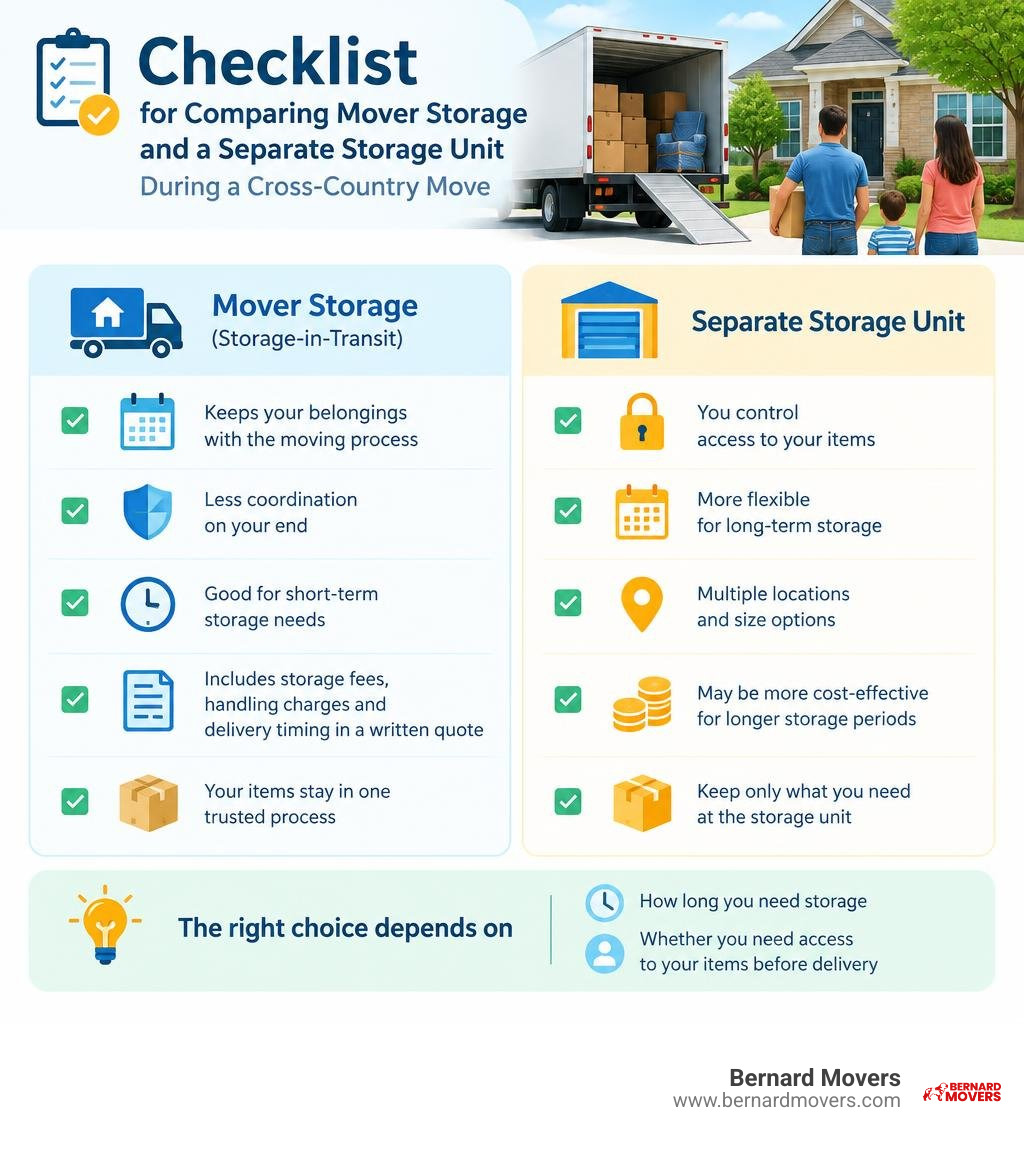
If your move-out and move-in dates do not line up, ask a long-distance mover about storage-in-transit. Your belongings can be stored between pickup and delivery, so you do not have to arrange a separate move to a storage unit. Before booking, get a written quote that lists storage fees, handling charges, delivery timing, and your options for protecting your belongings.
For a move from Chicago or elsewhere in Illinois, compare that plan with a separate storage unit. The best choice depends on how long you need storage and whether you need access to your items before delivery. According to the American Moving and Storage Association, nearly 35% of interstate moves involve temporary storage.
When preparing for cross country moving storage, discovering the best way to move cross country, selecting dedicated cross country moving trucks, and reviewing transparent long distance moving company rates will help you coordinate every stage of your relocation.
Introduction: Understanding Interstate Moving and Storage Needs
Relocating across state lines is an exciting milestone, but aligning your lease end date, home closing, and cross-country road trip can feel like solving a complex puzzle. Approximately 35% of long-distance movers require temporary storage solutions simply because moving schedules rarely line up on the exact same afternoon. Planning ahead for cross country moving storage can help bridge these timing gaps without added stress.
Whether you are relocating from Melrose Park, Evanston, Oak Park, Naperville, Schaumburg, or anywhere across the greater Chicagoland area and Illinois, temporary warehousing bridges the unpredictable gap between leaving your old home and receiving keys to your new front door. In many long-haul transitions, homeowners face delays caused by real estate closing escrow timelines, new home renovations, lease commencement dates, or staggered job start schedules. Attempting to coordinate same-day delivery under these circumstances often leads to logistical bottlenecks, congested street parking issues, and costly rush fees.
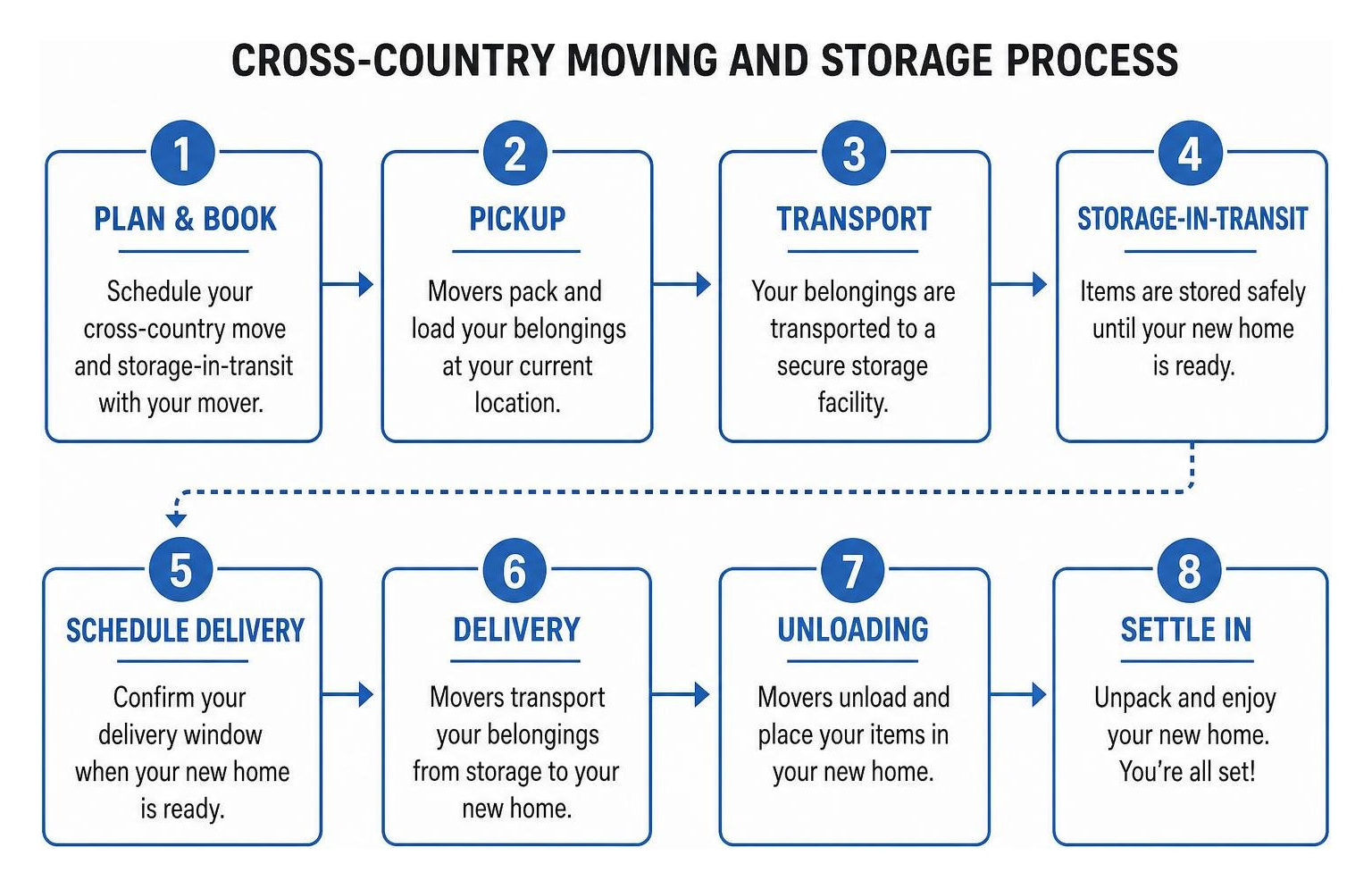
Storage-in-transit (SIT) options allow your goods to be professionally packed, held in a secure commercial facility, and delivered when you are ready. Unlike conventional residential moves where items go straight from truck to living room, long-distance relocations benefit immensely from warehouse staging. Professional moving crews inventory every box and piece of furniture, pack items into secure wooden vaults, and keep them monitored in a protected environment until your destination residence in another state is prepared for final move-in.
By leveraging localized staging centers throughout Illinois and across destination hubs nationwide, families can travel comfortably without worrying about where their possessions are stored. Moving teams handle the physical lifting, climate management, and protective wrapping, so your goods remain pristine during intermediate holding periods. Understanding the mechanics of storage-in-transit ensures that your interstate transition proceeds smoothly, safeguarding your valuable household possessions throughout every stage of the journey.
Comprehensive Solutions for Cross Country Moving Storage
Types of Cross Country Moving Storage Options
Every relocation comes with unique timelines and requirements. Finding the right mix of services depends on how far you are traveling, the duration of your storage needs, and the sensitivity of your belongings.
When organizing interstate removals and storage, you can choose from several core setups tailored to your specific schedule:
- Short-Term Warehousing (SIT): Ideal for gaps lasting between 30 and 90 days. Over 20% of major cross-country relocations use storage-in-transit while waiting on home renovations, lease starts, or closing dates. The average duration across interstate moves is roughly 45 days, giving families the flexibility needed to travel, finalize paperwork, and prepare their new residence without feeling rushed.
- Long-Term Wooden Vault Storage: If your move involves extended temporary housing, a multi-month corporate relocation, or a temporary assignment out of state, vaulted storage keeps packed items secured inside large, sealed wooden containers within an enclosed, secure warehouse. This setup keeps your furniture and cartons dust-free, organized, and isolated from external warehouse activity.
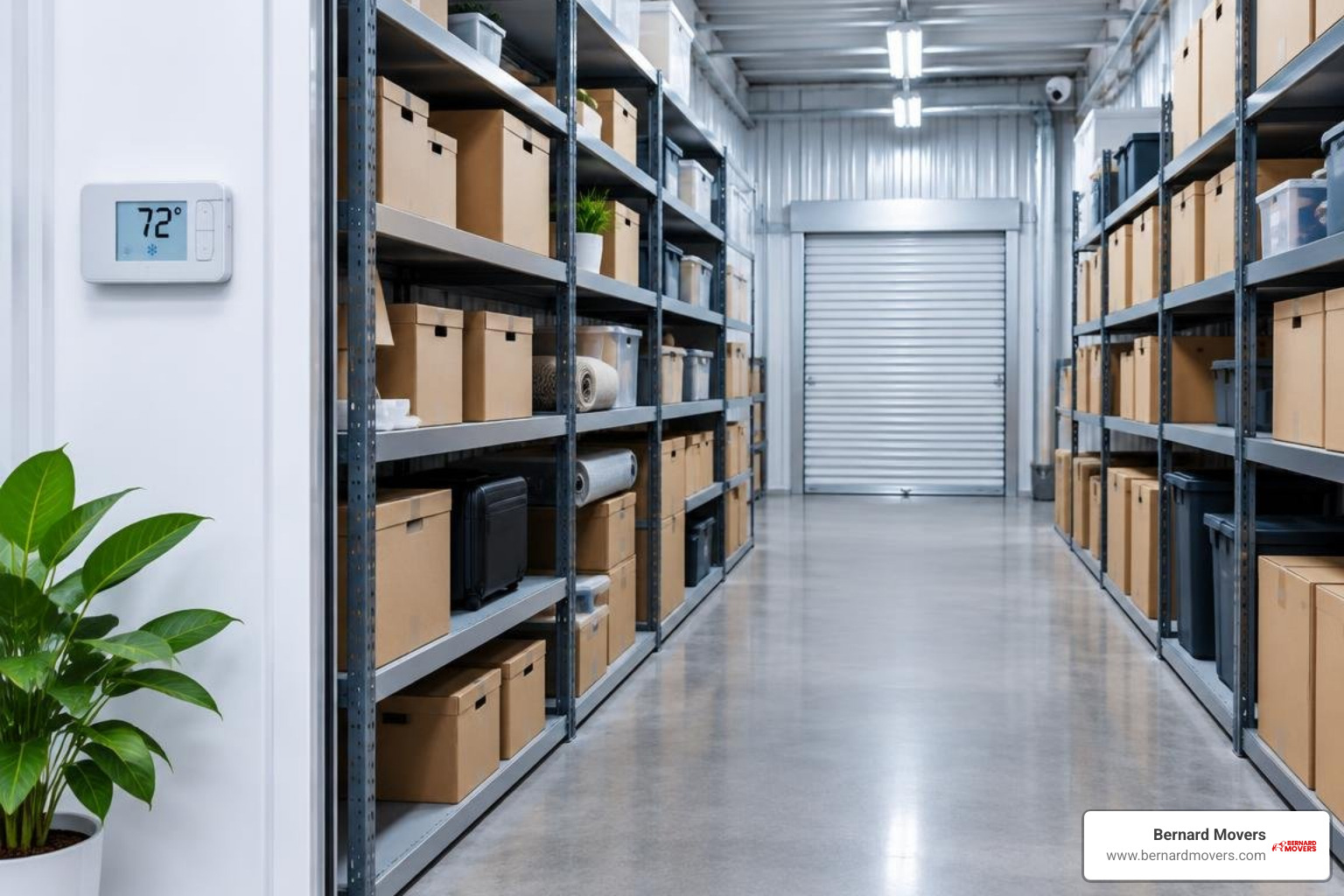
- Climate-Controlled Facilities: Illinois winters bring freezing temperatures and heavy snow, while Midwestern summers bring high humidity. Climate-controlled warehousing regulates both temperature and moisture levels, protecting sensitive electronics, musical instruments, fine art, leather upholstery, and solid wood furniture from warping, cracking, or mildew buildup over weeks or months of storage.
- Containerized Storage Vaults: Utilizing dedicated moving cubes cross country provides modular container protection where your shipment is loaded securely and held in a regional depot until final transit. This method provides steady predictability for homeowners who desire compartmentalized storage and clear separation of their inventory.
Evaluating Cross Country Moving Storage Facilities vs. Self-Storage Units
When coordinating an interstate move, you generally have two choices: let your full-service mover store your shipment in their commercial warehouse, or rent a separate self-storage unit yourself. Opting for full-service affordable moving and storage eliminates double handling, saving significant time, physical labor, and reducing the risk of accidental transit damage.
| Feature | Full-Service Mover Storage | Self-Storage Unit |
|---|---|---|
| Loading & Handling | Handled once by professional crew | Handled twice (into unit, out of unit) |
| Facility Security | 24/7 commercial monitoring, restricted public access | Gated entry, individual padlocks, public traffic |
| Climate Regulation | Central industrial climate systems | Varies by facility (often optional add-on) |
| Item Accessibility | By appointment or held until final delivery | Daily drive-up access during gate hours |
| Liability Coverage | Integrated valuation coverage | Separate third-party renter insurance required |
Renting a separate self-storage facility requires you to rent an extra local truck, unload everything into the unit yourself or hire separate hourly labor, and reload a long-haul truck weeks later. In contrast, mover-managed warehousing keeps everything wrapped in protective moving blankets and pads inside a single controlled ecosystem until outbound departure, minimizing handling risks.
Transit Logistics and How Movers Manage Storage Transitions
When you schedule professional long distance moving and storage in Chicago, our moving teams follow a streamlined cross-docking process designed to minimize handling and maximize safety.
Your items are packed and loaded onto the truck, where each piece is assigned an individual barcode or numbered inventory tag. Detailed condition reports are recorded during pickup in Melrose Park, Chicago, or neighboring suburbs. Once the truck arrives at the local or regional warehouse, the inventory is transferred into secure vault units. When your new home is ready, our dispatch team schedules the outbound long-haul trailer, loads your vaults directly, and transports your household goods straight to your new doorstep without unnecessary intermediate handling, ensuring consistent accountability from pickup to placement.
Planning, Costs, and Logistics for a Seamless Relocation
Estimating Costs and Budgeting for Long-Distance Storage
The average cost of a long-distance relocation exceeding 1,000 miles is approximately $4,890 for a standard 3-bedroom household. Adding temporary storage typically introduces an additional $150 to $300 per month for the equivalent of a 10×10 space.

Warehouse rates generally range from $0.50 to $1.50 per cubic foot per month, depending on container type, climate control specifications, and total shipment volume. To secure low cost moving and storage, always request an itemized estimate that clearly details warehouse handling fees, monthly storage rates, and final delivery charges so you have no surprises on delivery day. Transparent estimates allow you to account for redelivery charges, valuation protection, and access fees if you need to retrieve specific items from storage prior to cross-country transit.
Preparing and Packing Belongings for Secure Storage
Packing for long-distance transit combined with storage requires extra attention to detail to ensure goods remain pristine over weeks or months:
- Use Heavy-Duty Boxes: Standard grocery store boxes degrade quickly under warehouse stacking weight. Use double-walled, corrugated moving boxes engineered to withstand vertical pressure during transit and vault stacking.
- Guard Against Moisture: Place silica gel packs inside bins containing fabrics, leather, or paperwork, and wrap upholstered furniture in breathable moving blankets followed by stretch wrap to seal out dust without trapping interior humidity.
- Label Detailed Inventories: Clearly mark the contents and destination room on every container. Check out our comprehensive packing and moving cross country tips for room-by-room preparation techniques. Maintain a master inventory sheet noting high-value electronics and fragile heirlooms.
- Avoid Storing Prohibited Items: Perishable food, aerosol cans, flammable liquids, batteries, and live plants must never be packed for transit or warehouse storage due to safety and regulatory standards.
Booking Timelines and Choosing the Right Moving Partner
Long-distance relocation schedules fill up quickly, especially during the spring and summer peak seasons when moving volume surges across Illinois. We recommend reserving your moving date 8 to 12 weeks in advance for summer moves. If you are planning an off-season move between October and April, booking 4 to 6 weeks ahead usually provides ample scheduling flexibility.
If you are starting your journey in Cook County, DuPage County, or surrounding communities like Des Plaines, Park Ridge, Elmhurst, Wilmette, Skokie, Glenview, or Northbrook, partner with experienced Chicago cross country movers. Choosing an established professional moving and storage partner ensures your shipment is safeguarded from the moment our crew arrives at your door until every box is placed in your new home.