

What Do Long Distance Moving Company Rates Actually Cost in 2026?
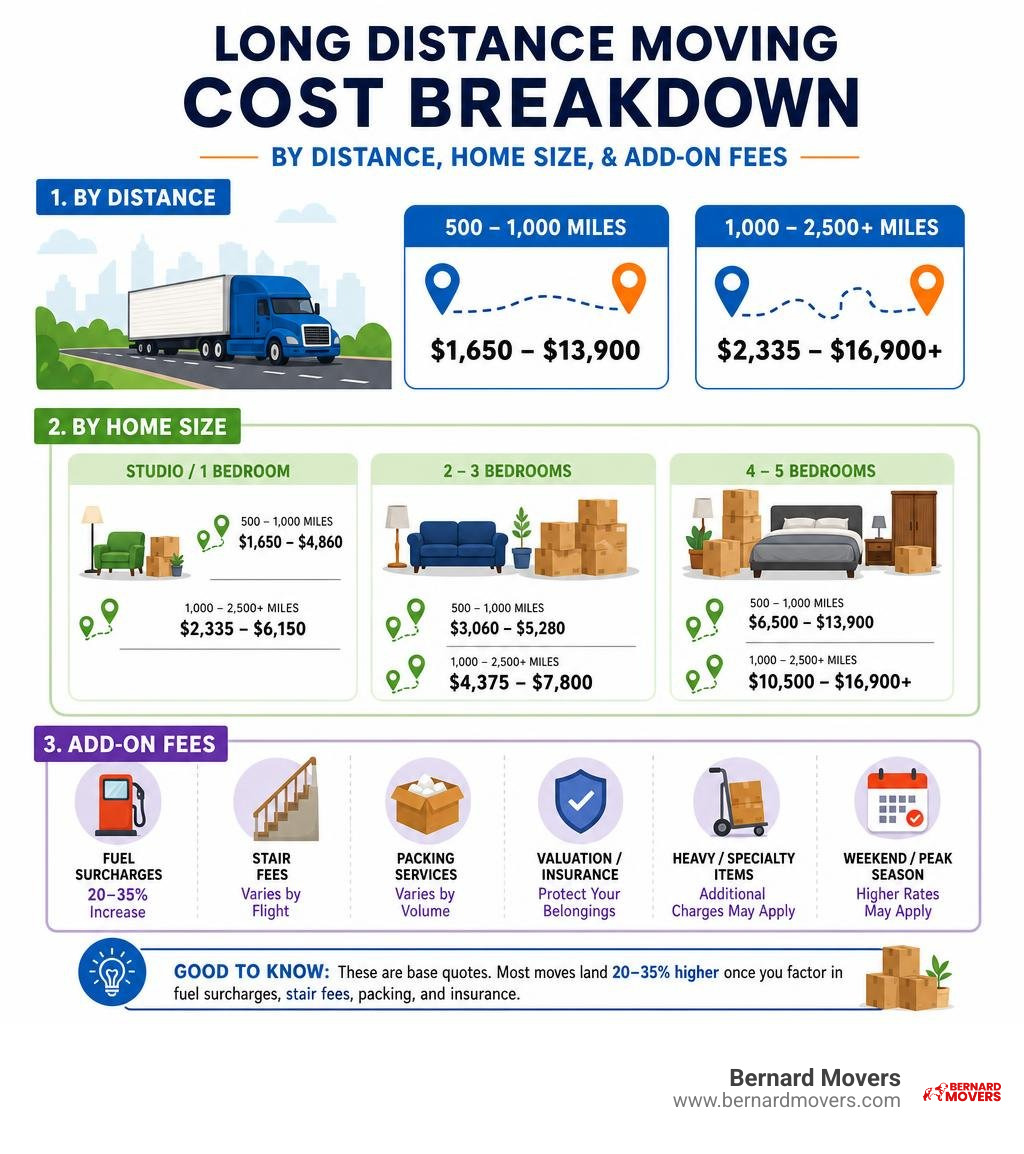
Long distance moving company rates in 2026 typically range from around $1,800 to $16,900, depending on how far you’re moving and how much stuff you’re bringing along. If you’re moving out of Chicago or anywhere in Illinois, here’s a quick look at what you can expect to pay:
| Home Size | 500-1,000 Miles | 1,000-2,500+ Miles |
|---|---|---|
| Studio / 1 Bedroom | $1,650 – $4,860 | $2,335 – $6,150 |
| 2-3 Bedrooms | $3,060 – $5,280 | $4,375 – $7,800 |
| 4-5 Bedrooms | $6,500 – $13,900 | $10,500 – $16,900+ |
These are base quotes. Most moves land 20-35% higher once you factor in fuel surcharges, stair fees, packing, and insurance.
Planning a cross-country move from Illinois — say, Chicago to Florida — is exciting. It’s also expensive, and the price tag can feel like a moving target (no pun intended).
The average long-distance move costs somewhere between $4,500 and $16,900. That’s a wide range. And for a family like Emily’s — relocating from Chicago with a full household to unpack on the other end — knowing why that number swings so much matters just as much as the number itself.
Unlike local moves, which are billed by the hour, long-distance moves are priced by weight and mileage. That means a lightly furnished one-bedroom and a packed three-bedroom house moving the same distance will cost very different amounts. Add in timing, access challenges, and optional services, and your final bill can look nothing like your first quote.
This guide breaks down exactly how Illinois long-distance rates are calculated, what fees to watch for, and how to compare quotes so you can move smart — not just fast.
Basic long distance moving company rates glossary:
Understanding Long Distance Moving Company Rates
When you transition beyond local boundaries – typically defined as moves crossing state lines or exceeding 100 miles – the entire pricing structure changes. Understanding how these rates are calculated is the first step toward keeping your budget intact.

For a solid foundation on what to expect, we recommend checking out our comprehensive long distance movers cost guide to see how the industry structures these specialized relocations.
Unlike local moves, which rely on simple hourly rates, long-distance relocations are governed by federal regulations. If you are crossing state lines, your move falls under the jurisdiction of the Federal Motor Carrier Safety Administration (FMCSA). The FMCSA also provides consumer guidance through its Protect Your Move resource, which helps customers understand interstate mover registration, estimates, and claims. This means your tariff-based interstate moving company rates are calculated using highly regulated metrics, primarily focusing on shipment weight and total transport mileage.
How Interstate Movers Calculate Your Final Bill
To understand your quote, you have to look at the structural drivers behind the math. Long-distance pricing is built on a “line-haul” fee. This is the base cost of transporting your goods from point A to point B.
Carriers use a tariff system that translates your shipment’s total weight and the distance of the route into a base price. In 2026, the industry average rates generally hover between $0.50 and $0.80 per pound for the first 1,000 miles.
Here is how the formula works in practice:
- Shipment Weight: Your household items are weighed on a certified truck scale. A typical three-bedroom home averages 7,400 to 11,000 pounds, while a smaller one-bedroom apartment usually weighs between 2,000 and 4,000 pounds. Knowing your weight class helps prevent unexpected surprises on moving day.
- Line-Haul Mileage: The physical distance between your old home in Chicago and your new destination. As distance increases, your per-mile rate actually decreases slightly due to logistical efficiencies, though the overall total will naturally be higher.
- Fuel Surcharges: This is a variable percentage (typically 5% to 15%) added to the line-haul fee to balance fluctuating fuel prices. It is adjusted regularly based on national diesel averages.
- Accessorial Services: Any extra tasks, such as packing, custom crating, or navigating stairs. These are billed separately from the base transportation rate.
To see these variables broken down in detail, read our guide on moving rates unpacked what to expect from long distance quotes. If you want to estimate your own inventory weight before calling in the professionals, utilizing a cost of moving home calculator can help you establish a realistic baseline.
Key Factors That Influence Long Distance Moving Company Rates
Several key variables will cause your moving quotes to fluctuate. Knowing these factors allows you to adjust your plans to secure a better rate:
- Home Size and Weight: This is the single largest cost driver. The more items you own, the heavier the shipment, and the more you will pay. For a deep dive into these specific costs, read about the average cost to move a 3 bedroom house long distance.
- Distance: Moving from Chicago to Indianapolis (approximately 180 miles) is significantly cheaper than moving from Chicago to Miami (nearly 1,400 miles). You can read more about these geographic realities in our breakdown of the cost to relocate to another state.
- Time of Year: Peak moving season runs from May through September. During these warm summer months, rates can jump 15% to 25% higher due to massive demand. Moving during the late fall or winter (October through April) is always the most budget-friendly choice.
- Date Flexibility: Moving mid-week (Tuesday through Thursday) and mid-month is cheaper than booking your move on a weekend or during the hectic first and last days of the month when leases turn over. If you can be flexible with your pickup window, companies can often offer better rates.
Additional Fees and Hidden Costs to Watch For
The base quote you receive is rarely the final amount you pay. Real-world moves often accumulate extra line items based on the unique physical layout of your origin and destination homes. Here are the most common accessorial fees that surprise Illinois homeowners:
- Long-Carry Fees: If the moving truck cannot park within 75 to 100 feet of your front door, you may be charged a long-carry fee. This typically runs $1 to $2 per foot for the extra distance the crew must walk with your belongings.
- Stair Fees: Carrying heavy furniture up and down multiple flights of stairs takes time and physical effort. Expect a charge of $50 to $100 per flight of stairs after the first flight.
- Elevator Fees: If your building requires the crew to use an elevator, a flat fee of $75 to $150 may be added to manage the extra transit time.
- Shuttle Services: If you are moving to a dense urban area where a massive 53-foot semi-truck cannot physically fit down the street, the movers must transfer your belongings to a smaller box truck. This shuttle service can add $400 to $1,000 to your bill.
- Storage-in-Transit (SIT): If your new home isn’t ready when the truck arrives, your goods must go into temporary warehouse storage. This incurs both storage fees and a second redelivery charge, which can quickly inflate your total expenses.
For those planning a move within Cook County, understanding local pricing dynamics is crucial. Check out our resource on how much do movers cost in chicago to gain a complete understanding of regional pricing structures.
If you live in the surrounding suburbs like Des Plaines or Park Ridge, local access issues might affect your initial estimates.
How to Compare Long Distance Moving Company Rates and Save
Saving money on a long-distance move requires a mix of decluttering, strategic scheduling, and smart negotiation.

Before signing any contract, we highly recommend reading our moving companies chicago prices guide to learn how to spot red flags and compare quotes effectively.
Here are the most effective strategies to lower your final bill:
- Get a Binding Estimate: Never rely on a phone-only quote. Insist on a physical or virtual home walkthrough. A Binding Not-to-Exceed Estimate ensures that even if your shipment weighs more than estimated, you won’t pay a penny over the quoted price. This protects you from sudden price hikes on delivery day.
- Shed the Excess Weight: Since weight dictates your price, decluttering is the fastest way to save. Selling, donating, or discarding heavy furniture and unused items can save you $1.50 to $3 for every pound you eliminate. It also means fewer boxes to pack and unpack.
- Pack Yourself: Professional packing services are incredibly convenient, but they can add $1,000 to $3,000 to a multi-bedroom move. By sourcing recycled boxes and packing your own non-fragile items, you keep those dollars in your pocket.
- Compare Multiple Suburban Providers: Reach out to established local operators across the Chicago suburbs, including Franklin Park and Wood Dale, to get a broader perspective on suburban transport rates and scheduling availability.
Maximizing Value: Basic Transport vs. Full-Service Professional Moving
When budgeting, you must decide between a bare-minimum transport service and a full-service moving experience. While saving money is important, your time, physical health, and the safety of your belongings are valuable assets.
| Service Element | Basic Transport (DIY/Container) | Full-Service Professional Moving |
|---|---|---|
| Loading & Unloading | You do all the heavy lifting | Professional crew handles everything |
| Packing & Wrapping | You pack and risk damage | Custom wrapping and crating included |
| Driving & Logistics | You drive a massive truck or host a container | Experienced drivers handle interstate routes |
| Time Investment | High (days of packing and physical labor) | Minimal (crew finishes in hours) |
| Transit Protection | Minimal coverage for self-packed goods | Comprehensive valuation options available |
To determine which tier fits your budget, look at our detailed full service moving cost estimate to see if the convenience outweighs the cost. For a complete local perspective on managing your budget from start to finish, read our moving cost chicago complete guide.
Insurance and Valuation Options Explained
Federal law requires interstate moving companies to offer two distinct levels of liability protection. Understanding these options is critical to protecting your wallet if an accident occurs during transit:
- Released Value Protection: This is the basic, economical option required by law at no extra charge. However, it only covers $0.60 per pound per article. If your brand-new, 50-pound flat-screen TV worth $1,000 is destroyed in transit, you will only receive $30 in compensation (50 lbs x $0.60). This option is rarely sufficient for high-value moves.
- Full Value Protection: This is the comprehensive option. If an item is lost or damaged, the mover must either repair it, replace it with a similar item, or offer a cash settlement for its current market value. This coverage typically adds 15% to 30% to your base quote (or a premium of $300 to $500), but it offers invaluable peace of mind for valuable shipments. It is highly recommended for long-distance journeys where items are handled multiple times.
Conclusion: Plan Your Illinois Relocation Today
Moving across the country doesn’t have to break the bank or ruin your peace of mind. By understanding how long distance moving company rates are calculated, decluttering your home before the trucks arrive, and choosing the right service tier, you can keep your relocation affordable and stress-free.
Whether you are moving from Chicago, Melrose Park, Elmhurst, or any of our neighboring Illinois communities, we are here to help make your transition seamless.
At Bernard Movers, we pride ourselves on providing transparent, reliable moving solutions tailored to your budget. We are excited to highlight our exclusive regional promotion: enjoy an additional 20% discount on all moves to Georgia and Florida booked for delivery by March 15, 2025.
Ready to plan your cross-country journey? Contact us today to receive a highly accurate, customized moving estimate and let our experienced team handle the heavy lifting for you!