

The Real Cost of Trusting the Wrong Moving Company
Finding a reputable moving company in Chicago or anywhere in Illinois can feel overwhelming — and the stakes are high.
Every year, millions of Americans hand over everything they own to strangers. Some of those strangers don’t deserve the trust. Moving scams, hidden fees, and damaged belongings are more common than most people realize. In 2024 alone, an estimated 7.1 million Americans moved to another state.
Here’s a quick answer if you’re short on time:
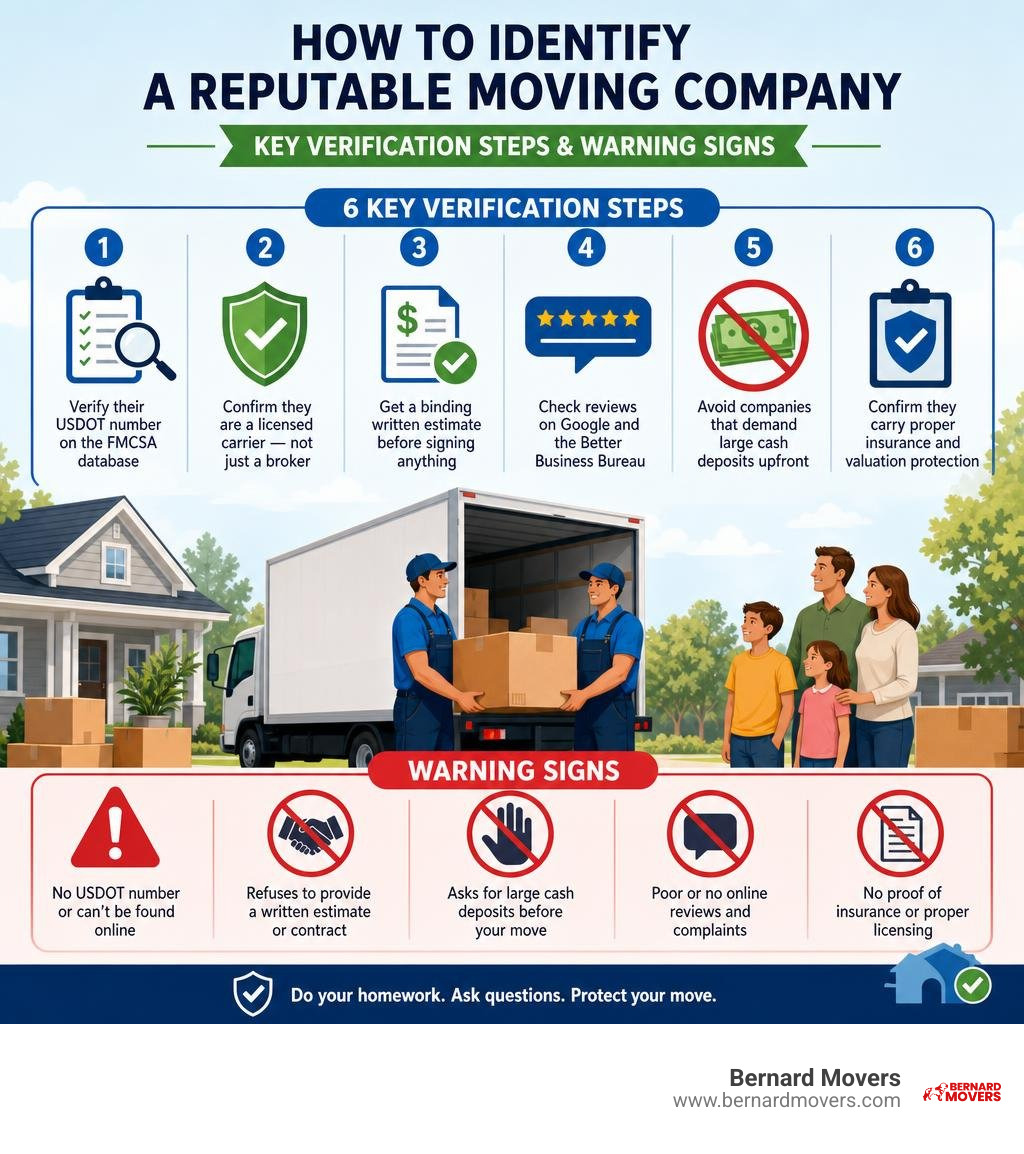
How to identify a reputable moving company:
- Verify their USDOT number on the FMCSA database at protectyourmove.gov
- Confirm they are a licensed carrier — not just a broker
- Get a binding written estimate before signing anything
- Check reviews on Google and the Better Business Bureau
- Avoid companies that demand large cash deposits upfront
- Confirm they carry proper insurance and valuation protection
The problem is that not every company promising a smooth move delivers one. Nearly 50% of homeowners who attempted a DIY move still spent at least $1,000 — not counting the physical toll or the risk of damage. Hiring a professional should solve that problem, but only if you hire the right one.
For families like Emily’s — relocating from Chicago to Florida with furniture, kids, and a tight timeline — choosing the wrong mover doesn’t just cost money. It costs peace of mind.
This guide breaks down exactly what separates a trustworthy mover from a risky one, what to look for, and how to protect yourself from the most common moving scams in Illinois and beyond.
Reputable moving company definitions:
How to Identify and Verify a Reputable Moving Company

When you begin searching for a reputable moving company in the Chicago metropolitan area, you need more than just a polished website or a friendly voice on the phone. True reliability is built on legal compliance, proper credentials, and transparent business practices.
In Illinois, intrastate movers must be registered with the Illinois Commerce Commission (ICC). If your household goods are crossing state lines, the mover must also be registered with the Federal Motor Carrier Safety Administration (FMCSA). You can verify interstate moving credentials through the FMCSA’s official Protect Your Move mover search tool. Verifying these credentials is your first line of defense against rogue operators.
Red Flags and Licensing for a Reputable Moving Company
The absolute baseline for any interstate mover is a valid USDOT (U.S. Department of Transportation) number. You can easily verify this number on the FMCSA’s official database. For local moves within our primary service areas like Melrose Park, Des Plaines, or Franklin Park, a professional mover must carry active state-level licensing.
Working with Licensed and Insured Movers protects you from liability and ensures the company is operating legally. Unfortunately, the industry is home to “rogue movers” who use deceptive tactics. Learning How to Spot Real Local Moving Experts will keep your belongings safe.
Watch out for these critical red flags when researching companies:
- The “Hostage-Load” Scam: This occurs when a mover gives a lowball estimate, loads your belongings onto their truck, and then demands significantly more money to deliver them, holding your life’s possessions hostage.
- Large Cash Deposits: Reputable movers rarely demand cash-only payments or massive upfront deposits. Anything over 20% to 50% is highly suspicious. Paying with a credit card preserves your right to dispute fraudulent charges.
- No Physical Address: If the company’s website lacks a physical address or lists a residential home or P.O. Box, proceed with extreme caution.
- Generic Phone Greetings: If they answer the phone with a generic “movers” or “moving company” rather than their official business name, they may be operating under multiple temporary aliases to dodge complaints.
Moving Brokers vs. Carriers
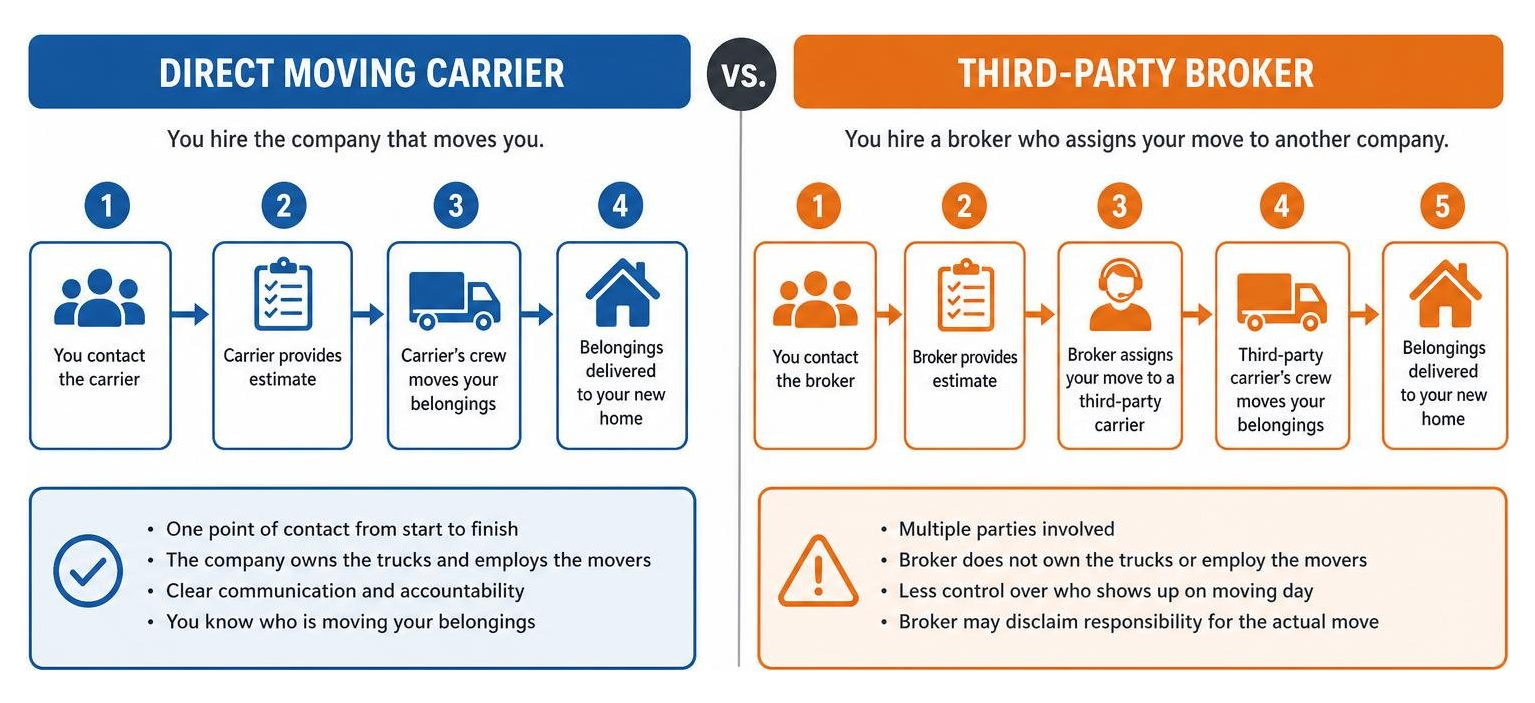
A common trap for unsuspecting consumers is failing to distinguish between a moving broker and a moving carrier.
- Moving Carrier: This is the actual company that owns the trucks, employs the trained moving crews, and physically transports your belongings.
- Moving Broker: This is a sales agent or intermediary that books your move and then sells the contract to a third-party carrier.
While brokers are legal, they present significant risks. They do not own the trucks or employ the movers, meaning you have little control over who actually shows up at your door in Elmhurst or Wood Dale. If the subcontractor is unreliable, the broker often disclaims responsibility.
Using a direct carrier ensures clear communication and operational accountability. For a deeper look into selecting the right team, read our Guide to Finding Reliable Movers.
Understanding Estimates and Contracts
Before you sign any paperwork, you must understand the type of estimate you are receiving. A legitimate estimate is always provided in writing after a detailed inventory of your home.
There are two primary types of moving estimates:
- Binding Estimate: This guarantees the final cost of the move based on the inventory listed. As long as you do not add extra items or request additional services on moving day, the price will not change.
- Non-Binding Estimate: This is a projection of the final cost based on the estimated weight of your shipment and the services required. The final price is determined after the truck is weighed, meaning your final bill could be higher than the initial quote.
| Feature | Binding Estimate | Non-Binding Estimate |
|---|---|---|
| Price Guarantee | Locked-in based on inventory | Subject to change based on actual weight |
| Unexpected Fees | None, unless inventory/services change | Highly possible if weight exceeds projection |
| Best For | Accurate budgeting and fixed costs | Small, straightforward shipments |
| Visual Survey Required | Yes, highly recommended | Yes, to ensure initial accuracy |
Every reputable move requires a Bill of Lading. This is the official contract between you and the mover. Never sign a blank or incomplete Bill of Lading, and make sure it includes an itemized inventory list of your belongings.
Services and Costs of a Reputable Moving Company
A full-service mover provides end-to-end support, including packing, loading, transport, unloading, and unpacking. This is particularly valuable for complex relocations out of high-density urban areas or North Shore suburbs like Wilmette, Winnetka, and Evanston.
To budget effectively, it helps to understand average industry rates:
- Local Moves: Typically priced by the hour. You can expect to pay around $80 to $100 per hour for a professional two-worker crew. A standard local move averages around $1,000.
- Long-Distance Moves: Priced by shipment weight and distance. A typical long-distance move averages $4,000 to $5,000, while cross-country relocations can range from $5,000 to $10,000 or more.
If you are looking to manage costs, plan your move during the off-peak season. Rates typically drop by 20% to 30% if you move midweek or between September and February.
To explore your options further, check our breakdown of the Best Moving Companies. We proudly serve communities across the region, including Des Plaines, Franklin Park, Park Ridge, Elmhurst, and Wood Dale.
It is also important to note that even the most reputable movers are legally restricted from transporting certain items due to safety regulations. Non-allowable items include:
- Hazardous materials (paint, propane tanks, fertilizer, aerosols, batteries, and household chemicals)
- Perishable foods and plants that could spoil or attract pests during transit
- Loaded firearms, ammunition, and other explosives
Moving Insurance and Valuation Protection
No matter how careful a moving crew is, accidents can happen. Understanding your protection options is essential.
By federal law, interstate movers must offer two types of liability options:
- Released Value Protection: This is basic liability coverage provided at no additional charge. However, it only covers your items at $0.60 per pound per article. If a 100-pound television worth $1,500 is destroyed, you will only receive $60 in compensation. This option is highly economical but offers minimal peace of mind for high-value items.
- Full-Value Protection: This is a more comprehensive plan where the mover is liable for the replacement value of lost or damaged goods. If an item is damaged, the mover must repair it, replace it with a similar item, or offer a cash settlement for its current value. While this option requires an upfront premium, it is highly recommended for families moving valuable furniture, electronics, or delicate heirlooms.
For specialized guidance on securing your belongings, read our Moving Company Recommendations. If you need to file a claim, document the damage immediately with photographs and contact your mover to initiate the claims process within the legally allowed window. Keep in mind that you typically have nine months from the date of delivery to file a written claim for interstate moves.
Preparing for Moving Day and Saving Money

A successful move starts weeks before the truck arrives. We recommend booking your moving company at least 4 to 8 weeks in advance, especially if you are relocating during the busy summer months.
To ensure a smooth moving day:
- Declutter Early: Sell, donate, or recycle items you no longer need. This reduces the total weight of your shipment and lowers your overall cost.
- Pack an Essentials Box: Keep daily necessities, medications, important documents, and basic tools with you instead of loading them onto the truck.
- Source Recycled Boxes: Save money on supplies by sourcing clean, used boxes from local businesses in Skokie, Morton Grove, or Glenview.
- Label Everything Clearly: Mark each box with its destination room and a brief description of its contents. This helps the movers place boxes in the correct rooms quickly, saving you time and money on hourly rates.
- Secure Parking and Access: If you live in a busy Chicago neighborhood or a high-rise building, ensure you have reserved parking permits for the moving truck and booked the service elevator in advance.
- Be Present: Plan to be at your home for both the initial walkthrough and final delivery to verify the inventory list.
Conclusion: Partner with Bernard Movers for a Seamless Relocation
Relocating your home or business shouldn’t be a source of constant stress. By choosing a licensed, experienced, and highly rated local carrier, you can protect your family from moving scams and enjoy a seamless transition.
At Bernard Movers, we have spent years building a reputation for reliability across Chicago, Melrose Park, and the surrounding Illinois suburbs, including Mount Prospect, Glencoe, Northfield, and Northbrook. We handle your belongings with the utmost care and provide transparent, straightforward pricing.
Planning a long-distance relocation? We are proud to offer a unique promotion: get a 20% additional discount on moves to Georgia and Florida booked for delivery by March 15, 2025.
Don’t leave your life’s possessions to chance. Contact us today to request a detailed estimate, and discover why we are one of the most trusted and affordable moving companies in Illinois.