

Typical Moving Company Costs at a Glance
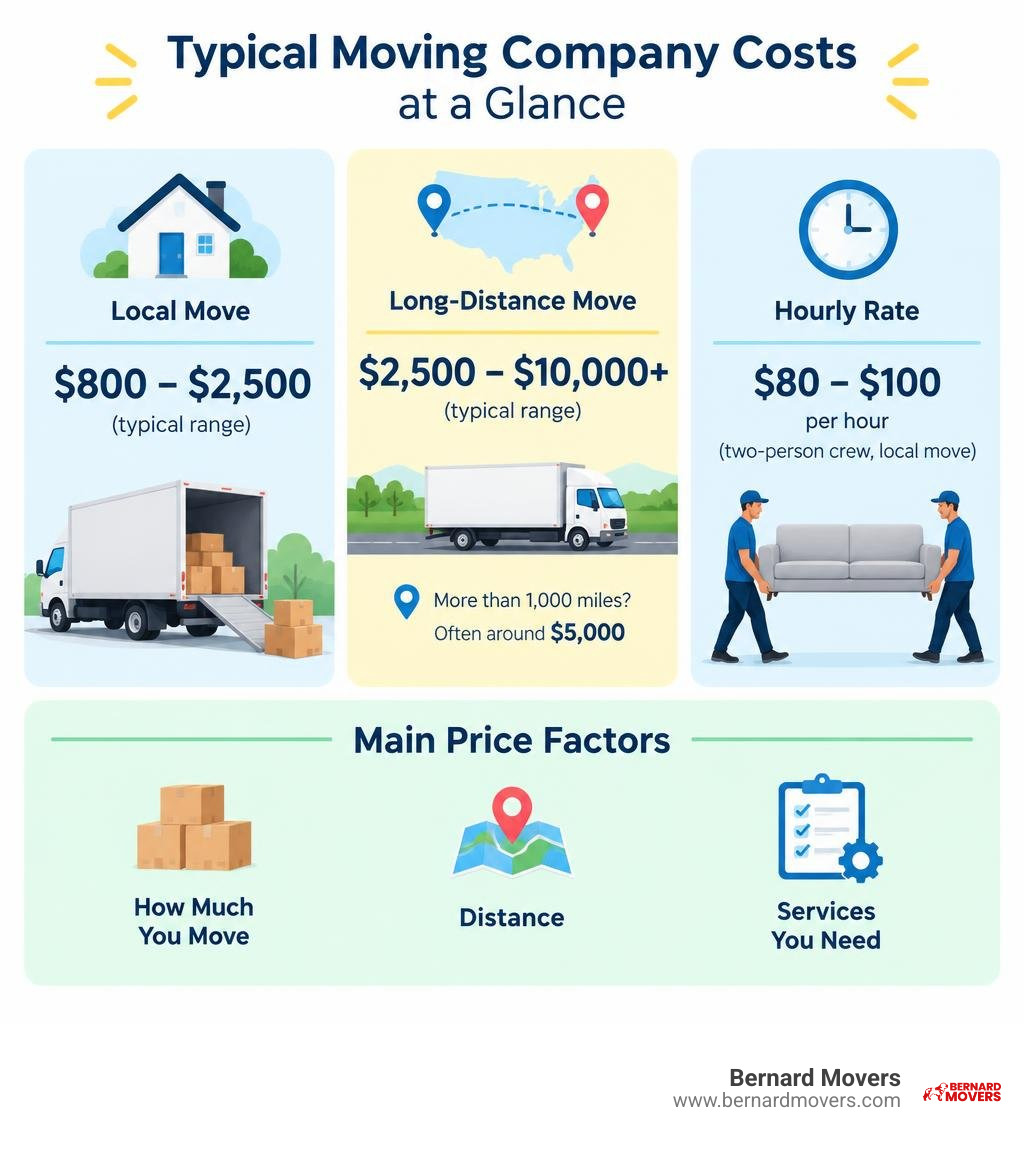
Typical moving company costs range from about $800 to $2,500 for a local move and $2,500 to $10,000 or more for a long-distance move. For local relocations within Illinois, standard moving teams usually charge an hourly rate between $80 and $150 per hour for a standard two-person crew, depending on truck size, specific handling requirements, and local access conditions. For long-distance relocations extending more than 1,000 miles, total relocation expenses often average around $5,000, with larger family residences reaching higher totals based on cumulative weight and mileage.
Whether you are organizing a transition within Chicago, moving between neighborhoods in Melrose Park, or scheduling an interstate relocation from Illinois to another state, your total moving expense depends on the overall volume of your inventory, travel distance, and selected packing or specialty services. Establishing a preliminary budget using standard regional pricing metrics helps you review carrier quotes with confidence.
Helpful relocation budgeting resources:
- Utilize an approximate moving cost calculator for the USA to gauge preliminary figures.
- Evaluate the average cost to move a 3-bedroom house long-distance before planning interstate logistics.
- Learn proven methods for comparing moving company estimates across multiple licensed carriers.
Understanding Typical Moving Company Costs and Key Price Factors

Planning a residential or commercial relocation involves balancing your timeline, energy, and financial resources. Relocation professionals throughout Illinois handle thousands of household moves each year, providing tailored logistical support for high-rise condos, historic walk-ups, and suburban family estates. However, moving quotes can appear complex if you are unfamiliar with how professional carriers calculate labor, transit, and handling fees.
Several core variables shape your final moving invoice:
- Labor and Crew Size: Professional moving companies base local rates on hourly labor, generally billing $25 to $50 per hour for each mover assigned to the crew.
- Shipment Volume and Weight: The total weight and volume of your furniture, boxes, and specialty items directly determine truck capacity, loading time, and fuel consumption.
- Travel Distance and Transit Route: Short neighborhood transitions within Cook County involve straightforward hourly travel times, whereas cross-country routes require line-haul freight fees, road tolls, and overnight driver accommodations.
- Physical Logistics and Property Access: Long hallways, elevator reservations, tight door frames, and narrow stairwells require additional labor time and specialized equipment.
- Seasonal Timing and Scheduling: Relocation demand spikes during the summer months, at month-ends, and on weekends, which influences overall crew availability.
Reviewing established industry cost averages provides a solid benchmark for assessing your moving estimates.
Typical Moving Company Costs for Local and Long-Distance Relocations
Local relocations generally encompass moves occurring within a specific geographic radius—typically under 50 miles—within the state of Illinois. These transitions are billed on an hourly basis, reflecting the total time required for our crew to arrive, wrap and protect your furniture, load the truck, transport the cargo, and unload items at your destination. For a detailed breakdown of regional moving rates, our comprehensive moving companies Chicago prices guide outlines local pricing expectations across varying apartment and home sizes.
In contrast, long-distance relocations cross state lines or cover substantial mileage across Illinois and beyond. These estimates are structured around verified inventory weight, space requirements, and total highway mileage rather than hourly rates. When planning an interstate relocation, reviewing the average cost for movers out of state provides valuable clarity on long-haul transit expenses.
| Home Size | Estimated Local Move Cost | Estimated Long-Distance Move Cost |
|---|---|---|
| Studio / 1-Bedroom | $240 – $500 (3–5 hours) | $1,500 – $3,500 |
| 2-Bedroom Apartment / Home | $400 – $700 (4–6 hours) | $2,500 – $5,000 |
| 3-Bedroom House | $560 – $1,200 (6–9 hours) | $4,000 – $7,500 |
| 4+ Bedroom House | $800 – $2,000+ (8–12+ hours) | $6,000 – $10,000+ |
How Typical Moving Company Costs Are Calculated and Additional Fees to Expect
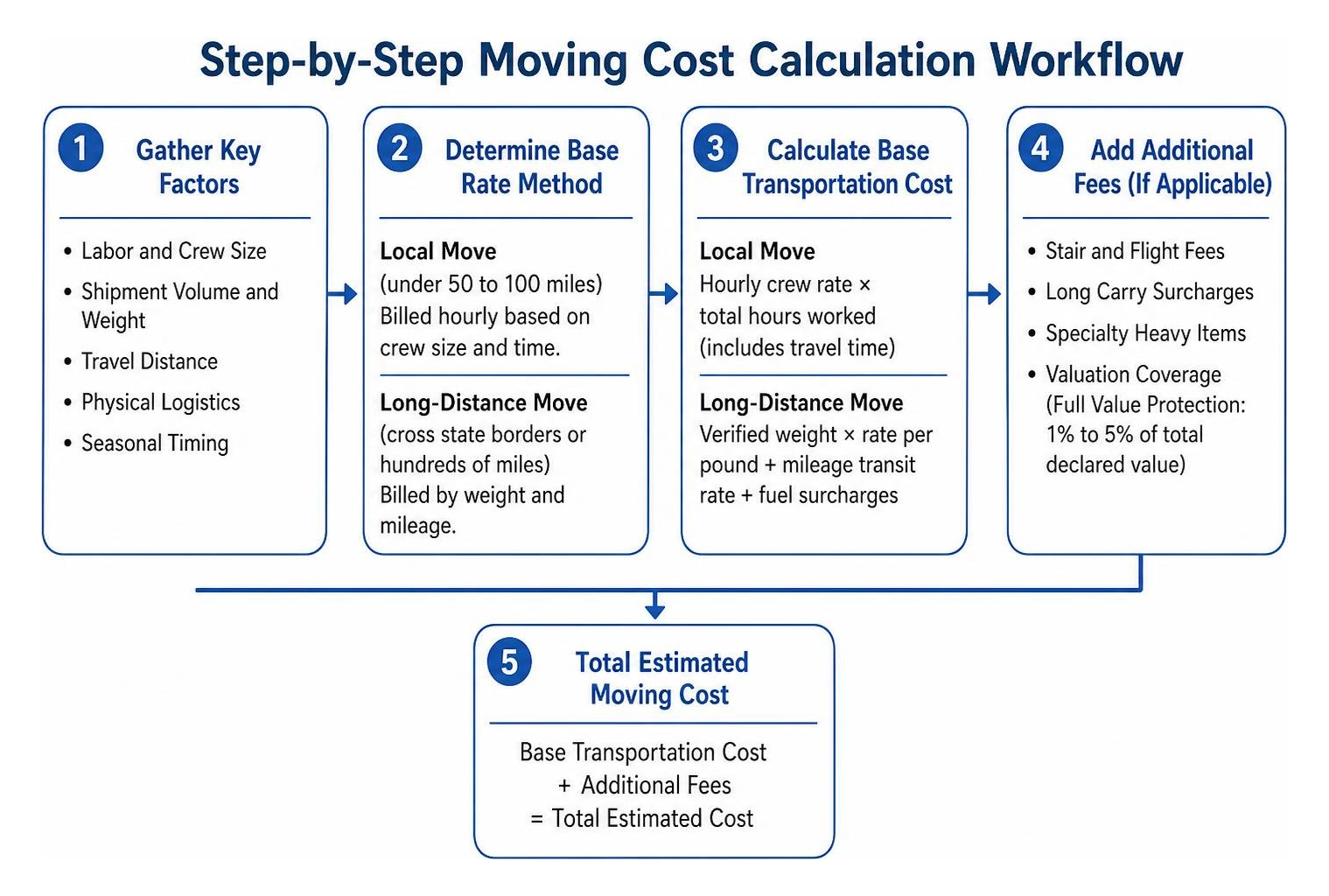
Understanding the mathematical framework behind professional quotes prevents unexpected fees. Local relocation charges are calculated by multiplying the crew’s hourly rate by total labor hours, with an added standard travel fee to cover transit to and from company headquarters. Long-distance quotes multiply the scale-certified weight of your goods by a per-pound tariff rate, then add applicable mileage rates and current fuel surcharges.
Depending on the specific architectural layout and inventory details of your move, several supplementary service charges may apply:
- Stair and Flight Fees: Navigating multiple flights of stairs in multi-story apartment buildings or multi-level homes increases physical labor requirements and may incur standard flight charges.
- Long Carry Surcharges: When moving trucks cannot park within 75 feet of your building entrance—a common situation in dense Chicago neighborhoods—carrying cargo over extended distances requires dedicated handling fees.
- Specialty Heavy Items: Transporting oversized or delicate assets such as upright pianos, grand pianos, heavy gun safes, or slate pool tables requires specialized rigging, protective wrapping, and custom equipment. Reviewing our piano moving company price breakdown explains the specific labor requirements for heavy instrument transport.
- Valuation Coverage: Standard Released Value Protection provides fundamental baseline coverage of $0.60 per pound per article as mandated by federal regulations. Homeowners seeking full replacement value for valuable furniture and delicate electronics can select Full Value Protection, which typically costs between 1% and 5% of the total declared shipment value.
- Crew Gratuities: Although optional, customary tipping standards in the moving industry suggest $20 to $30 per mover for standard local relocations, and $50 or more per crew member for full-day, multi-truck, or complex interstate jobs.
To thoroughly review the structure of your paperwork, consult the ultimate guide to understanding your next moving quote.
Professional Packing and Add-On Service Rates
Selecting professional packing services eliminates the demanding physical labor of wrapping, boxing, and labeling personal belongings. Professional packing for standard one- or two-bedroom residences typically ranges between $350 and $600 for labor and baseline supplies. Larger family homes with extensive kitchenware, artwork, and specialty decor involve additional materials and dedicated packing hours. To plan appropriately for a larger residence, read our detailed analysis on 4-bedroom house packing costs.
Full-Service Moving Cost Breakdown

A full-service relocation package provides complete end-to-end management of your moving day. The professional crew carefully packs every room, disassembles furniture, protects delicate surfaces, loads the transport vehicle, safely navigates transit routes, unloads each item into designated rooms, and reassembles primary furniture pieces. Handling a move without professional help can reduce direct expenses, but it requires significant physical labor, loading expertise, and driving responsibilities.
For many homeowners and apartment dwellers across Chicago and Melrose Park, investing in professional movers protects valuable assets and ensures a seamless transition. You can examine detailed full-service tiers in our overview covering the cost for full service movers.
| Service Level | Included Services | Typical Cost Range (3-Bedroom) |
|---|---|---|
| Standard Professional Move | Loading, transit, unloading, furniture pads | $1,250 – $2,200 (Local) |
| Full-Service Relocation | Packing, materials, loading, transit, unloading, reassembly | $2,500 – $4,500+ (Local) |
Planning Your Relocation Budget and Securing Accurate Moving Rates
Careful planning ensures your moving budget remains accurate and manageable throughout the entire relocation process. When preparing for a residential or commercial move in Illinois—whether across Chicago, Melrose Park, Evanston, Skokie, Naperville, or surrounding Cook County neighborhoods—securing an in-home visual walkthrough or a detailed virtual survey represents the most reliable method for obtaining an accurate price structure.
When you are ready to organize your upcoming relocation, you can easily schedule an accurate moving estimate with our professional team.
Optimal Timing, Booking Windows, and Moving Estimates
Strategic timing plays an essential role in securing your preferred moving date and controlling overall expenses. Over half of all annual household transitions occur during the peak relocation window between May and September. Scheduling your move during the off-peak fall or winter months (November through March) provides expanded scheduling availability. Furthermore, mid-week dates from Tuesday through Thursday and mid-month moving slots generally offer better crew flexibility compared to peak end-of-month weekend timeframes.
Examine verified seasonal moving demand guidelines to learn more about industry-wide scheduling trends. When preparing for an Illinois transition, our guide on how much do movers cost in Chicago explains regional rate factors and crew structures. Always insist on receiving written estimates—such as binding quotes that establish fixed total charges based on an agreed inventory, or transparent non-binding estimates calculated on verified hours and shipment weight.
Practical Tips for Managing Moving Day Expenses
You can keep moving expenses predictable and organized through focused preparation:
- Declutter Inventory: Sort, donate, or sell unused furniture, clothing, and household goods prior to your visual survey to reduce total shipment volume and weight.
- Pack Non-Fragile Goods in Advance: Packing clothing, books, linens, and durable items independently reduces the total billable packing labor required on moving day.
- Acquire Uniform Moving Boxes: Using standard, heavy-duty moving boxes rather than mismatched containers facilitates faster, safer stacking inside the truck.
- Reserve Moving Dates Early: Reserving your moving crew four to eight weeks ahead ensures you secure your desired moving date without scheduling complications.
- Prepare Furniture and Appliances Ahead of Time: Disassembling bed frames, clearing hallways, and disconnecting household electronics prior to arrival enables movers to begin loading immediately.
For additional strategic guidance on budgeting for your next relocation, review our advice on how to find affordable moving companies. With clear planning and reliable moving professionals handling the logistics, your moving experience in Illinois will be efficient, secure, and well organized.