

What Are Long Distance Services — and Which Type Do You Need?
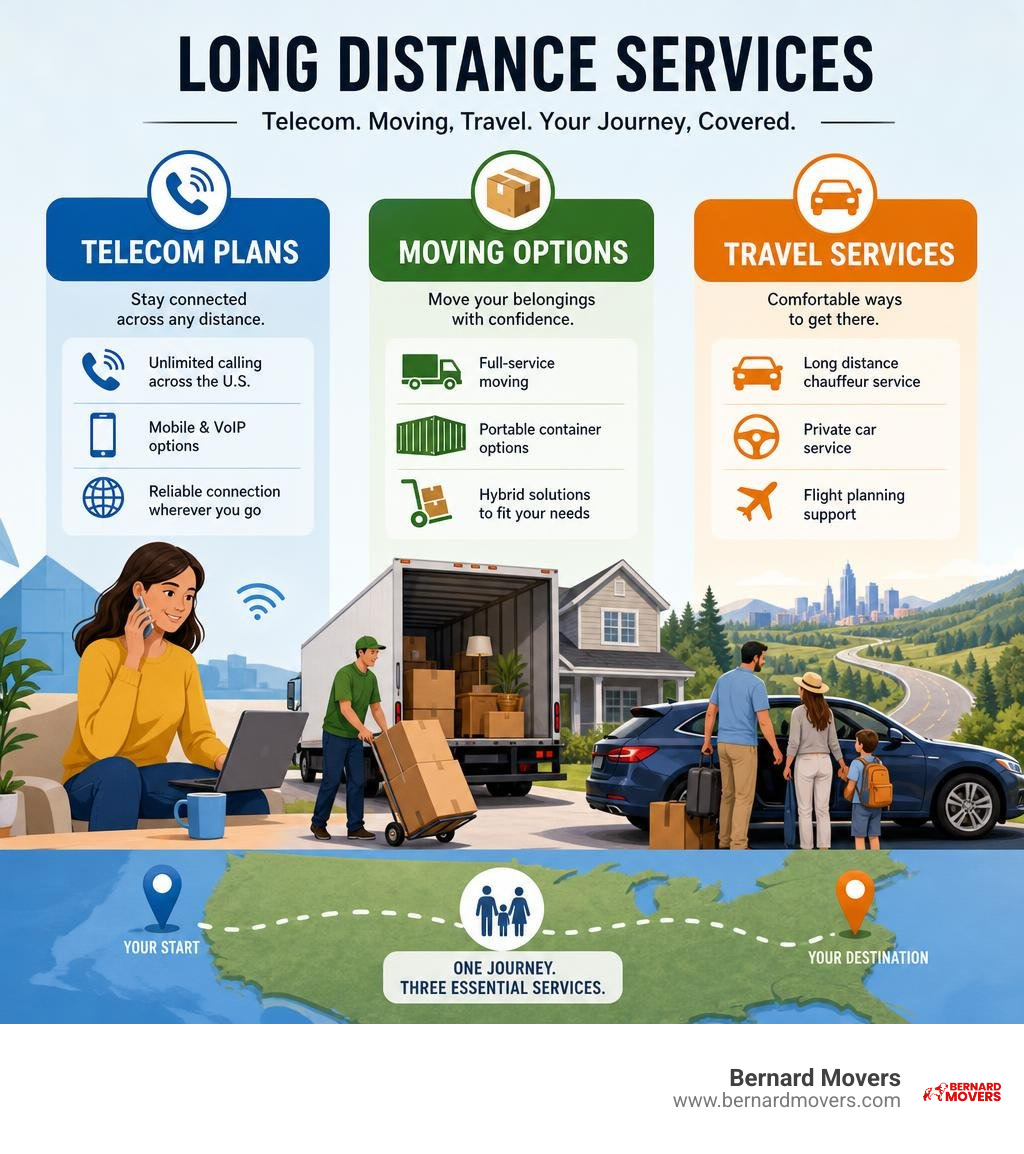
Long distance services cover two very different worlds: telecommunications (phone calls across state lines or borders) and physical transport (moving your belongings or yourself across the country).
Here’s a quick breakdown to match your situation:
| Your Need | Type of Long Distance Service |
|---|---|
| Make calls outside your local area | Telecom long distance (landline, VoIP, prepaid) |
| Move belongings to another state | Long distance moving company |
| Travel city-to-city without flying | Long distance chauffeur or car service |
| Relocate across the country | Full-service or hybrid moving company |
If you’re planning a move from Chicago or Illinois to another state — like Emily, who’s relocating her family from Chicago to Florida — you’re likely dealing with all three of these at once: setting up new phone service, transporting your household, and figuring out travel logistics.
Long distance has come a long way. The first direct-dial long distance call in North America connected in just 18 seconds back in 1951. Today, you can make unlimited calls to anywhere in the U.S. for under $10 a month, and move an entire household across the country with options ranging from full-service movers to portable containers to hybrid services.
But more choices means more decisions — and more ways to overpay or get caught off guard by hidden fees.
This guide breaks it all down so you can make confident choices, whether you’re comparing phone plans, vetting movers, or deciding whether to drive or fly.
Long distance services terms you need:
Navigating Telecom and Travel Long Distance Services
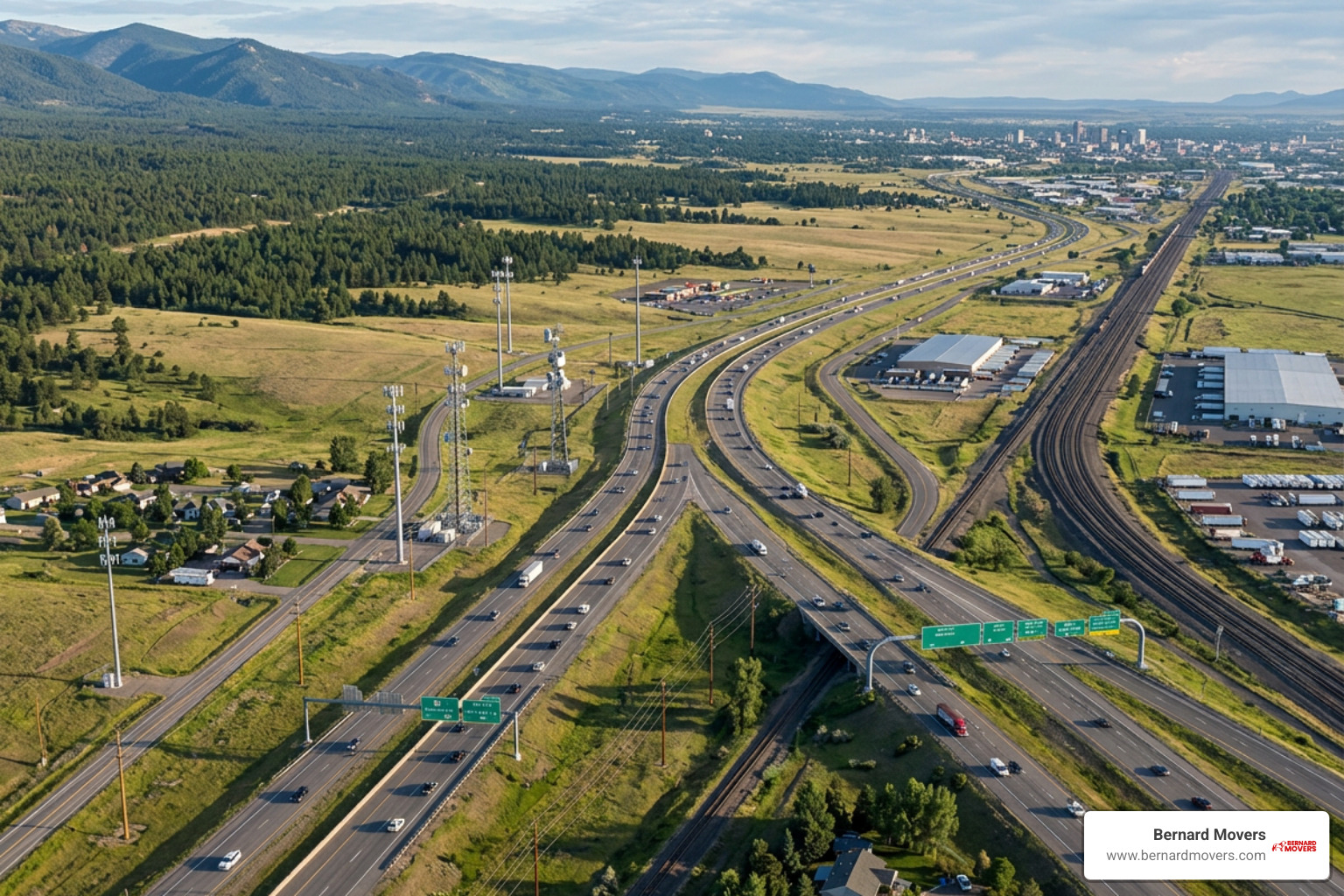
When we talk about navigating long distance services in July 2026, the lines between physical distance and logical distance often blur. Whether you are dialing a relative three states over from your home in Melrose Park, IL, or coordinating a physical relocation from Des Plaines to the East Coast, the primary goal remains the same: reliable, high-quality connection without budget-busting surprises.
To help you visualize your options, we have compiled a comparison table that highlights the primary differences between communication and physical transit solutions:
| Service Category | Typical Pricing Structure | Key Considerations | Best For |
|---|---|---|---|
| VoIP / Digital Telecom | Flat monthly fee ($6.25 – $20) | Requires stable internet connection | Frequent residential calling |
| Traditional Landline Telecom | Per-minute (2.7¢ – 10¢) + monthly fees | Surcharges, carrier recovery fees | Back-up home connectivity |
| Long Distance Moving | Flat-rate based on inventory and distance | Loading labor, transit times, insurance | Complete household relocation |
| Chauffeur / Car Services | All-inclusive flat rate (fuel and tolls included) | DOT rest regulations for drivers | City-to-city business or comfort travel |
Demystifying Telecom Long Distance Services
What exactly constitutes a long distance call today? Historically, any call placed outside your immediate local exchange was billed at a premium. In the United States, these boundaries are governed by Local Access and Transport Areas (LATAs). Calls within a LATA are “intra-LATA” (which can still be long distance), while calls crossing LATA boundaries or state lines are “inter-LATA” or interstate calls.
If you maintain a traditional analog landline in Elmhurst, IL or Franklin Park, IL, you have several plan structures to choose from:
- Unlimited Plans: Ideal for high-volume callers, bundling nationwide calling into a single flat monthly rate.
- Per-Minute Plans: Perfect for infrequent callers, with rates starting as low as 2.7 to 3.25 cents per minute.
- International Plans: Tailored for calling overseas, utilizing fiber-optic networks to deliver crystal-clear audio.
However, the true cost of these plans often hides in the fine print. When reviewing your monthly bill, you may encounter several regulatory and administrative fees:
- Federal Subscriber Line Charge: A flat fee collected to support the local network infrastructure.
- Universal Service Fund (USF) Fee: A variable fee that helps fund telecom access for low-income consumers and rural schools.
- In-State Recovery Fees: Often averaging around $1.95 per month.
- Minimum Usage Fees: Charges ranging from $0.30 to over $7.00 if you do not make a minimum threshold of calls.
For those looking to bypass traditional carrier restrictions, several excellent alternatives exist. Prepaid calling cards offer predictable expenses, though you must watch out for connection fees and maintenance charges. “Dial-around” codes (such as 10-10 numbers) allow you to bypass your primary carrier for individual calls, though they often carry hidden three-minute minimums.
By far the most cost-effective modern alternative is Voice over Internet Protocol (VoIP). Using your broadband internet connection, VoIP providers can offer unlimited calling across the U.S. and Canada for under $10 a month. For local communication alternatives and municipal transit programs, you can also consult the Transportation Resources in Wood Dale page to see how local infrastructure supports regional connectivity.
How to Switch and Compare Telecom Providers
Switching your long distance carrier is a straightforward process, but it requires a bit of consumer vigilance. Thanks to equal access regulations, you have the right to select any long distance provider that services your local exchange area.
To successfully transition your service, follow these steps:
- Identify Your Current Provider: If you are unsure who handles your long distance calls, simply dial 1-700-555-4141 from your landline. An automated message will state the name of your current carrier.
- Shop and Compare: Request written price lists from prospective providers. Look closely at their billing increments (e.g., 6-second vs. 60-second rounding) and hidden administrative surcharges.
- Initiate the Switch: Contact your new provider. They will coordinate the transition with your local telephone company. This process typically takes less than a week.
- Confirm Cancellation: To prevent duplicate billing, always contact your previous carrier directly to confirm they have stopped billing your account.
- Protect Your Line: Ask your local provider to place a “PIC freeze” (Primary Interexchange Carrier freeze) on your account. This prevents unauthorized carriers from switching your service without your explicit consent—a deceptive practice known as “slamming.”
Comparing Travel and Relocation Long Distance Services
Just as digital communication requires careful routing, physical relocation requires strategic planning. If you are preparing to move out of Illinois, you are likely comparing different methods for transporting your household goods.
Traditional long distance moving involves hiring professional movers who handle the heavy lifting, loading, and driving across state lines. This is vastly different from local moving, where rates are typically hourly. For interstate moves, reputable companies offer flat-rate pricing based on a detailed inventory of your belongings, ensuring complete cost transparency.
To understand what goes into these rates, you can read our comprehensive Long Distance Movers Cost Guide or learn more about how we structure our services by visiting our page on Professional Movers Long Distance.
For physical travel between cities, you might also compare hiring a long distance chauffeur service versus flying. For trips under 8 hours of total driving time, a dedicated car service is highly competitive with commercial aviation. When you account for driving to O’Hare, navigating security, waiting for layovers, and coordinating ground transit at your destination, a door-to-door chauffeur service is often faster, more comfortable, and highly productive for business travelers.
If you are simply planning a local trip before your big move, such as figuring out How to get from Melrose Park to Chicago, rideshare and local car services are highly accessible. For premium, cross-border ground travel, regional options like the Interstate Service in Chicago provide high-end, comfortable alternatives to regional flights.
When planning a cross-country move, it is also crucial to understand the regulatory framework that protects you as a consumer. The Federal Motor Carrier Safety Administration (FMCSA) regulates all interstate moving companies. Before signing any contract, verify that your chosen mover has an active USDOT number and a valid MC (Motor Carrier) license. Reputable long distance moving services are legally required to provide you with a copy of the “Your Rights and Responsibilities When You Move” booklet, which outlines liability options, claim procedures, and dispute resolution programs. Understanding these protections ensures that your physical transition is as secure and transparent as your digital communications.

Conclusion: Making the Right Connection for Your Next Move
Whether you are optimizing your home telecom setup or coordinating a major relocation, choosing the right long distance services requires a clear understanding of your personal usage patterns, hidden fees, and service boundaries.
At Bernard Movers, we specialize in taking the stress out of physical long distance transitions. We serve Chicago, Melrose Park, Des Plaines, Franklin Park, Elmhurst, Wood Dale, and the surrounding suburbs with reliable, fully licensed, and insured moving solutions.
If Georgia or Florida is your ultimate destination, we have an exclusive offer to make your transition even more affordable: we are proud to offer a 20% additional discount on moves to Georgia and Florida booked for delivery by March 15, 2025.
Ready to make your next big move seamless and cost-effective? Explore our Affordable Moving Local and Long Distance Moving Services today to request your customized relocation estimate.