

What Are Interstate Moving Experts — and Do You Need One?
Interstate moving experts are licensed, federally regulated moving professionals who specialize in relocating households and businesses across state lines. If you’re moving from Illinois to Florida — or anywhere outside your home state — here’s what you need to know fast:
Quick answers for people relocating out of state:
- What qualifies as an interstate move? Any move that crosses a state border, regulated by the Federal Motor Carrier Safety Administration (FMCSA).
- How do you verify a legitimate mover? Look for a valid U.S. DOT number and FMCSA MC number. Check Google, Yelp, and the BBB for reviews.
- How much does it cost? The average interstate move runs around $4,500 for a 7-room home traveling 1,000 miles. Larger homes or longer distances cost more.
- How long does it take? Most moves complete in 2–14 days, depending on distance, weather, and route.
- What insurance is required? Movers must offer at minimum $0.60 per pound per item. Full-value protection is strongly recommended.
Moving your family from Chicago to another state is a big deal. It’s not just loading boxes onto a truck. It involves federal regulations, binding contracts, insurance decisions, and coordinating a move across hundreds — sometimes thousands — of miles.
And the stakes are high. The wrong mover can hold your belongings hostage, inflate prices after loading, or simply disappear.
That’s not an exaggeration. Rogue movers and bait-and-switch schemes are real problems in the long-distance moving industry. Unlike local moves, which are governed by state rules, interstate moves fall under federal law — which actually gives you stronger, more standardized consumer protections when you work with a properly licensed carrier.
The good news? Knowing what to look for makes all the difference. This guide walks you through everything — from verifying credentials and understanding costs, to packing timelines and choosing the right mover for your Illinois relocation.
Quick interstate moving experts terms:
Why You Need Certified Interstate Moving Experts
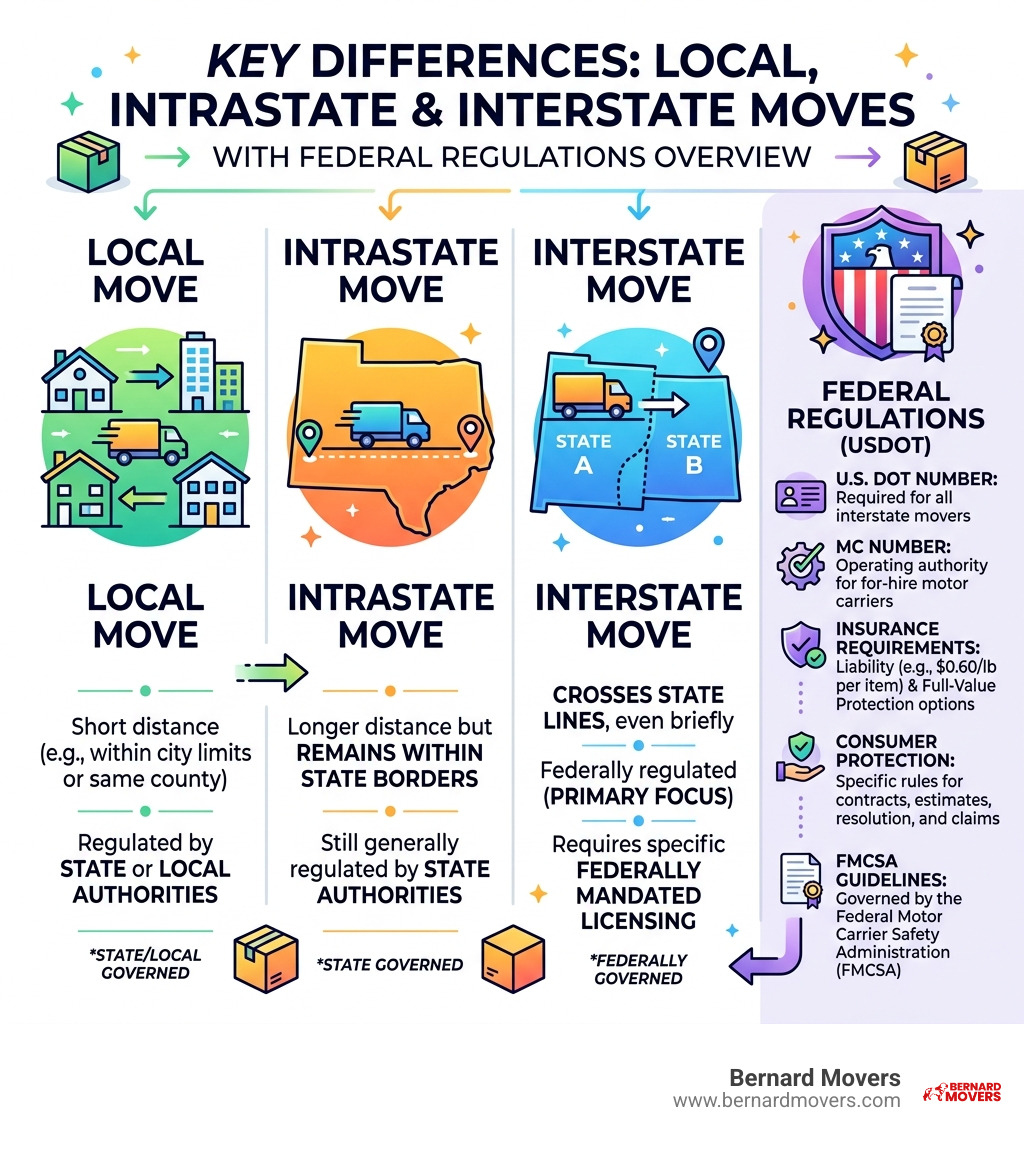
When you are moving within the Chicago city limits or even from Melrose Park to Des Plaines, you are dealing with a local or intrastate move. These are relatively straightforward and governed by state-level commerce commissions. But the moment that truck tires hit the border of Indiana, Wisconsin, or Iowa, the game changes completely.
Interstate moves are governed by strict federal laws designed to protect you from fraud and negligence. These laws ensure that the company you hire has the financial backing, safety record, and legal authority to transport your life across the country. Working with certified interstate moving experts means you aren’t just hiring “guys with a van”; you’re hiring a regulated motor carrier that must adhere to rigorous safety standards and insurance requirements.
For more detailed insights, you can explore our resources on interstate removals and storage and the complexities of moving companies across state lines.
Understanding Federal Regulations and Licensing Requirements
To legally operate, any company moving household goods across state lines must be registered with the Federal Motor Carrier Safety Administration (FMCSA). This isn’t optional—it’s the law. The FMCSA oversees the entire industry to ensure carriers are operating safely and ethically.
- U.S. DOT Number: This is a unique identifier used for monitoring a company’s safety record, inspections, and compliance. It allows the government to track accident history and safety violations.
- MC Number (Operating Authority): This proves the company has the legal right to transport goods for payment across state borders. Without an active MC number, a mover is operating illegally.
- The “Rights and Responsibilities” Booklet: Federal law requires movers to provide you with a copy of the “Your Rights and Responsibilities When You Move” booklet. This document is your primary resource for understanding the claims process and your legal protections.
- Illinois Requirements: While federal law takes the lead on interstate moves, companies based in our area, like those in Wood Dale or Elmhurst, must also comply with the Illinois Department of Transportation (IDOT) for their local operations.
Before you sign anything, ask for these numbers. You can verify them on the FMCSA’s Protect Your Move website. If a company “forgets” their DOT number or claims they don’t need one because they are a “broker,” proceed with extreme caution. Brokers don’t actually own trucks; they sell your move to the lowest bidder, which can lead to major headaches regarding accountability and pricing.
How Interstate Moving Experts Prevent Scams
We’ve all heard the horror stories: a mover gives a low quote over the phone, loads the truck, and then demands double the price before they’ll unload. This is a classic “bait-and-switch” scam that targets unsuspecting families during a vulnerable time.
True interstate moving experts prevent this by providing clear, written estimates based on a physical or virtual survey of your home. There are two main types of estimates you should look for:
- Binding Estimate: This guarantees the total cost of the move based on the items listed. If the weight is higher than estimated, you still pay the agreed price.
- Binding Not-to-Exceed: This ensures you won’t pay more than the estimate, but if your shipment weighs less than expected, you pay the lower amount. This is generally the most consumer-friendly option.
To avoid scams, look for these red flags:
- The “Sight-Unseen” Quote: If a company refuses to do a virtual or in-home survey of your belongings, their quote isn’t worth the paper it’s printed on. They cannot accurately estimate weight without seeing the items.
- Large Upfront Deposits: While small booking fees are common, reputable movers shouldn’t ask for a massive cash deposit (often 50% or more) before the truck even arrives.
- Generic Branding: If the truck that shows up is a rental with a magnetic sign (or no sign at all), that’s a major warning sign that you might be dealing with an unlicensed subcontractor.
By working with professional movers state to state, you ensure that your inventory is verified and your price is protected by federal consumer rights.

Insurance and Valuation Options for Your Goods
One of the biggest misconceptions in moving is the word “insurance.” In the moving industry, it’s actually called valuation. Under federal law, interstate movers must provide two distinct options for protecting your shipment:
- Released Value Protection (Basic): This is included at no extra cost. However, it only covers $0.60 per pound per article. If your 100-pound OLED TV is smashed, you get $60. That’s barely enough for a fancy dinner, let alone a new TV. This is the minimum legal requirement but offers very little real-world protection.
- Full Value Protection (Recommended): This is the more comprehensive option. If an item is lost or damaged, the mover must either repair it, replace it with a similar item, or offer a cash settlement for the current market value. While this has an upfront cost, it provides significant peace of mind.
When moving out of state, we always recommend documenting your high-value inventory. Take photos of electronics, antiques, and furniture before the movers arrive. If you need to file a claim, federal law gives you a nine-month window from the date of delivery to do so. Don’t wait—inspect your boxes as they come off the truck and note any visible damage on the Bill of Lading immediately.
Mastering the Logistics of Your Illinois Relocation
Relocating from the Chicago area—whether you’re in the bustling heart of the city or a quiet suburb like Northbrook or Glencoe—requires a logistical master plan. You aren’t just moving down the street; you’re navigating interstates, varying weather patterns, and tight delivery windows. The complexity of a cross-country move means that every detail, from the size of the truck to the route taken, must be calculated with precision.
Planning should start at least 8 to 12 weeks before your desired move date. This gives you time to declutter, research interstate moving company rates, and secure your spot on a moving truck. During peak season (May through September), trucks fill up fast, so early booking is essential to get your preferred dates.
Calculating the Cost of Moving Out of State
How do interstate moving experts come up with those numbers? It’s not a guessing game. The cost is primarily determined by two factors: Weight and Distance. However, there are several other variables that can influence the final price.
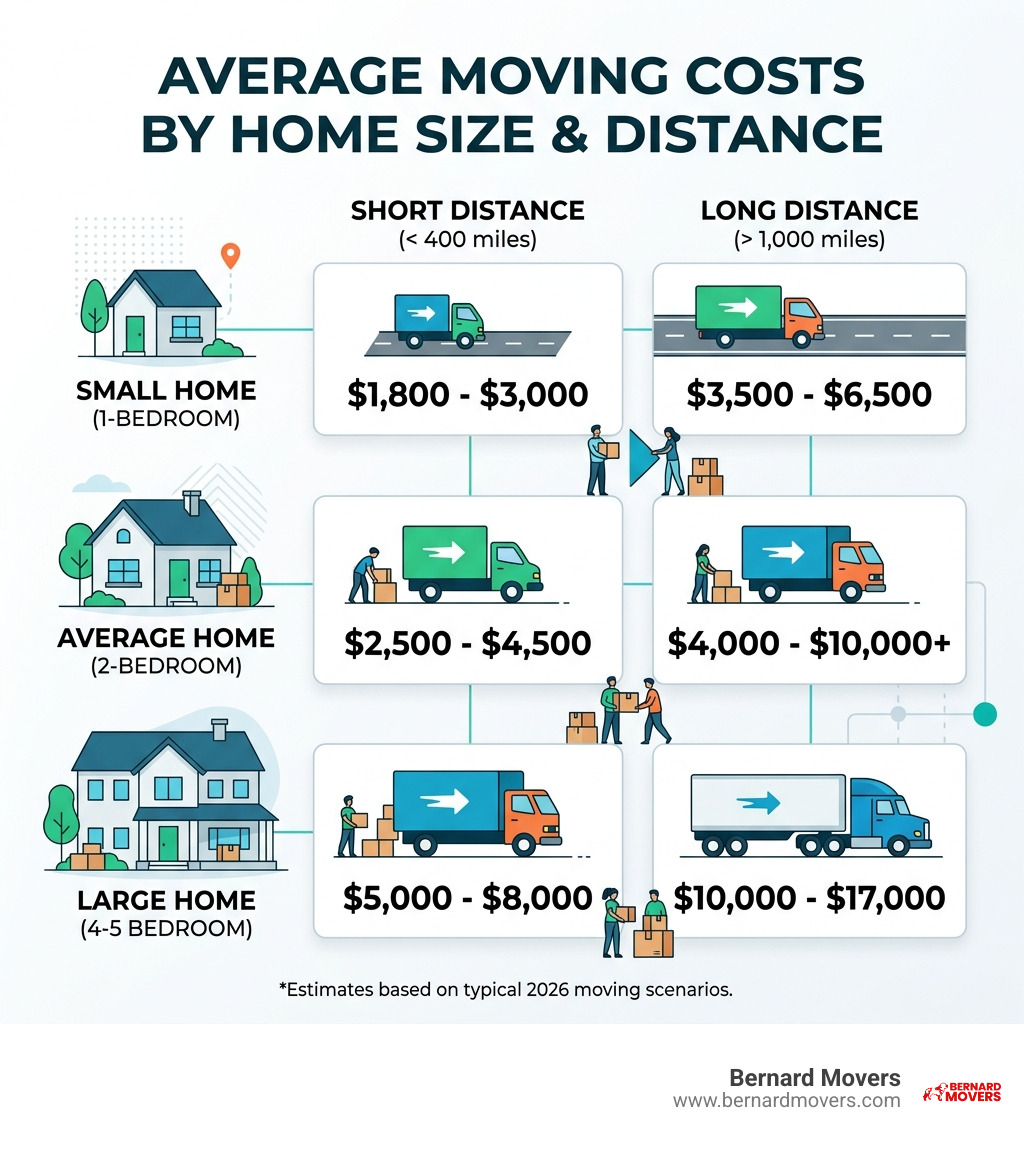
- The 7,000 lbs Rule: The average interstate move is based on a weight of approximately 7,000 lbs (roughly 7 rooms) traveling 1,000 miles.
- Typical Price Ranges:
- A 2-bedroom move across 1,500 miles often ranges from $4,000 to $10,000+.
- For larger 4-5 bedroom homes, expect to budget between $10,000 and $17,000.
- Small moves (1-bedroom) under 400 miles can start as low as $1,800 to $3,000.
- Accessorial Charges: These are fees for additional services. If you live in a Chicago high-rise with a long walk to the elevator, or if a semi-truck cannot fit down your narrow street (requiring a smaller “shuttle” truck), you will see these charges on your estimate. Always ask about “long carry” or “stair” fees upfront.
- Seasonal Fluctuations: Moving in the dead of a Chicago winter might be cheaper, but it comes with weather risks. Summer moves are more expensive due to high demand.
To find the most affordable way to move long distance, consider downsizing before the movers arrive. If you haven’t used that treadmill since the 2024 Olympics, don’t pay to ship it to Georgia! Every pound you remove from the inventory directly lowers your bottom line.
Timelines and Delivery Expectations
One of the most common questions we get in Skokie and Evanston is: “When will my stuff get there?”
Unlike a local move where everything happens in one day, interstate moves involve a delivery window. Because moving trucks are huge, they often carry shipments for multiple families heading in the same direction to keep costs lower for everyone.
- Typical Duration: Most interstate moves take between 2 and 14 business days.
- Factors Affecting Time: Distance is obvious, but weather (especially Chicago winters!), traffic patterns, and the driver’s federally mandated rest hours also play a role. Drivers are limited by “Hours of Service” regulations to ensure they stay alert and safe on the road.
- Tracking: Reputable movers now offer GPS monitoring so you can see exactly where your life-in-a-truck is located at any given moment. This transparency helps reduce the stress of the waiting period.
For a deeper dive into what to expect, check out our interstate moving companies ultimate guide.
Why Chicago Residents Trust Local Interstate Moving Experts
We know the Chicago suburbs like the back of our hand. Whether we are navigating the narrow streets of Wilmette or coordinating a large-scale pack-out in Mount Prospect, our local expertise matters. We understand the logistical hurdles of the Windy City, from securing parking permits for the North Side to managing the timing of the Kennedy Expressway traffic.
Choosing a mover with deep roots in the Melrose Park and Des Plaines area means you get a team that understands the specific challenges of Illinois relocations—from city parking permits to the “Lake Effect” snow that can pop up unexpectedly. We don’t just see a map; we see the neighborhoods we’ve served for years.
At Bernard Movers, we pride ourselves on being more than just a service; we are your neighbors. We’ve helped thousands of families transition from the North Shore and Western Suburbs to new lives across the country. Our team of professional packers and movers handles every item with the care it deserves, ensuring your cross-country journey starts on the right foot. We treat your heirloom furniture and your children’s toys with the same level of respect, knowing that we are carrying your home, not just your boxes.
Preparing for the Big Day: A Step-by-Step Guide
By April 2026, you should be well on your way to your new destination. But the weeks leading up to the move are where the real work happens. Here is how the pros prepare:
8 Weeks Out: The Great Purge
Go through every closet in your Morton Grove or Glenview home. If you don’t love it or use it, sell it, donate it, or toss it. Remember: weight equals money in an interstate move.
6 Weeks Out: Secure Your Mover
Get at least three written estimates. Ensure they are from companies with physical offices in the Chicago area, like Melrose Park or Wood Dale. This ensures accountability.
4 Weeks Out: Start Packing the Non-Essentials
Books, off-season clothes, and that fine china you only use for Thanksgiving can all go into boxes now. If you’re using our packing services, this is when we coordinate the delivery of high-quality materials to your home.
2 Weeks Out: The Essentials Bag
Pack a suitcase for every family member. It should contain enough clothes, toiletries, and medications for at least two weeks. Your truck might take 14 days to arrive!
Moving Day: The Final Walkthrough
Before the truck pulls away from your home in Park Ridge or Franklin Park, do a final sweep. Check the attic, the basement, and behind the water heater. Once that Bill of Lading is signed, the journey officially begins.
Frequently Asked Questions About Interstate Moving
Q: Can I move my car with my household goods? A: Yes! Many interstate moving experts offer vehicle transport. Your car can either be loaded onto the same trailer as your furniture or transported via a specialized auto carrier.
Q: What items are “non-allowables”? A: Federal law and safety regulations prevent movers from carrying hazardous materials. This includes propane tanks, aerosol cans, ammunition, and flammable liquids. Most movers also suggest you carry “high-value items” like jewelry, passports, and birth certificates with you personally.
Q: What if my new home isn’t ready when the truck arrives? A: This happens more often than you’d think. Reputable movers offer storage-in-transit (SIT). Your goods will be kept in a secure, climate-controlled warehouse until you are ready for final delivery.
Q: How do I handle utilities when moving out of state? A: We recommend scheduling your Chicago-area utilities to be turned off the day after you move out, and your new utilities to be turned on the day before you arrive. You don’t want to be loading a truck in a Melrose Park July heatwave without the AC running!
Conclusion: Your Journey Starts Here
Moving across state lines is one of life’s biggest transitions. It’s the end of one chapter and the exciting beginning of another. While the logistics can seem overwhelming, you don’t have to do it alone.
By choosing certified interstate moving experts, you are investing in peace of mind. You are ensuring that your belongings are protected by federal law, handled by professionals, and delivered with care. Whether you are moving from the quiet streets of Winnetka to the sunny coasts of Florida or from a Skokie apartment to a Texas ranch, the right preparation makes all the difference.
Ready to start your journey? Don’t let the state lines give you lines. Plan early, verify your mover’s credentials, and get ready for your next great adventure.
Bernard Movers Service Areas: We proudly serve the following Illinois locations: Chicago, Melrose Park, Des Plaines, Franklin Park, Park Ridge, Elmhurst, Wood Dale, Wilmette, Skokie, Morton Grove, Glenview, Mount Prospect, Evanston, Winnetka, Glencoe, Northfield, and Northbrook.
Note: Bernard Movers does not offer free services. All estimates are based on weight, distance, and requested service levels to ensure the highest quality of care for your relocation.