

What Does a Moving Service Price Estimate Actually Cost in 2026?
As we navigate the economic landscape of 2026, a moving service price estimate in Illinois typically ranges from $300 to $7,000+. This wide variance depends heavily on whether you’re executing a quick local relocation within the Chicago city limits or embarking on a complex long-distance journey to a southern state like Florida. Understanding these numbers early in your planning phase is the most effective way to mitigate the stress of relocation.
Here’s a comprehensive breakdown to help you establish a realistic budget quickly:
| Move Type | Home Size | Estimated Cost Range (2026) |
|---|---|---|
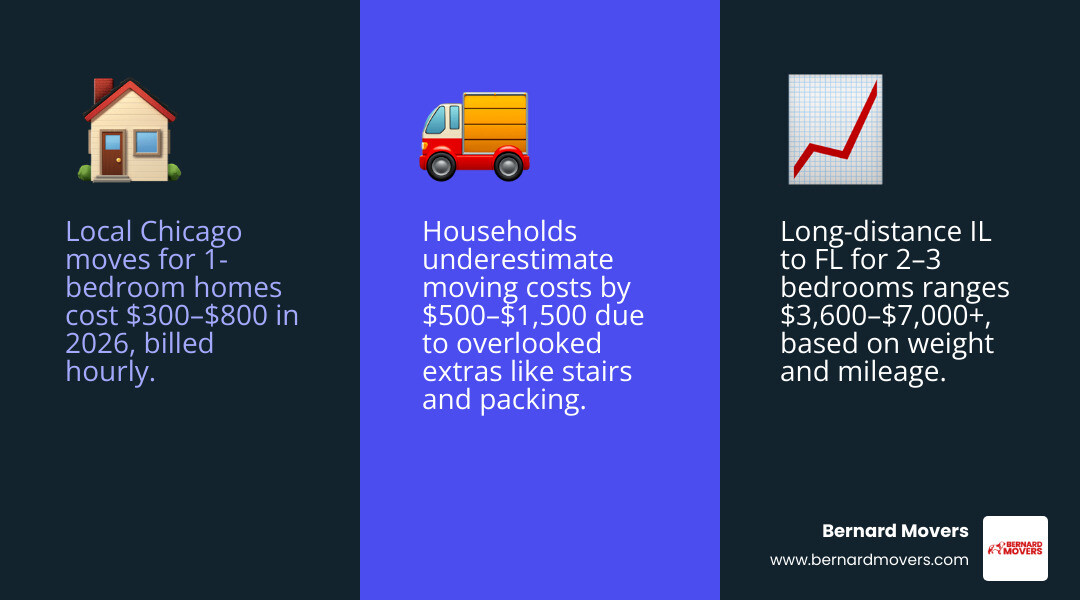
| Local (Chicago area) | 1-bedroom | $300 – $800 |
| Local (Chicago area) | 2-bedroom | $750 – $1,450 |
| Local (Chicago area) | 3-bedroom | $1,750 – $2,550 |
| Local (Chicago area) | 4-bedroom | $2,050 – $2,750 |
| Long-distance (IL to FL) | 2–3 bedrooms | $3,600 – $7,000+ |
| Cross-border (US to Canada) | Any size | $4,500 – $10,000 |
Note: These costs reflect 2026 market estimates. Local moves are typically billed via hourly labor rates, whereas long-distance moves are priced based on total shipment weight and total mileage.
Planning a move is a significant life event that is often stressful enough without the added anxiety of surprise costs appearing on your final invoice. Whether you’re relocating your family across the diverse neighborhoods of Chicago, moving out of the quiet suburbs of Melrose Park, or heading all the way down to the sunshine of Florida, the primary question remains: “How much is this actually going to cost me?”
The honest answer is that it depends on several logistical variables, but it doesn’t have to be a mystery. Moving costs follow predictable patterns based on three core factors: the distance of the move, the volume of items being transported, and the specific timing of your relocation.
Industry data shows that the average household actually underestimates their total moving costs by anywhere from $500 to $1,500. This financial gap usually stems from overlooking “add-on” expenses such as stair fees, professional packing services, fuel surcharges, and temporary storage needs. For those moving across state lines, it is highly recommended to review the FMCSA’s consumer protection resources to understand how estimates are regulated at the federal level and what your rights are as a consumer.
This guide is designed to break down every factor that shapes your moving estimate, allowing you to budget with total confidence and avoid the common pitfalls of the relocation process.
Simple guide to moving service price estimate:
- average cost to move a 3 bedroom house long-distance
- get moving quotes online
- moving company estimates
Understanding Your Moving Service Price Estimate
When you first reach out to a professional relocation team, the document they provide isn’t just a random figure. It is a carefully calculated moving service price estimate built on historical data and current labor trends. In 2026, accuracy in quoting is higher than ever thanks to advanced digital inventory tools and virtual walkthroughs, but you still need to understand the legal implications of the quote you are signing.
Not all estimates are created equal. Depending on the company’s policies and the complexity of your specific move, you might encounter one of three primary estimate types:
- Binding Estimates: This is a “what you see is what you get” price. If the quote states $2,000, you pay exactly $2,000, provided your inventory does not change between the quote and moving day. It offers the most financial peace of mind but usually requires a very detailed, line-item inventory check beforehand.
- Non-Binding Quotes: These are essentially an “educated guess” based on the mover’s initial assessment. The final price is determined by the actual weight of your belongings and the total hours worked. While the initial number might look lower and more attractive, it can fluctuate. By federal law, most movers can only charge you up to 110% of this estimate upon delivery, with any remaining balance billed 30 days later.
- Not-to-Exceed Estimates: Often referred to as a “guaranteed price,” this is widely considered the gold standard for consumers. It ensures you won’t pay a penny more than the estimate, but if your shipment weighs less than the initial projection, you actually pay less than the quoted price.
For those moving within the greater Chicago area—from Skokie to Melrose Park or Evanston—most quotes are based on hourly rates. However, for those crossing state lines or heading north into Canada, weight-based pricing (known as linehaul) becomes the primary metric for the estimate.
Local Moving Service Price Estimate in Chicago
If you are staying within the Illinois borders, specifically moving between suburbs like Franklin Park, Park Ridge, or Wilmette, your moving service price estimate will likely be billed by the hour. This covers the labor of the crew and the use of the specialized moving truck.
In 2026, the standard hourly rate for a professional team of two movers and a fully equipped truck in the Chicago area ranges from $120 to $150 per hour during peak times (weekends and summer months), and slightly less during the winter “low season.”
Here is how the math usually works out for local relocations in the Chicagoland area:
- 1-Bedroom Apartment: Typically takes 3 to 5 hours of labor. With two movers, you are looking at a base cost of $360 to $750, plus a one-time truck/travel fee (usually $100–$250).
- 2-Bedroom Home: Usually requires 3 movers and takes 5 to 7 hours. This brings the estimate to roughly $750 to $1,450.
- 3-Bedroom House: Often requires 4 movers and 7 to 10 hours of labor, landing between $1,750 and $2,550.
We often see clients in Melrose Park or Elmhurst surprised by the “travel fee.” It is important to understand that this isn’t just a charge for gasoline; it covers the labor time it takes for the crew to get from our facility to your home and back again at the end of the day. When you check How Much Do Movers Cost In Chicago/, you’ll see that transparency in these fees is what separates the professional operations from the “guy with a van” services.
For residents in the western suburbs, checking our Melrose Park Moving Company Services can give you a more localized look at how we handle the specific logistics of these neighborhoods, from narrow residential driveways to local parking regulations and permit requirements.
Long-Distance and Interprovincial Moving Service Price Estimate
Long-distance moves—defined as anything over 400 miles—are a different logistical beast entirely. If you are moving from Mount Prospect to Georgia or from Northbrook to Florida, your moving service price estimate is calculated using “Linehaul” costs rather than simple hourly labor.
Linehaul costs are determined by three primary factors:
- The total weight of your shipment: Measured in pounds or sometimes cubic feet for smaller loads.
- The distance (mileage): The literal road miles between your old front door and the new destination.
- Fuel surcharges: These are dynamic and fluctuate based on real-time diesel prices. In early 2026, fuel surcharges can account for 15-20% of your total bill.
For those looking at Long Distance Movers Cost Guide/, you’ll find that the average 2-bedroom move across the country costs about $4,000 to $6,000. If you are moving cross-border into Canada—say, Chicago to Toronto—expect to pay between $4,500 and $10,000. This higher price tag accounts for the complex customs paperwork, border fees, and the specialized labor required to ensure your items clear the border without being held in a warehouse for weeks.
When reviewing Interstate Moving Company Rates/, always ask if the price includes “Full Value Protection.” This is the valuation coverage that covers the actual replacement value of your items, rather than just the state-mandated minimum of 60 cents per pound (which wouldn’t even cover the cost of a new toaster if your $2,000 TV breaks during transit).
Factors Influencing Your Total Quote
Why does one 2-bedroom apartment cost $800 to move while another seemingly identical one costs $1,200? The devil is in the logistical details. Your moving service price estimate is influenced by several “hidden” variables that we always look for during an initial consultation.
- Home Size and Density: It’s not just about the number of rooms; it’s about the density of the items. A minimalist studio is a breeze, but a 1-bedroom condo filled with floor-to-ceiling bookshelves and heavy mahogany furniture will require significantly more “man-hours” to pack and load safely.
- Seasonality (The Peak Season Tax): Over 60% of moves happen between May and September. If you move in July, you might pay 30-40% more than you would in February. If you can, aim for the “Optimal Timeframes” of April 10–25 or September 15–October 31 for the best rates.
- Accessibility and “Long Carries”: If our truck can’t park within 75 feet of your door, or if you live in a high-rise in Evanston with a small elevator, the move takes longer. Movers call this a “long carry” fee, and it is billed to account for the extra physical labor involved.
- Stairs: Every flight of stairs adds time and physical risk. In Chicago brownstones, narrow stairwells can significantly increase labor costs as items must be maneuvered with extreme care.
For apartment dwellers, our Apartment Movers Cost Guide 2026/ is a must-read. It covers the specific challenges of city living, like reserving freight elevators and obtaining parking permits. To get a head start, you can use our Chicago Moving Cost Calculator to plug in your specific zip codes and home size for a more tailored look at the numbers.
Budgeting for Additional Fees and Specialty Items

A common mistake we see is people budgeting only for the labor and the truck. But a comprehensive moving service price estimate often includes “add-on” services that make the difference between a nightmare move and a smooth transition. In 2026, full-service moves are more popular than ever as people prioritize their time and the safety of their belongings.
Hidden Costs: Packing, Insurance, and Storage
Packing is the most time-consuming part of any move. If you want us to handle it, we call this “Full-Service Packing.”
- Packing Labor: For a 3-bedroom home, professional packing usually adds $1,000 to $1,800 to your total bill. This includes the labor of expert packers who know how to secure fragile items.
- Packing Supplies: Boxes, tape, and bubble wrap aren’t cheap. A standard moving kit for a 2-bedroom apartment can easily cost $200–$400 if purchased through a moving company.
Then there is the question of where your stuff goes if your new home isn’t ready. Maybe you are moving from a large house in Winnetka to a smaller condo in the city and need to store some items temporarily.
- Storage Unit Pricing: A standard 10×10 unit in the Chicago area typically runs between $150 and $300 per month, depending on climate control. Check our guide on 10 By 10 Storage Unit Price/ for a deeper dive into monthly rates and security features.
When you request a Full Service Moving Cost Estimate/, we include all of this—packing, materials, and even short-term storage—so there are zero surprises when the final bill arrives.
Specialty Moves: Pianos and Heavy Equipment
Do you have a baby grand piano? A slate pool table? A 500-pound gun safe? These items cannot be moved by a standard crew without specialized equipment and training.
- Piano Moving: Moving an upright piano locally usually adds $200 to $500 to your estimate. If it’s a grand piano or requires a crane to get it out of a balcony, that cost can jump to $2,000+. You can find specific details in our Piano Moving Company Price/ guide.
- The “Crane” Factor: In some Northfield or Glencoe estates, we occasionally encounter furniture that simply won’t fit through the door. Hoisting or crane services are rare but can cost upwards of $3,000 for a single day’s work.
We always recommend checking our Upright Piano Moving Cost/ breakdown before you assume your standard movers can “just handle it.” These items require specific dollies, padding, and, most importantly, specialized insurance coverage.
Strategies to Reduce Your Final Bill
We know that moving is expensive. That is why we are always looking for ways to help our clients in the Chicago suburbs save a few bucks without sacrificing the quality of the move. The single best way to lower your moving service price estimate? Declutter.
Moving companies charge by weight or by the hour. If you haven’t used that treadmill in three years, don’t pay us to move it! Selling or donating heavy items before the move can save you hundreds of dollars. Another huge factor is timing. If you can avoid the last weekend of the month (when everyone’s lease is up) and the peak summer months, you will find much more flexible pricing.
The Bernard Movers Advantage: For those planning a major relocation, we have a special offer that can drastically change your budget. We are currently offering a 20% additional discount on moves to Georgia and Florida booked for delivery by March 15, 2025. Even if you are reading this in 2026, we frequently run similar regional promotions for popular routes out of Illinois. It’s always worth asking our consultants about current “lane discounts” for your specific destination.
To get started on your own budget, use our Cost Of Moving Home Calculator/ to see how much you can save by adjusting your move date or packing your own boxes. When you are ready for a formal walkthrough, you can request a detailed Moving Estimate/ from our team. Moving doesn’t have to be a financial mystery. By understanding the components of your moving service price estimate—from the hourly rates in Skokie to the linehaul costs to Florida—you can take control of your relocation and keep your hard-earned money where it belongs: in your pocket.