


Why a Detailed Corporate Office Moving Checklist Matters
A corporate office moving checklist is essential for a smooth, organized relocation that minimizes business disruption. Moving an office can be daunting, but without proper planning, you risk lost productivity, damaged equipment, and frustrated employees.
Quick Answer: Essential Components of a Corporate Office Moving Checklist
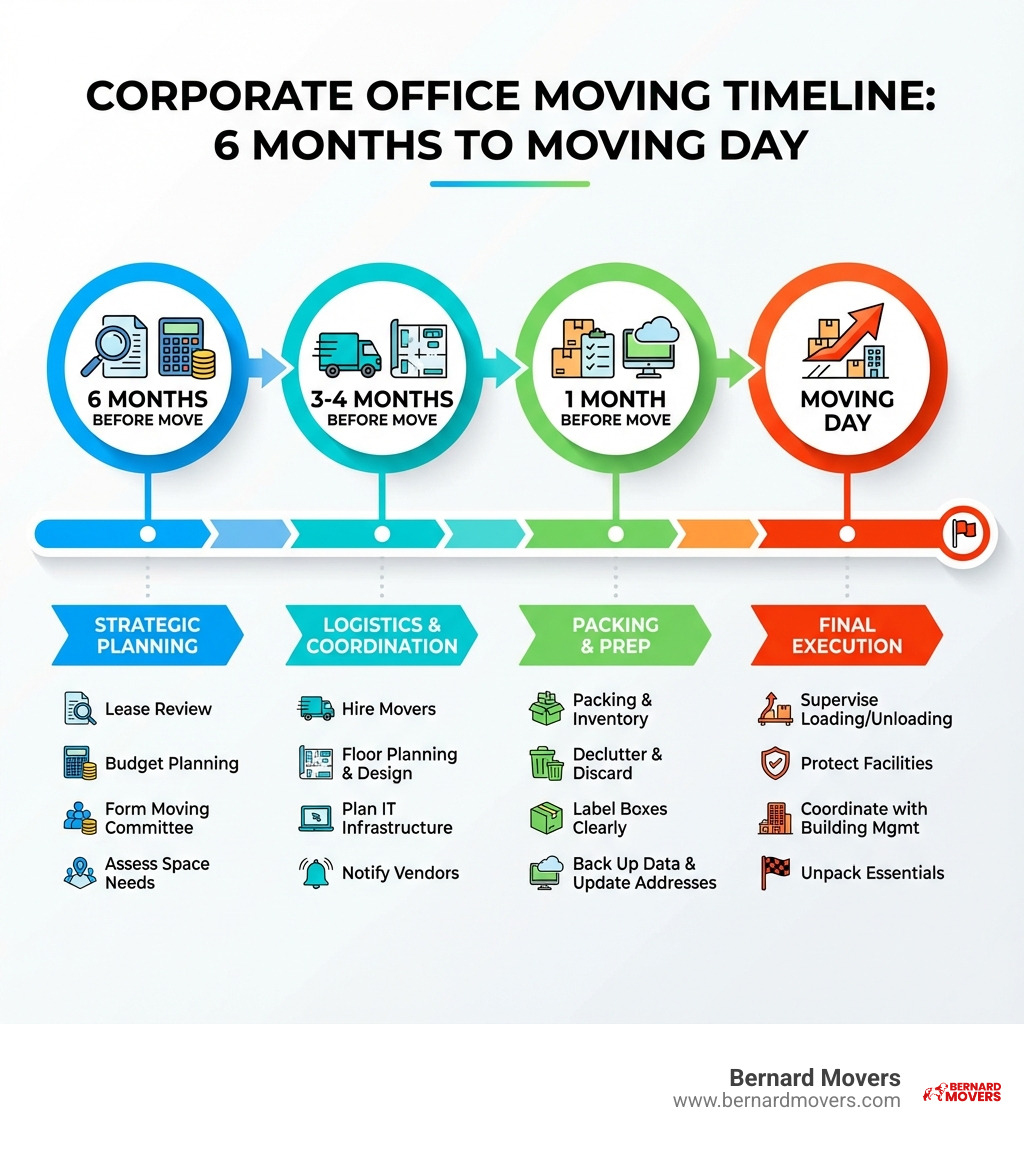
- Strategic Planning (6-12 months out) – Review lease, set budget, form moving committee, assess space needs
- Logistics & Coordination (2-4 months out) – Hire movers, plan IT infrastructure, create floor plans, notify vendors
- Packing & Prep (1 month – 1 week out) – Declutter, inventory items, label boxes, back up data, update addresses
- Moving Day Execution – Supervise loading/unloading, protect facilities, coordinate with building management
- Post-Move Setup – Unpack essentials, test IT systems, distribute access cards, celebrate success
Research shows that 35% of workers now work from home full-time, with another 23% working remotely part-time. This shift means your new office layout needs to accommodate hybrid work models while providing essential in-person collaboration spaces.
Planning ahead is critical. Commercial-grade office furniture alone can take seven to ten weeks from order to delivery and installation. Without a comprehensive checklist, these long lead times can derail your entire timeline.
I’m Mina Georgalas, owner of Bernard Movers. With nearly 30 years of experience helping businesses in Chicago, Melrose Park, and across Illinois execute successful office relocations, I know a well-structured corporate office moving checklist is the foundation of every smooth transition we facilitate.
The Ultimate Corporate Office Moving Checklist
Moving a corporate office is a strategic undertaking that impacts your entire organization. Our comprehensive corporate office moving checklist guides you through every stage, ensuring a well-orchestrated move with minimal disruption to your business in Chicago, Melrose Park, or anywhere in Illinois.
Phase 1: Strategic Planning (6-12 Months Out)
The earliest stages are the most critical for laying a solid foundation. This is where you define the “why” and “how” of your relocation, setting the stage for a smooth transition.
-
Define Your Relocation Goals: Clarify the objectives of your move. Are you expanding, downsizing, seeking a better location, or adapting to a hybrid work model? Your goals will inform every subsequent decision.
-
Review Your Current Lease Agreement: Carefully review your existing lease for terms regarding early termination, notice periods, and restoration requirements for your old space. Missing these details can lead to significant financial penalties.
-
Establish Your Moving Budget: A comprehensive budget is the backbone of a successful move. Account for all potential costs, including movers, supplies, new furniture, and tech upgrades. Include a contingency fund for unexpected issues. For a detailed breakdown, see Office Interiors’ guide on determining a budget for the move.
-
Form a Dedicated Moving Committee & Appoint a Project Manager: A dedicated team ensures accountability. Form a committee with representatives from key departments like IT, HR, and Facilities. Assigning an Office Relocation Project Manager provides a central point of contact and crucial oversight.
-
Assess Your Current and Future Space Needs: Analyze how your current space is used and project your needs for the new one. With 35% of workers now working from home full-time and 23% part-time, considering a hybrid work model is essential. Your new office design should accommodate both in-office collaboration and flexible remote work.
-
Begin the New Location Search: Based on your goals and space assessment, start scouting new office spaces. Consider factors like size, accessibility, parking, and amenities. For businesses in Chicago or other Illinois cities, local market knowledge is key.
-
Consider a Third-Party Move Management Consultant: For complex moves involving specialized equipment or a large workforce, a consultant can provide invaluable expertise and coordination.
Phase 2: Logistics & Coordination (2-4 Months Out)
With your strategic plan in place, this phase focuses on detailed logistics and coordinating with external partners.

-
Develop a New Office Floor Plan: Work with your team or a design firm to create a detailed floor plan. This plan dictates where everything goes, from workstations and meeting rooms to server racks, ensuring optimal flow and productivity.
-
Research and Hire Commercial Movers: Choosing the right moving partner is paramount. Get quotes from at least three reputable commercial moving companies. Verify their licenses, insurance, and experience with corporate relocations in your Illinois area. Our guide, A Practical Guide to Finding Reliable Commercial Movers, offers more insights. Look for companies that understand the complexities of Commercial Moving and can provide custom solutions.
-
Discuss and Secure Moving Insurance: Standard moving coverage ($0.60 per pound) is often insufficient for valuable office equipment. Discuss your needs with your mover to ensure adequate protection for your assets.
-
Plan Your IT Infrastructure Migration: Collaborate with your IT team on a comprehensive plan for data backup, server relocation, network setup, and system testing. Schedule the disconnection and reconnection of telecom and data services well in advance, accounting for potential lead times.
-
Order New Office Furniture and Technology: If your new space requires new furnishings, order them now. Commercial-grade office furniture can take seven to ten weeks to deliver. Proactive ordering avoids delays.
-
Notify Clients, Vendors, and Suppliers: To maintain business continuity, notify all external partners of your move well in advance. This includes suppliers, clients, and service providers. Update your vendor agreements accordingly.
-
Coordinate with Building Management (Both Locations): Contact building management at both your old and new locations in Chicago or your Illinois city to coordinate elevator reservations, loading dock access, and building rules. Obtain a Certificate of Liability Insurance (COI) if required.
-
Arrange for Essential Services: Schedule utilities (electricity, water, gas) for disconnection at the old office and connection at the new one. Arrange for phone and internet installation so your new space is operational from day one.
-
Plan for Specialized Equipment Moving: If your office has heavy or sensitive machinery, coordinate with your movers and specialized vendors. Other professionals may be needed for safe disconnection and reconnection, as movers are not electricians or plumbers.
Phase 3: Packing & Final Prep (1 Month – 1 Week Out)
The countdown intensifies! This phase is about meticulous organization, packing, and critical administrative updates.

-
Declutter and Inventory Your Office: This is the perfect time for a clean sweep. Encourage employees to clean their personal spaces while the office declutters. Dispose of outdated equipment, shred old documents, and donate unneeded items. Create a comprehensive inventory list of everything being moved.
-
Gather Packing Supplies: Ensure you have an ample supply of moving boxes, packing tape, bubble wrap, and markers. We can advise on the best types of packing materials for office items, including specialized boxes for files and electronics.
-
Implement a Clear Labeling System: To turn chaos into efficiency, use a color-coding system for different departments. Add clear labels indicating contents, destination room number, and employee name for personal items. This makes unpacking a breeze.
-
Communicate the Employee Packing Plan: Provide employees with clear guidelines and materials for packing their personal desks. Explain the labeling system and their responsibilities to ensure everything is accounted for.
-
Perform a Comprehensive Data Backup: Before any IT equipment is unplugged, ensure all critical data is securely backed up, both on-site and off-site. This is your digital safety net.
-
Plan for E-waste Disposal: Environmentally responsible disposal of old electronics is crucial. Consult EPA’s resources on where and how to do it right to ensure proper recycling or donation of e-waste.
-
Update Your Business Address: Complete change of address forms with the USPS and the IRS via the Business Change of Address Form. Also, notify your bank, insurance carriers, and relevant Illinois state agencies. Update your website, social media, and marketing materials.
-
Finalize Plans with Your Moving Team: Confirm all arrangements with your chosen movers, including arrival times, instructions for delicate items, and any special access requirements for your Chicago or Illinois location.
-
Order New Keys and Access Cards: Ensure all employees will have access to the new building and their designated areas on day one.
-
Consider Office Moving and Storage Solutions: If there’s a gap between leaving your old space and moving into the new one, or if you need to store items temporarily, arrange for secure storage.
Phase 4: Execution (Moving Week & Day)
This is the peak of the relocation. The focus shifts to meticulous oversight and rapid problem-solving to keep everything on track.
-
Conduct a Final Walkthrough of the Old Office: A few days before the move, walk through your current office to ensure everything is packed, labeled, and ready. Identify any items that still need attention.
-
Communicate Employee Responsibilities for Move Day: Clearly inform employees of their roles on move day. Some might pack final personal items, while others might be limited to minimize disruption to the movers.
-
Disconnect All Electronics: On the day before or morning of the move, ensure all computers, printers, and other electronic devices are safely disconnected and prepared for transport.
-
Protect Facilities at Both Locations: Ensure proper protection for floors, walls, and doorways in both offices to prevent damage. This might include floor runners, corner guards, and padding.
-
Designate an On-Site Move Liaison: Appoint a key person from your team to be the primary contact for your Full Service Office Movers at both locations. This person will oversee the process and address immediate questions.
-
Prepare an Emergency Contact List: Have a list of critical contacts readily available, including building management, IT support, and emergency services.
-
Coordinate with Building Management: Reconfirm elevator access, loading dock availability, and any specific time restrictions with building management in Chicago or your specific Illinois city.
-
Supervise Loading and Unloading: Your move liaison should be present to supervise the loading of items from the old office and their placement into the new office according to your floor plan.
-
Secure Sensitive Documents and Valuables: Any highly sensitive documents, valuable equipment, or cash should be transported by a trusted member of your team or secured in a safe location.
-
Perform a Final Sweep of the Old Office: Before leaving for good, a final walk-through of the vacated office is essential. Check for forgotten items, document any damage, and ensure the space is ready for Office Move Out Cleaning.
Post-Move & Final Steps
Congratulations on making it to your new space! Now it’s time to settle in and get everything fully operational.
Settling In: Unpacking & Setup
-
Prioritize Unpacking & Set Up Workstations: Unpack essential equipment first for immediate operation. Your movers should place furniture and equipment according to the floor plan, allowing employees to set up their workstations quickly.
-
Conduct Comprehensive IT Systems Testing: Your IT team should immediately test all network connectivity, phones, computers, and Wi-Fi. This ensures minimal downtime and a smooth return to productivity. Our New Office Setup services can help coordinate with your IT team to make this seamless.
-
Distribute Keys and Access Cards: Provide all employees with their new keys, access cards, and any necessary parking passes.
-
Update Internal Directories: Create and distribute a new internal contact list and updated office layout to help employees steer their new surroundings.
-
Provide an Employee Welcome Packet & Safety Orientation: A welcome packet with info about the new building, local amenities, and emergency procedures helps employees feel at home. Conduct a safety orientation to familiarize everyone with exits, fire extinguishers, and other protocols.
Wrapping Up: Final Tasks & Celebration
The move isn’t complete until all administrative tasks are finalized and your team is settled.
-
Conduct a Post-Move Evaluation: Gather feedback from your employees and moving committee. What went well? What could be improved? This debriefing provides valuable insights for future moves.
-
Review Vendor Invoices: Carefully compare all invoices from movers and other service providers against your contracts and budget.
-
Confirm Security Deposit Return: Follow up with your previous landlord to ensure the timely return of your security deposit from the old premises.
-
Update All Online Listings: Double-check that your new address is reflected accurately across all online platforms, including Google My Business, social media, and industry directories.
-
Announce Move Completion: Formally announce your successful move to clients, partners, and the wider community via email, press release, or social media.
-
Celebrate Success & Team Recognition: Moving an office is a monumental effort. Celebrate this milestone with your employees with an office-warming party or team recognition event to boost morale. For expert assistance with your next Office Relocation Chicago or anywhere in Illinois, our team is ready to ensure a seamless transition. Contact us for your office move.
