

How to Move a Piano on Hardwood Floors Without Damage
When moving a piano on hardwood floors, keep its casters off the bare wood. Clear grit from the route, then lay protective padding beneath rigid plywood or hardboard panels. Move the piano on a weight-rated dolly over that path, and set each caster in a felt-backed cup once the piano is in place. Do not roll metal piano casters directly across the floor.
Even a small acoustic piano can weigh around 400 pounds. Its narrow casters put that weight on a few small spots, which can scratch the finish or dent the wood. In a Chicago home with tight turns or narrow doorways, plan the full route before anyone lifts the piano.
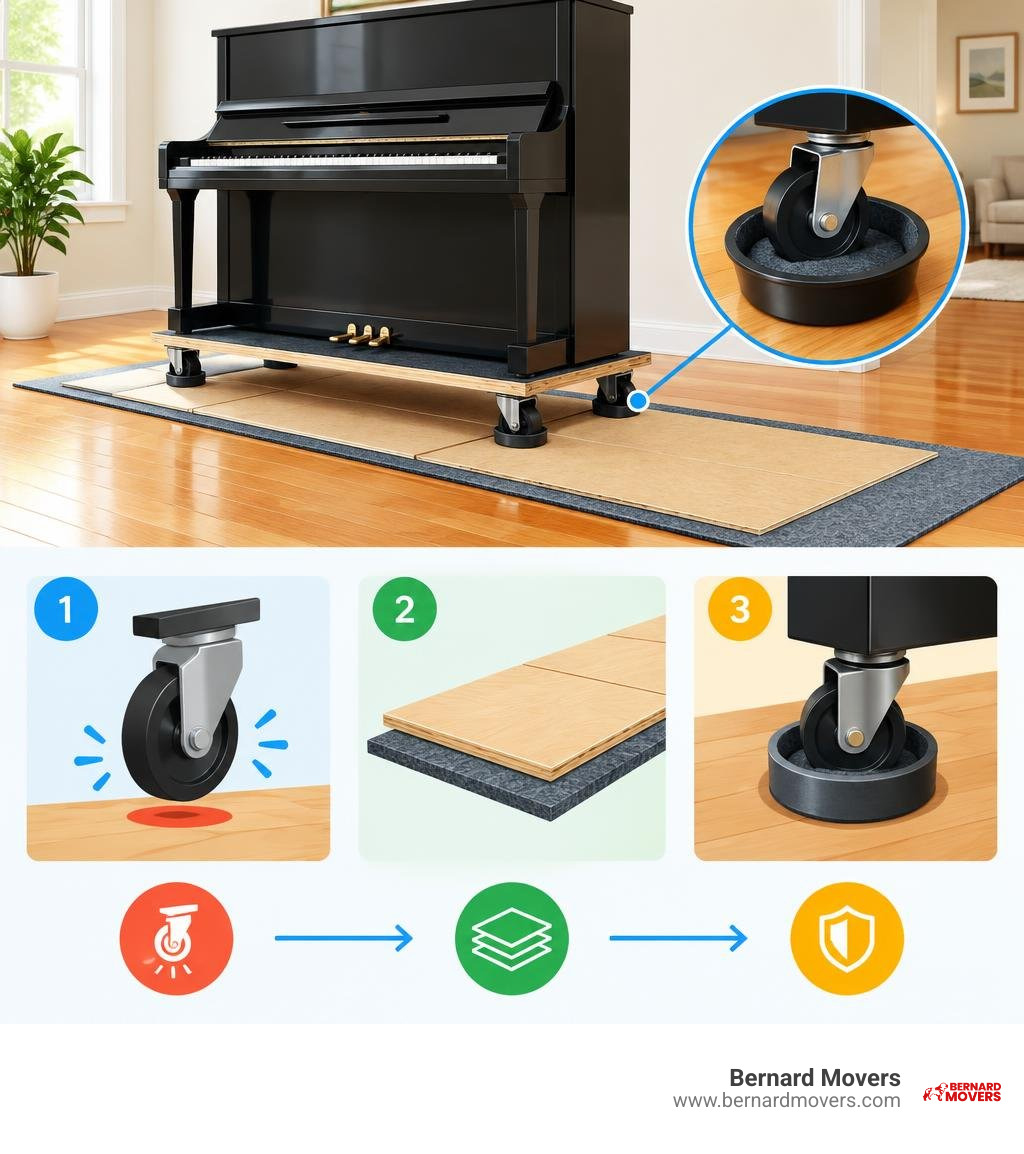
Mastering the relocation process requires knowing how to safely lift a piano, operating a heavy duty piano trolley across protective boards, and following the best way to move an upright piano through tight residential floor plans.
Essential Equipment and Techniques for Moving a Piano on Hardwood Floors
Acoustic pianos are marvels of acoustic engineering, containing solid cast iron plates designed to withstand roughly 19 tons of internal string tension. That strength also brings immense weight: the smallest spinet or console upright weighs 400 to 450 pounds (over 200 kilograms), a 6-foot studio grand reaches around 700 pounds, and a concert grand easily climbs to 1,000 to 1,200 pounds.
When that massive bulk sits on small metal or vintage brass wheels, the resulting contact pressure will crush wood fibers and gouge polyurethane coatings instantly. The built-in metal casters on your piano are intended strictly for minor cosmetic pivots away from a baseboard during cleaning—they are not designed for transit across a room.
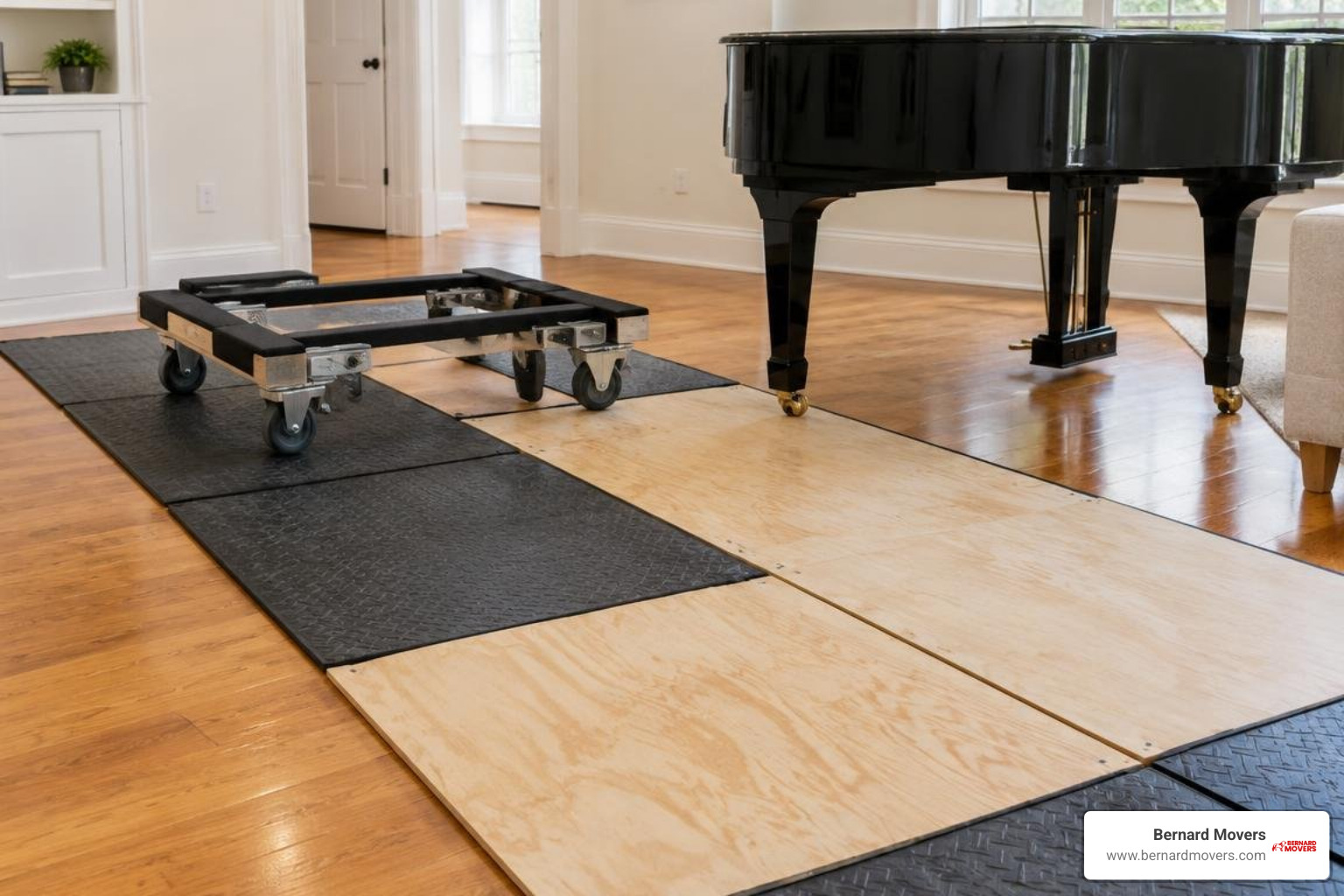
To establish an impenetrable runway that shields delicate oak, maple, or engineered planks, select the right piano moving equipment before shifting any weight:
- Rigid Shield Panels: Use sheets of 1/8-inch Masonite (tempered hardboard) or 1/4-inch to 1/2-inch plywood. These sheets bridge the pressure across multiple floorboards rather than concentrating force onto one spot.
- Underlayment Padding & Neoprene Runners: Lay thick moving blankets or non-slip neoprene floor runners under hard panels to prevent the protective boards from grinding ambient dust or grit into the finish.
- Four-Wheel Rubber-Capped Piano Dolly: Choose a heavy-duty dolly equipped with non-marking, vulcanized rubber casters to absorb vibrations and cushion your floorboards.
For additional handling basics, review Monash University’s piano-moving guidance when mapping equipment needs.
Floor and Instrument Preparation Before the Move
Preparation makes the difference between a seamless relocation and a costly floor refinishing project. Begin by sweeping, vacuuming, and dry-mopping the entire transit pathway. A single trapped grain of coarse sand caught beneath a dolly wheel or sliding board acts like a diamond cutting edge against sealed hardwood under hundreds of pounds of pressure.
Next, measure every hallway, doorway, and tight threshold along the route. Secure the keyboard lid and wrap the entire cabinet using thick furniture blankets in Chicago homes to cushion exterior finishes, keeping walls and moldings safe. Learn how to pack a piano for moving by securing these pads tightly with heavy-duty ratchet straps and stretch film. Finally, ensure every crew member wears sturdy, closed-toe footwear with reinforced toe caps; when handling a 600-pound instrument, protecting your feet is just as vital as protecting the floorboards.
Step-by-Step Execution for Moving a Piano on Hardwood Floors
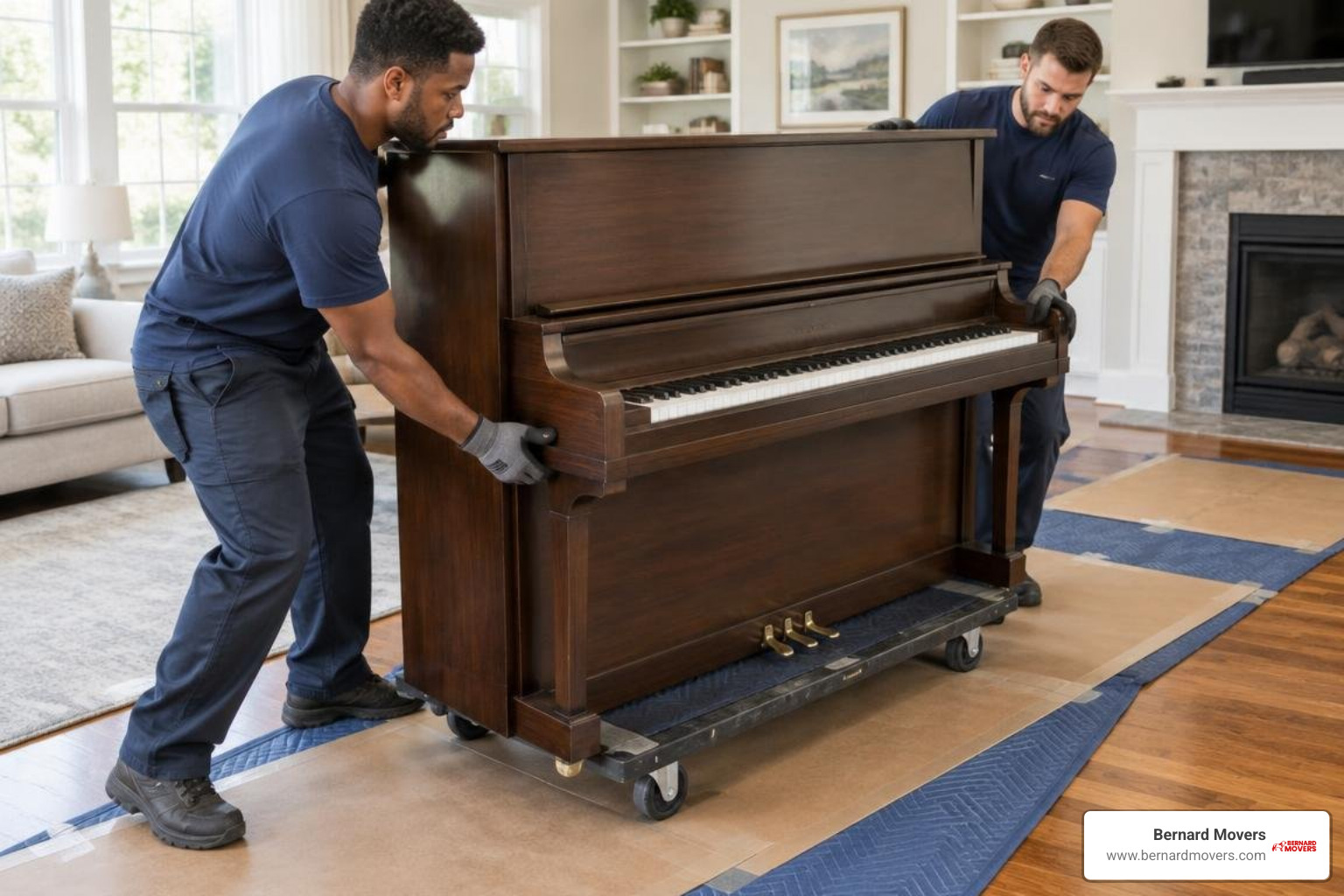
Executing the move requires deliberate pacing, clear communication, and balanced weight distribution:
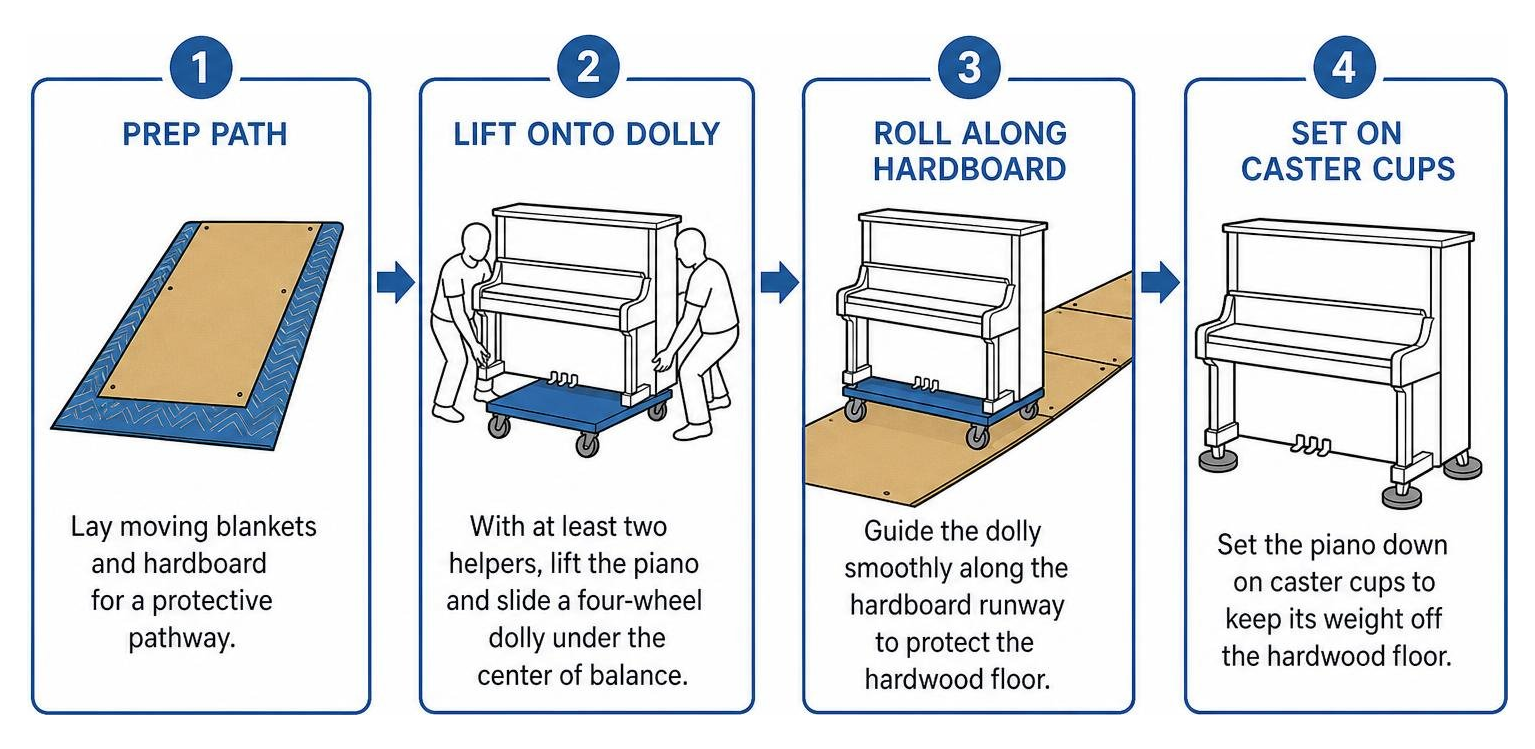
- Construct the Protective Pathway: Lay down moving blankets flat across the hardwood, topped with interlocking or overlapping sheets of 1/8-inch Masonite or smooth plywood.
- Elevate and Mount the Instrument: Position at least two strong helpers on each end. Utilize proper lifting mechanics by bending at your knees with a straight spine, gripping the structural handles on the rear frame, and lifting the piano high enough to slide a four-wheel rubber dolly directly under the center of balance. For deeper technique details, consult safe piano lifting and balance guidelines and learn to lift a piano like a pro.
- Roll Across the Runway (Leapfrog Method): Guide the dolly smoothly over the hardboard runway. If you do not have enough hardboard to cover the entire path from the living room to your exit, use two 4-foot by 4-foot sheets of Masonite. Roll the dolly onto the first board, pick up the trailing board behind it, place it in front, and leapfrog your way across the room.
- Maintain Continuous Balance: Keep at least one hand firmly on the instrument at all times to prevent sudden shifts, tilts, or momentum rollaways.
Unique Handling When Moving a Piano on Hardwood Floors: Uprights vs. Grands
Moving dynamics vary significantly depending on whether you are relocating a vertical upright or an expansive grand piano.
| Feature | Upright Piano | Grand Piano |
|---|---|---|
| Average Weight Range | 400 – 600 lbs | 550 – 1,200 lbs |
| Center of Gravity | High and back-heavy (near the soundboard) | Low, broad, and horizontally distributed |
| Disassembly Required | None (secure front lid and music rack only) | Extensive (remove lyre/pedals, lid, and legs) |
| Floor Pressure Vulnerability | High point load on 4 small corner casters | Extreme point load focused on 3 isolated leg tips |
| Transit Method | Transported upright on a 4-wheel rubber dolly | Tilted vertically onto a padded grand piano skid board |
Upright pianos carry their weight concentrated toward the rear iron plate. When organizing upright piano moving in Chicago, keep the heavy soundboard side stabilized and tilt the instrument straight back onto a dolly.
Grand pianos require systematic disassembly. As detailed in our guide to grand piano moving in Chicago, handling a grand involves removing the pedal lyre, detaching the left front leg, and gently lowering the flat side of the piano body onto a carpeted skid board (also known as a piano shoe). Once secured to the skid with padded straps, the remaining legs are removed, and the entire skid board rolls safely over your protective floor boards.
Repairing Floor Blemishes and Knowing When to Hire Experts
If an accidental slip creates a minor surface mark during transit, act quickly:
- Surface Scuffs: Light scuffs in the top polyurethane layer often buff out using a clean microfiber cloth and dedicated hardwood floor cleaner or a wax-based polish.
- Deeper Scratches: Shallow gouges that expose raw wood can be concealed using matching wood stain touch-up markers, blending pens, or blending wax sticks matched to your floor’s stain (such as natural oak, walnut, or espresso).
- Crushed Wood Fibers & Gouges: Deep indentations where the wood fibers have been compacted by metal wheels cannot simply be polished out; they generally require wood filler, professional sanding, and localized re-staining.
When weighing moving a piano DIY vs professional movers, professional moving companies often set contractual liability caps around $2,000 for residential flooring damage, as existing floor conditions vary. Attempting to maneuver an awkward 800-pound instrument without specialized dollies, ramps, and training risks both severe personal injury and costly floor repairs. For total peace of mind, securing certified piano moving in Chicago ensures the correct rigging and heavy equipment protect your home every step of the way.
Permanent Floor Protection and Piano Settling in Your Home
Once your piano reaches its designated space, floor protection does not end. The continuous static downward force of several hundred pounds resting on small contact points can compress hardwood floorboards over months and years, leaving unsightly indentations even if the instrument is never moved. Applying proven piano floor protection tips keeps your flooring pristine while your instrument settles.
Long-Term Floor Care Using Caster Cups
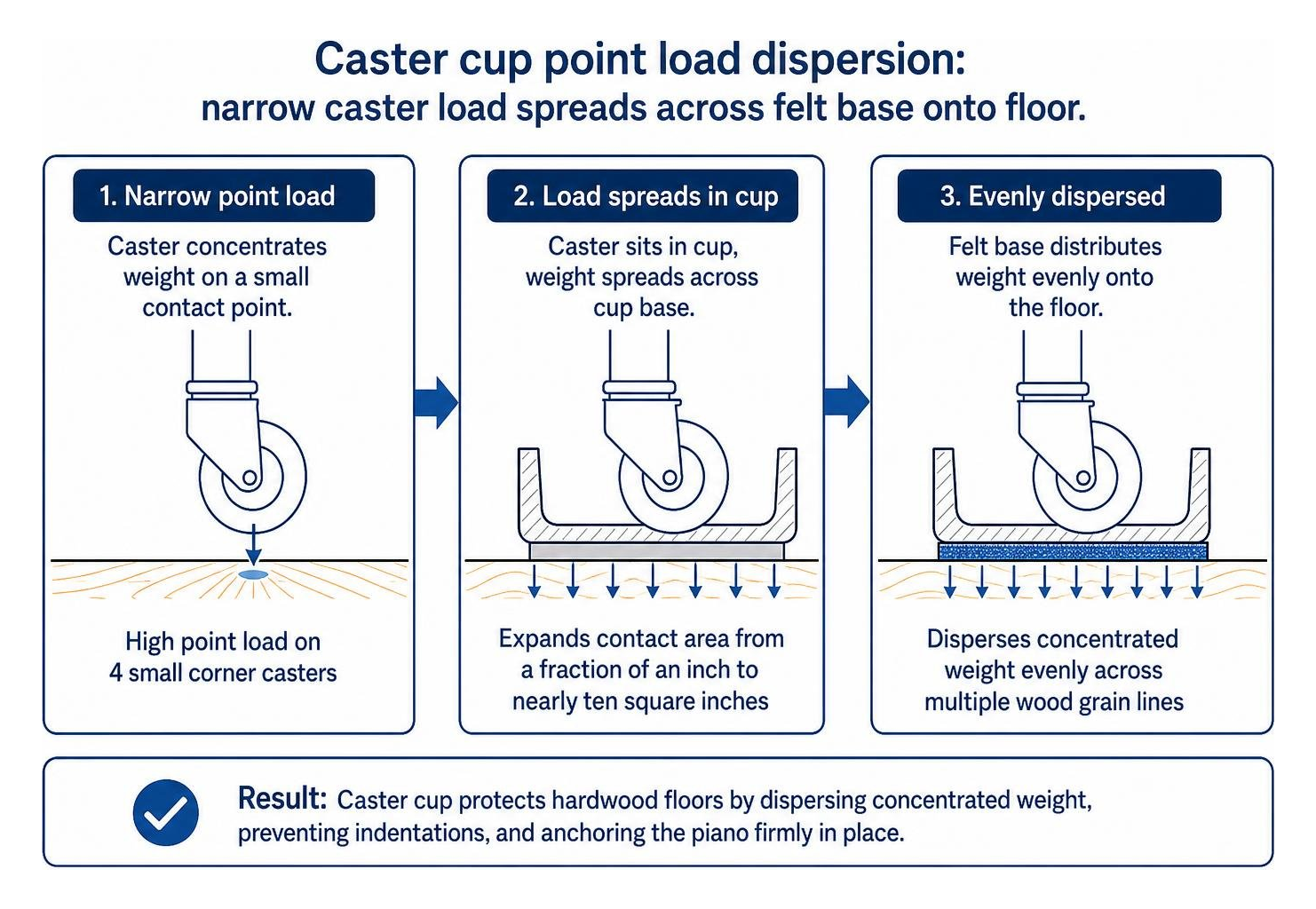
The gold standard for post-move preservation is the dedicated piano caster cup. Standard caster cups measure roughly 3.5 inches in diameter, crafted from solid hardwood, cast acrylic, or heavy metal, and lined underneath with thick, high-density felt.
Investing between $15 and $25 per caster cup delivers immense structural protection:
- Point Load Dispersal: A caster cup expands the contact area from a fraction of an inch to nearly ten square inches, dispersing concentrated weight evenly across multiple wood grain lines.
- Friction and Rolling Prevention: Caster cups anchor the piano firmly in position, preventing accidental shifts that could scuff the polyurethane finish.
- Universal Floor Care: On hard surfaces, the soft felt underside shields against scratches; when placed over carpet, caster cups prevent deep pile crushing, leaving shallow depressions that can be easily fluffed smooth.
Post-Move Climate Stabilization in Chicago and Illinois Homes
Pianos are constructed primarily of seasoned hardwoods, felts, and cast iron—materials that respond dynamically to ambient climate. Following a move across Chicago, Melrose Park, or neighboring Illinois communities like Des Plaines, Evanston, and Skokie, give your piano time to adjust to its new surroundings before scheduling services.
The rapid indoor temperature and humidity swings typical of Midwest seasons cause soundboards and pinblocks to expand in summer moisture and contract in dry winter heated air. Avoid positioning your piano right over forced-air HVAC supply vents, adjacent to drafty exterior doorways, or directly in line with harsh window sunlight.
Allow the instrument to acclimate to your home’s indoor humidity for 4 to 6 weeks. Once the internal wood and string tension stabilize, schedule a certified piano technician to perform precision tuning and regulation. When you require seasoned support for an upcoming relocation across Illinois, our team at Bernard Movers brings the proven techniques, protective gear, and dedicated care your prized piano and beautiful hardwood floors deserve.