

Plan Your Commercial Move Out Without Disrupting Work
Plan your commercial move out by checking your lease first, then setting a handover date and working backward. Assign someone to coordinate the move, schedule packing around critical work, and confirm what must be removed, cleaned, or repaired before you return the keys.
For a Chicago or Melrose Park business, the goal is more than getting everything to the new space. A clear plan helps your team keep working while you meet the lease terms and leave a record of the space’s condition.
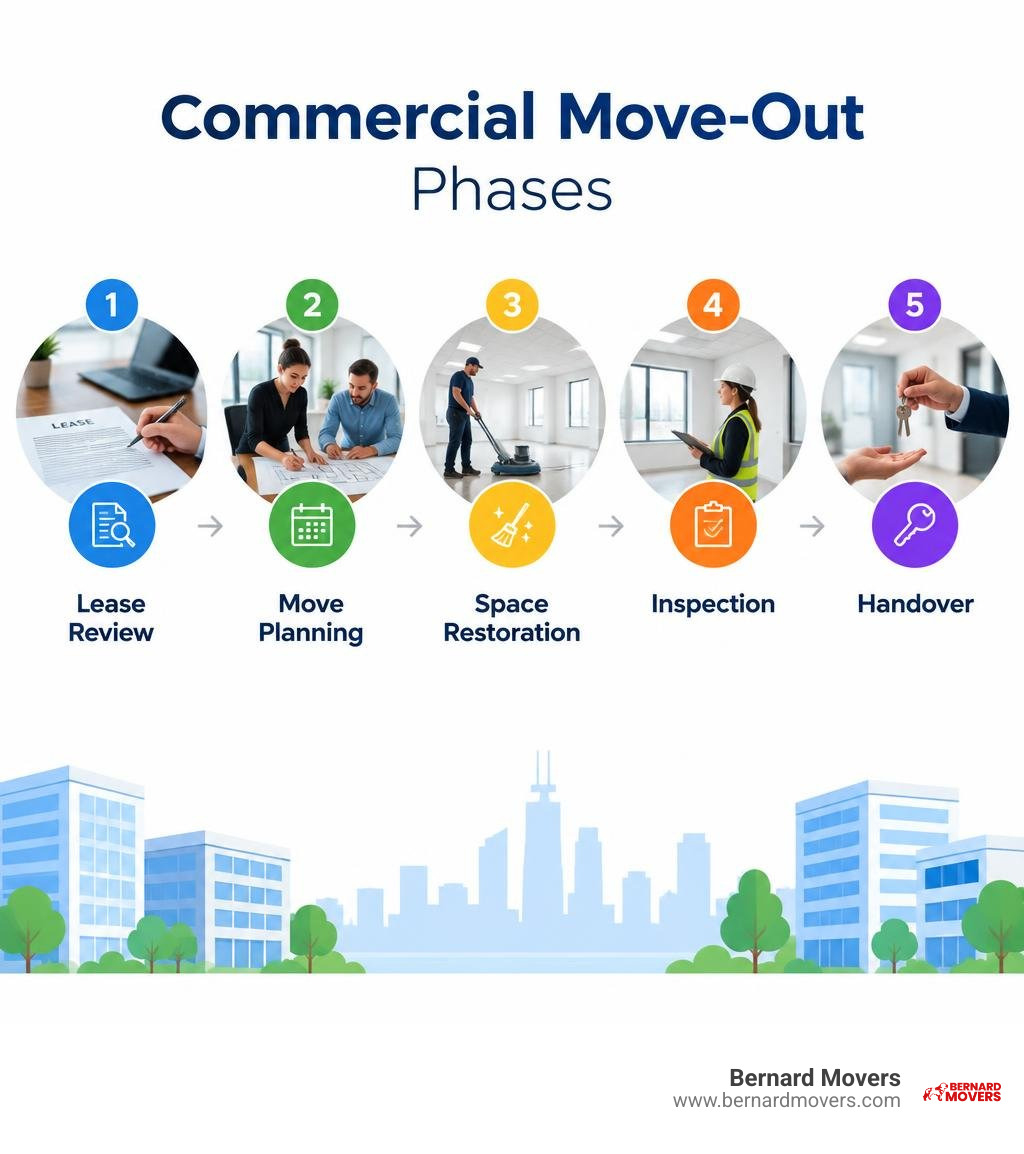
Similar topics to commercial move out:
End-to-End Planning for a Seamless Commercial Move Out
Executing a successful relocation requires balancing operational continuity with lease compliance. When an enterprise transitions out of a facility, unorganized planning creates costly business disruption, administrative friction, and potential lease default liabilities. Commercial tenants across Illinois face strict building requirements, demanding freight elevator schedules, and detailed surrender clauses that require proactive coordination months in advance.

Strategic planning begins with realistic downtime mitigation, clear budget modeling, and coordinated stakeholder communication across departments. In Illinois, commercial lease protocols require careful attention to local building regulations and municipal requirements. For instance, businesses relocating near Cook or DuPage County must account for local compliance such as Commercial Occupancy, Licenses & Registrations to ensure proper zoning clearances and smooth building transitions. Engaging building management early also helps verify insurance minimums, Certificate of Insurance (COI) endorsements, and specific freight bay loading rules unique to Chicago high-rises and suburban corporate parks alike.
Step-by-Step Commercial Move Out Checklist and Timeline
A structured transition timeline prevents last-minute scrambles and ensures every lease covenant is satisfied. Using a structured checklist for moving office locations allows facility leaders to coordinate external vendors, schedule phased department packing, and maintain continuous productivity throughout the move.
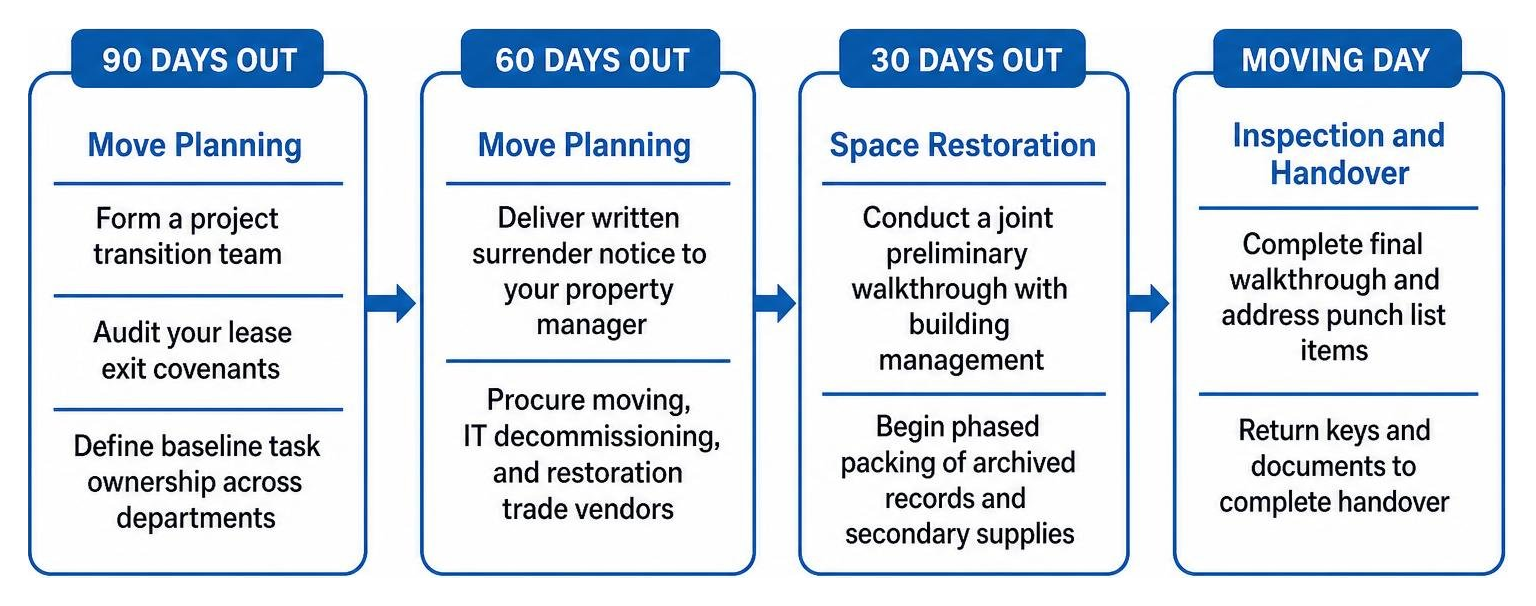
To keep your project on schedule, follow these core operational milestones:
- 90 Days Before Move-Out: Form an internal project transition team, audit your lease exit covenants, review your security deposit recovery requirements, and follow a complete office moving checklist to define baseline task ownership across departments.
- 60 Days Before Move-Out: Deliver formal written surrender notice to your property manager in accordance with lease terms. Solicit bids and procure specialized commercial moving teams, IT decommissioning technicians, and certified restoration trade contractors.
- 45 Days Before Move-Out: Map out physical asset distribution between new premises, storage facilities, and disposal routes. Confirm required loading dock permits, municipal parking reservations, and after-hours building access parameters with property management.
- 30 Days Before Move-Out: Conduct a joint preliminary walkthrough with building management to identify necessary repairs. Begin phased packing of archived records, off-season collateral, and secondary departmental supplies.
- 14 Days Before Move-Out: Disconnect non-critical server infrastructure, confirm loading dock reservations, re-verify vendor Certificates of Insurance, and finalize dedicated freight elevator booking windows.
- Moving Day & Final Week: Execute primary asset transport, perform structural strip-out, supervise deep cleaning crews, complete utility meter handovers, and execute the final space turnover walkthrough.
Navigating Lease Termination, Subletting, and Assignment Strategies
Exiting a space ahead of lease expiration requires strategic financial maneuvering. If your contract lacks an explicit early termination break clause, you can pursue a negotiated deed of surrender or a structured landlord buyout. When exploring how to get out of commercial lease or downsize your office space, your legal and financial exposure depends on personal guarantee clauses and whether state law mandates a landlord’s duty to mitigate damages by attempting to re-let the space.
When full lease termination is not viable, transferring your tenancy through an assignment or sublease provides significant financial relief:
| Feature | Lease Assignment | Commercial Sublease |
|---|---|---|
| Primary Lease Relationship | Transferred directly to assignee | Retained between original tenant and landlord |
| Rent Collection Responsibility | Assignee pays landlord directly | Original tenant collects from subtenant and pays landlord |
| Ongoing Liability | Secondary/contingent (unless fully released) | Primary liability remains with original tenant |
| Landlord Approval Requirement | Almost always required | Required in standard commercial leases |
| Default Risk Impact | Assignor called upon only if assignee defaults | Original tenant immediately responsible for default |
Managing Office Furniture Decommissioning and Asset Liquidation
Decommissioning a commercial office requires dismantling modular fixtures, managing electronics recycling, removing low-voltage cabling, and taking down non-load-bearing walls without damaging the core infrastructure. Professional stripout & make good practices protect your business from costly holdover charges and property damage claims.

Whether you are coordinating an office relocation in Chicago or scheduling broader business relocation services, asset cataloging is essential. Create an itemized inventory categorizing assets by retention, liquidation, donation, and certified electronic recycling. Unwanted modular workstations and cubicles can often be liquidated or donated, turning excess equipment removal into a sustainable corporate contribution while substantially lowering hauling and disposal costs.
Lease Compliance, Make-Good Restorations, and Final Handover
Returning your premises to the landlord requires strict adherence to make-good covenants. Landlords in competitive commercial submarkets like Cook County enforce high property standards to prepare suites for immediate marketing. Working with experienced teams familiar with Melrose Park property management standards ensures that dilapidations claims, repair disputes, and unauthorized alteration penalties are neutralized before the final inspection.
Meeting Commercial Move Out Cleaning Standards and Make-Good Obligations
A common point of contention during a facility turnover is the cleaning standard. Traditional leases often cite “broom-clean” condition, but modern commercial landlords frequently mandate professional deep cleaning verified by formal proof of service and vendor receipts.
A comprehensive commercial clean involves deep carpet steam extraction, interior window washing, wall scuff removal, floor buffing, and degreasing HVAC diffusers. For a standard 5,000-square-foot office space, professional turnover cleaning typically ranges between $1,500 and $4,000 depending on carpet condition, kitchen facilities, and restroom density. Scheduling dedicated office move out cleaning alongside your primary commercial moving services guarantees your space meets property management turnover standards and protects your security deposit.
Move-Out Inspections, Wear and Tear Distinctions, and Deposit Recovery
Facilities that use structured digital checklists achieve 40% faster space turnaround and reduce transition disputes by 65%. Clear documentation helps recover an average of $18,000 more per handover by preventing unjustified dilapidation charges from being deducted from escrow funds.
Differentiating between fair wear and tear and actionable tenant damage is critical:
- Normal Wear and Tear: Minor carpet matting along high-traffic corridors, subtle paint fading from natural light exposure, minor door handle looseness, and small baseboard scuffs from regular chair movement.
- Actionable Tenant Damage: Deep carpet tears or chemical burns, unpatched wall anchors from heavy server racks or audiovisual mounts, cracked ceiling tiles from unauthorized cabling runs, broken window glass, and abandoned proprietary wiring.
Schedule a preliminary joint inspection at least 14 days before your legal lease end date. This window gives your facility team time to complete punch-list repairs before final handover, ensuring your full security deposit is returned within the standard 14 to 45-day statutory window mandated by Illinois commercial agreements.
Final Utility Cutoffs, Key Handover, and Next Steps
The final phase of vacating your commercial property involves thorough administrative closeout. On your last handover day, record photographic evidence of all utility meter readings (water, gas, electric) with timestamped records, and forward official account transfer paperwork to building management and utility providers.
Audit all physical master keys, parking passes, mailbox keys, and digital access badges. Deactivate employee key fobs and cancel digital perimeter access permissions to eliminate ongoing building security liabilities. Ensure that HVAC programming and fire alarm monitoring accounts are formally transferred back to building ownership.
When you partner with our experienced team at Bernard Movers, our dedicated commercial movers manage every phase of packing, transport, and facility turnover—keeping your business running seamlessly without unnecessary downtime or lease surrender complications.