

How to Book Local Apartment Movers in Chicago
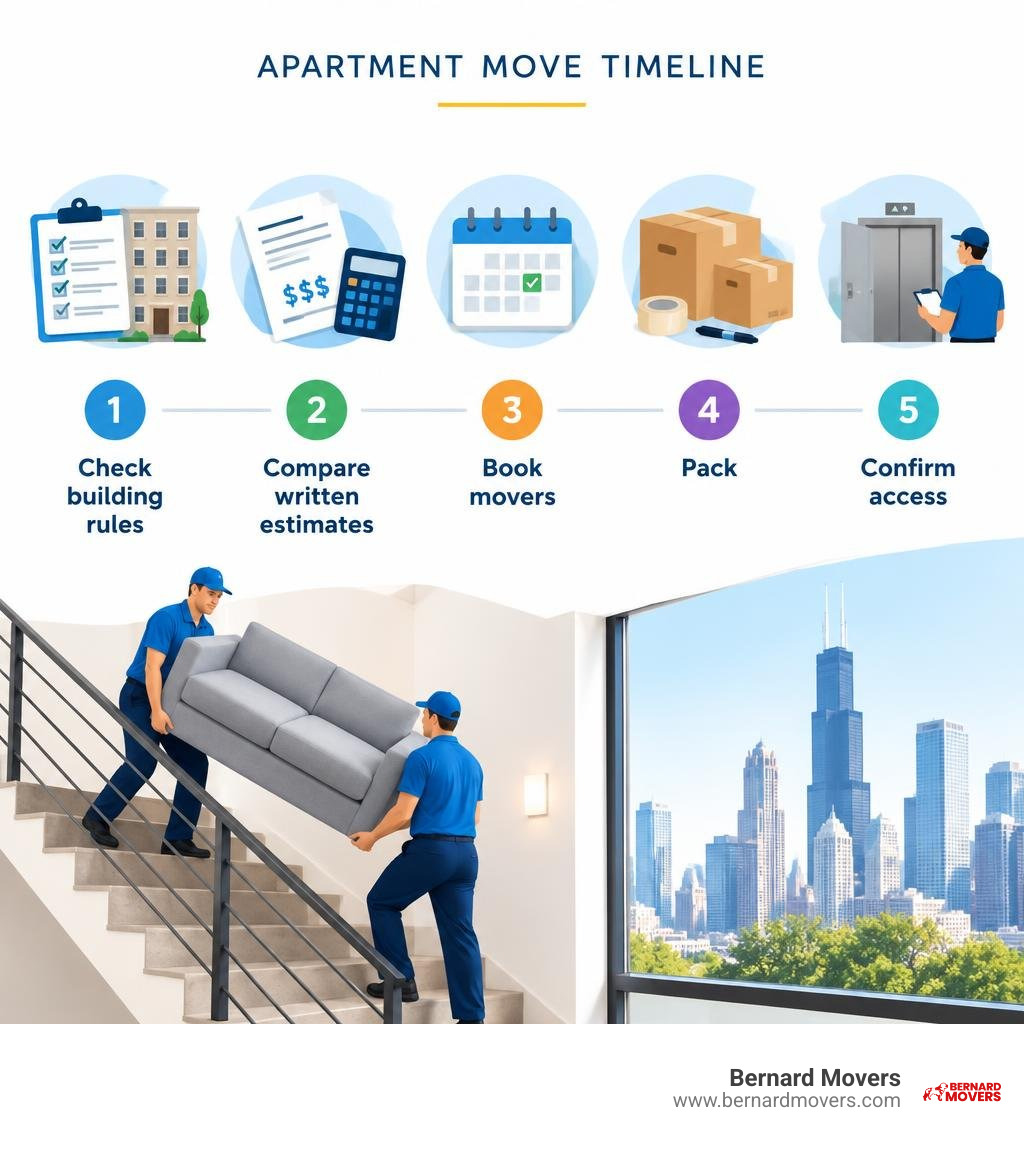
To book local apartment movers, start by detailing your move date, overall inventory, apartment square footage, and specific building regulations. Request a written estimate that clearly outlines labor charges, travel time, crew sizing, and potential stair or elevator considerations. Before finalizing any agreement, check that your moving company holds active Illinois credentials, carries adequate cargo and liability protection, and maintains consistent positive feedback from local clients across the Chicagoland area. Securing elevator reservations and loading zone permits well in advance ensures your moving crew can begin loading without unnecessary delays.
Whether you are relocating across Chicago neighborhoods or settling into a new complex in Melrose Park, proactive scheduling prevents common logistical hurdles. Apartment relocations involve shared entryways, narrow hallways, and strict property management requirements that differ from single-family transitions. Organizing your belongings, labeling every carton clearly, and verifying access guidelines with both property managers will keep moving day organized from start to finish.
Relevant articles related to local apartment movers:
How to Choose and Work With Professional Local Apartment Movers

Relocating between multi-family residential units presents unique hurdles that single-family home transitions rarely face. With local moves under 50 miles representing approximately 60% of all moving jobs across the country, apartment transfers form a massive share of everyday relocations. The average apartment renter moves every 1.8 years, which means navigating tight stairwells, shared corridors, parking restrictions, and strict building regulations becomes a routine necessity.
When selecting local movers in Chicago, you need a team equipped to handle close quarters, heavy furniture, and rigid timelines. Understanding how crew sizing, travel time, and hourly rates interact helps ensure that you receive a transparent quote and an efficient transfer across Cook County and surrounding Illinois communities.
| Planning Consideration | Key Details for Apartment Moves | Impact on Service & Efficiency |
|---|---|---|
| Crew Sizing | Typically 2 to 4 movers depending on square footage and stairs | Right-sized crews prevent fatigue and speed up loading |
| Access Windows | Scheduled freight elevator times and loading zone restrictions | Prevents building penalties and keeps hourly billing efficient |
| Travel Time & Base Rates | Standard hourly rates combined with portal-to-portal travel time | Clear estimates eliminate unexpected charges on the final bill |
| Building Compliance | Certificates of Insurance (COI) and hallway protection rules | Guarantees authorized building entry on moving day |
Key Factors When Evaluating Local Apartment Movers
Reliability, licensing, and proven technical experience should guide your search. Handling tight turns with a sectional sofa or carrying heavy dressers down three flights of vintage brownstone stairs requires trained techniques rather than raw strength alone. Our specialized small apartment relocation guide highlights how tailored planning keeps items secure regardless of floor level or building style.
When vetting companies in communities like Melrose Park, Des Plaines, Evanston, or Park Ridge, verify that the business possesses valid Illinois operating authority. Legitimate operators gladly provide license numbers and proof of active insurance. Check recent feedback to see how well crews manage complex building layouts, tight parking, and scheduled time slots. A reputable mover will explain their equipment handling methods, truck dimensions, and safety procedures before moving day arrives.
Comparing Costs, Contracts, and Estimates
Local apartment relocations are generally billed on an hourly structure based on crew size, truck capacity, and total labor hours. A standard two-person crew typically ranges from $80 to $100 per hour, bringing total costs for standard apartments between $300 and $1,500 based on volume, distance, and physical access challenges such as walk-ups or extended walking distances to loading zones.
To plan your budget accurately, consult our apartment relocation cost guide and evaluate affordable apartment moving rates before committing. Always request a clear written binding or non-binding estimate detailing:
- The base hourly rate and minimum hour requirements
- Travel time and fuel surcharges between locations
- Specific fees for oversized items, long carries, or multiple flights of stairs
- Cancellation, rescheduling, and payment terms
Securing your date at least four weeks in advance ensures availability with preferred crews and prevents the scheduling bottlenecks common at the beginning and end of each month across the Chicago metropolitan area.
Navigating Building Regulations and Insurance Policies
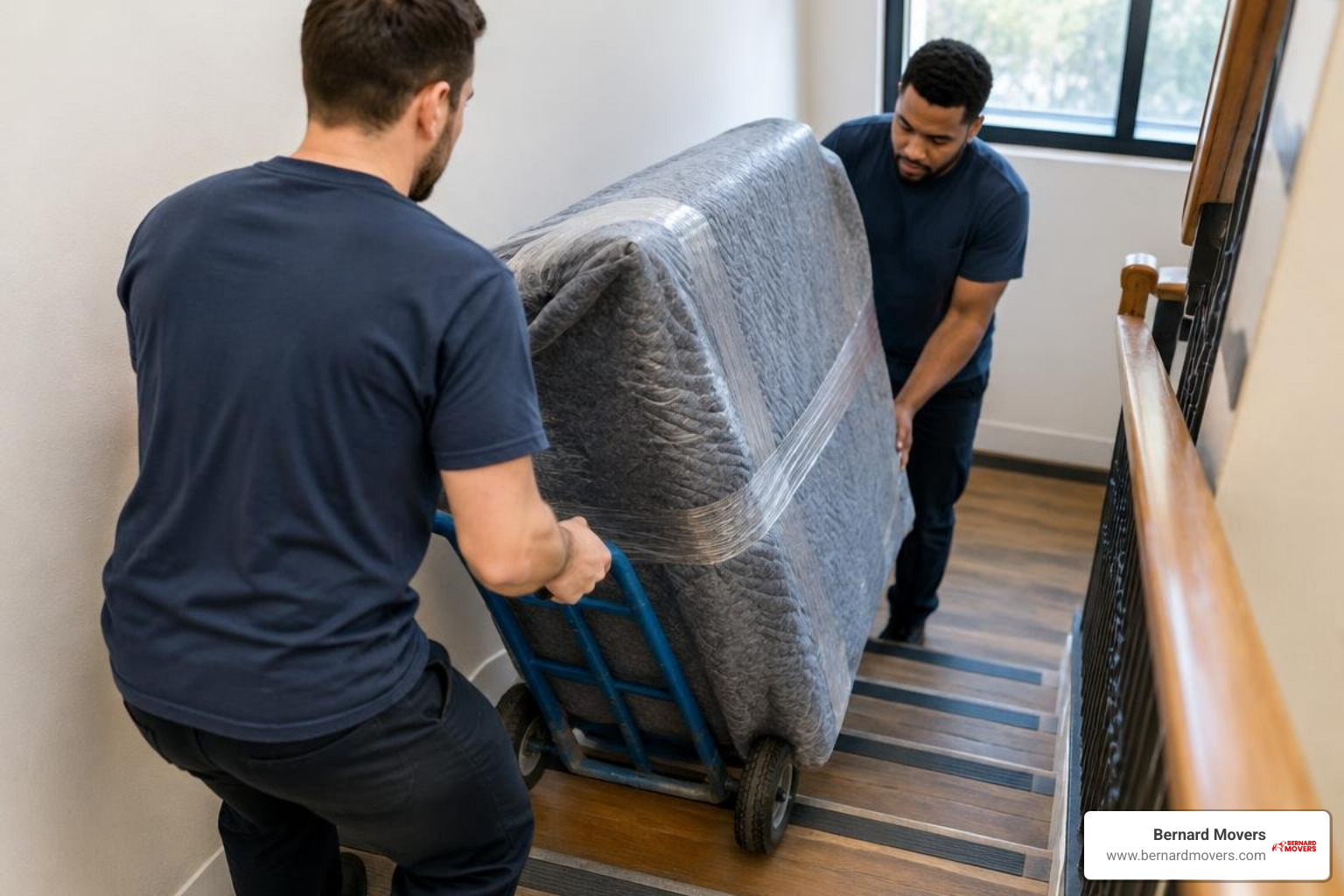
Multi-unit properties enforce strict guidelines to safeguard common areas, elevators, and resident comfort. Most property managers in mid-rise and high-rise developments require a Certificate of Insurance (COI) naming the building management company and property owner as additional insured parties before any moving equipment enters the lobby or service bays.
Professional moving teams routinely coordinate COIs to meet building criteria, issuing documentation directly to your property manager ahead of time. Beyond commercial property coverage, movers provide standard released-value protection, which covers items at a baseline rate per pound as mandated by state regulations. For higher-value furniture, electronics, and delicate items, full-value protection policies offer comprehensive repair or replacement coverage throughout transport.
Preparing for Moving Day and Securing Your Booking
A smooth relocation relies on structured preparation before our truck arrives at your building. Utilizing professional apartment moving services eliminates physical strain, while organizing your personal inventory beforehand allows the crew to load items quickly, safely, and systematically.
Preparing Your Unit and Packing Efficiently
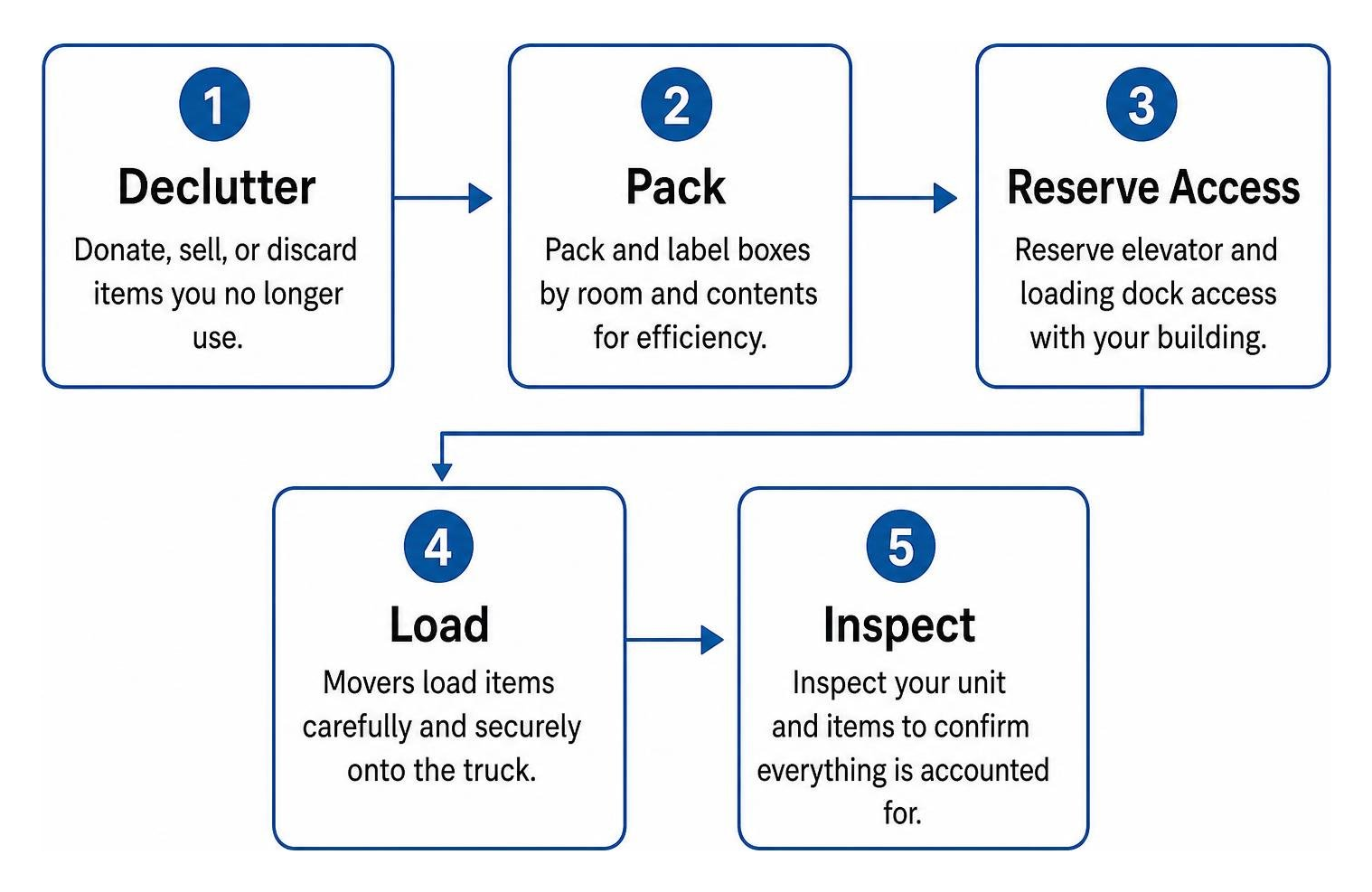
Taking organized steps in the days leading up to moving day significantly reduces loading duration and protects your belongings:
- Declutter early: Sort through closets, storage nooks, and balconies to separate items to donate, sell, or discard before packing begins.
- Pack room by room: Use sturdy, uniform boxes rather than plastic grocery bags or open containers. Place heavy items like books in smaller cartons and reserve larger boxes for lightweight linens and kitchenware.
- Label clearly: Mark box tops and sides with corresponding rooms and note fragile items prominently so movers can arrange the truck properly.
- Disassemble bulky furniture: Take apart bed frames, remove modular couch sections, unbolt dining table legs, and secure loose cords in labeled bags to expedite loading.
- Protect surfaces and corridors: Confirm whether your building requires floor runners, corner guards, or door jamb protectors during move-in and move-out periods.
- Conduct a final property walkthrough: Inspect closets, kitchen cabinets, bathroom vanities, and storage lockers to verify that nothing is left behind before handing over keys.
Scheduling Experienced Local Apartment Movers for a Seamless Relocation
Booking ahead allows our dispatchers to coordinate parking permits, review loading bay clearance, and assign the proper truck size for your specific building layout. Whether you are transitioning between apartments in Skokie, Glenview, Mount Prospect, Oak Park, or Wilmette, thorough coordination guarantees a punctual, secure move.
At Bernard Movers, we manage the heavy lifting, tight stairwells, and detailed building logistics so you can focus on getting settled. Contact our team today to schedule our trusted local moving services and secure your upcoming apartment moving date across the Chicago area and Melrose Park.