

Why a Grand Piano Skid Board Is the Key to a Safe Move
A grand piano skid board is a flat, padded platform used to support a grand piano on its side during transport or storage — and building one yourself is entirely doable with the right materials and a few hours of work.
Here’s what you need to know at a glance:
- What it is: A sturdy wooden board (usually hardwood or plywood) with padding, rope handles, and strap slots
- Standard size: 6 feet long, 13 inches wide, 3 inches thick
- Weight it must support: Grand pianos range from 500 to 1,200 lbs
- DIY cost: Around $60 in materials vs. $181–$799 for a commercial board
- Key features to include: E-track strap slots, a toe block, rope handles, and padded canvas covering
Grand pianos don’t move like regular furniture. They’re extremely heavy — often close to half a ton — and their polished finish scratches easily. Without a proper skid board, you risk damaging the piano’s body, its internal structure, and the floors of your Chicago home or Illinois moving truck.
One DIY builder put it simply: he had too many grand pianos in his shop and needed a storage solution fast. Rather than spending hundreds on a commercial board, he built one for about $60 using basic lumber and upholstery materials — and it worked perfectly.
Whether you’re relocating across Melrose Park or preparing a grand piano for a long-distance Illinois move, this guide walks you through building your own skid board from scratch, safely and affordably.
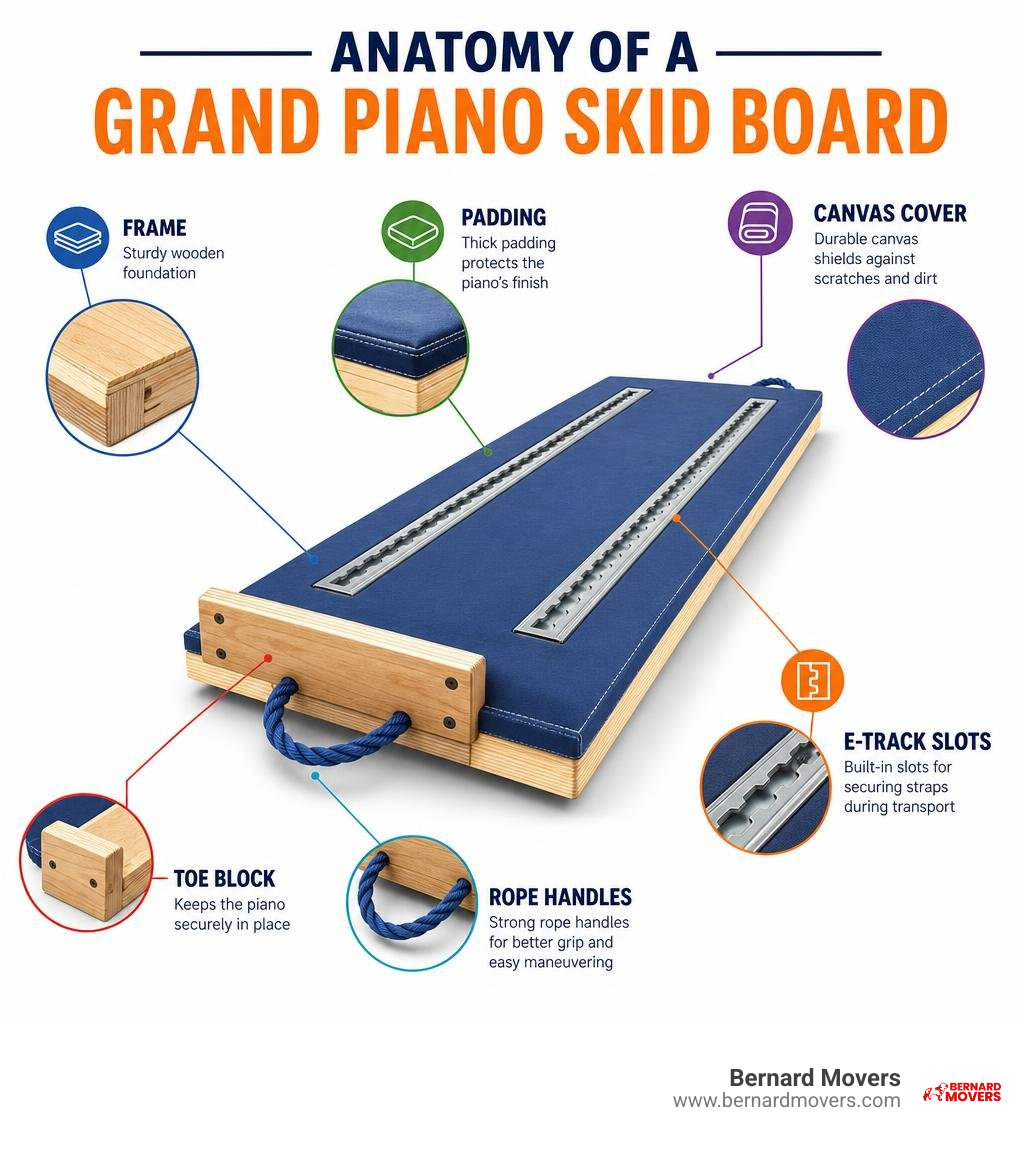
Easy grand piano skid board glossary:
How to Build a DIY Grand Piano Skid Board
If you are a woodworker or a dedicated DIYer, building your own grand piano skid board is a rewarding weekend project. However, because grand pianos weigh up to 1,200 pounds, you cannot afford to cut corners. A structural failure during a move could destroy a priceless family heirloom or cause serious injury.
To meet professional safety standards, your DIY board must possess incredible structural integrity and a massive load capacity. Here is how you can construct a commercial-grade board in your own garage.
What is a Grand Piano Skid Board and Why Do You Need It?
A grand piano skid board (also called a piano board) serves as a flat, rigid base for a grand piano once it has been prepped for transport. Pianos cannot be moved with their legs attached; their legs are designed to support vertical weight, not lateral forces.
To move a grand piano:
- We carefully disassemble and remove the music lyre and the lid.
- We lower the piano onto its straight left side (the bass side) onto the padded skid board.
- We remove the legs and secure the piano body tightly to the board using heavy-duty straps.
By serving as a temporary chassis, the skid board protects the delicate wood finish from friction and absorbs structural shocks during transport. If you want to know more about the logistics of this process, check out our guide on Grand Piano Moving Chicago.
For those who prefer to buy rather than build, commercial options like the Piano Board | Piano Skid Board | Piano Moving Board – Fasteners Plus offer pre-built reliability with industrial-grade standards.
Essential Materials and Dimensions for Your DIY Project
To build a board that can handle up to 1,200 lbs of breaking strength, you need the right wood. Hardwoods like maple are ideal because they are incredibly strong and naturally burnish over time, allowing the board to slide more easily across ramps. Alternatively, you can use high-grade marine plywood for moisture resistance, or a combination of solid pine boards for a budget-friendly frame.
For a standard DIY build, you will need:
- Two 2x4s and one 2×12, cut to exactly 6 feet (72 inches) in length.
- Heavy-duty carriage bolts, washers, and wood glue.
- Thick polyester batting or a folded moving blanket for padding.
- Heavy-duty 18 oz. duck canvas or quilted cotton fabric for the outer cover.
- 1/2-inch synthetic rope for the handles.
A standard 6-foot board measures 72 inches long, 13 inches wide, and roughly 3 inches thick, weighing about 32 pounds. This size is perfect for most baby grands and medium grand pianos. For a complete look at the specialized tools required for these moves, browse our checklist of Piano Moving Equipment.
Step-by-Step Guide to Constructing Your Grand Piano Skid Board
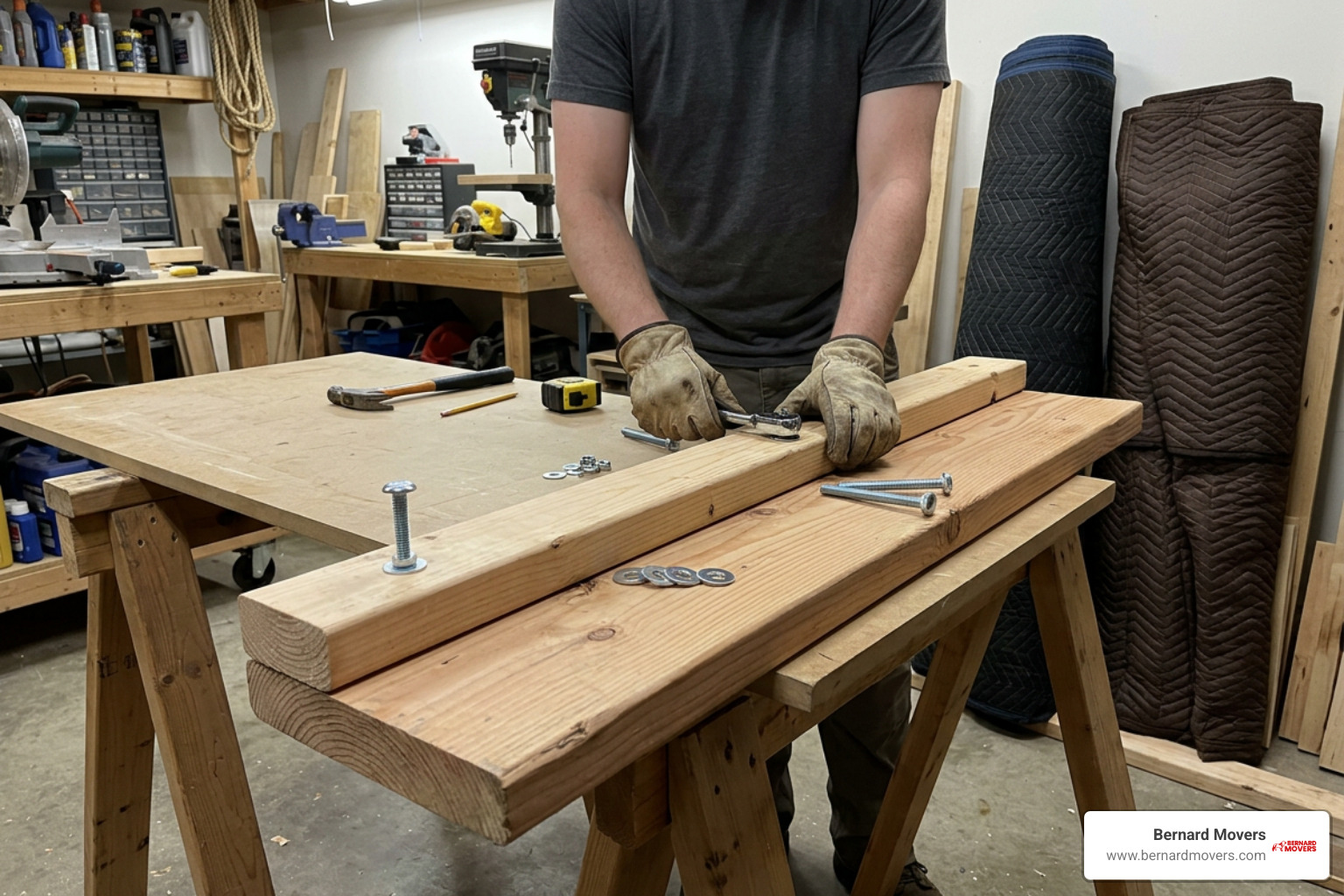
Follow these steps to assemble your custom skid board:
- Assemble the Core Frame: Place your 6-foot 2×12 board flat. Align the two 2x4s underneath along the outer edges to act as reinforcing runners. This raises the board, prevents warping, and creates clearance for strap slots.
- Drill and Bolt: Drill pilot holes through the top board into the runners. Use carriage bolts rather than simple wood screws. Ensure you countersink the bolt heads on the top surface so they sit completely flush; any protruding metal will scratch your piano’s finish.
- Apply the Padding: Lay down a thick layer of polyester fill or a folded moving blanket over the top surface. Keep the padding firm and uniform. If it is too loose, it will bunch up when you slide the piano onto it.
- Wrap with Canvas: Stretch your heavy-duty canvas or quilted cotton over the padding. Secure it tightly to the underside of the board using heavy-duty staples or upholstery nails.
- Add the Finishing Touches: If you are moving in wet Illinois winter weather, consider adding a layer of marine-grade sealant to the exposed wood on the bottom runners to prevent moisture damage.
For more tips on packing delicate instruments, read our guide on Piano Moving Chicago.
Key Safety Features: E-Track Slots, Rope Handles, and Toe Blocks
A basic plank of wood is not a skid board. To make it safe, you must integrate specialized safety features:
- E-Track Slots: Cut three rectangular slots on each side of the board. These slots allow you to hook in heavy-duty logistics straps. For ultimate safety, you can install metal E-track slots that align with commercial strap systems, similar to the design of the Piano Skid Board w/ 3-Set of E-Track Slots – Blue Hardwood Material, 1,200 lbs BS.
- Rope Handles: Drill four holes on the underside of the board (two on each side) and thread 1/2-inch synthetic rope through them to create handles. Melt the ends of the synthetic rope knots with a lighter to prevent them from unraveling under tension.
- Toe Blocks / End Caps: Install a solid wooden block (a toe block) at the front end of the skid board. This block acts as a physical barrier that prevents the heavy piano body from sliding forward when the board is tilted down stairs or up truck ramps.
Essential Accessories for Safe Transport and Storage
Your newly built grand piano skid board is only one part of the moving equation. To safely transport your instrument across Melrose Park or Chicago, you will also need:
- A Heavy-Duty Piano Dolly: A four-wheel dolly with non-marring rubber wheels, rated for at least 1,000 lbs.
- Web Straps: High-tensile moving straps with ratchets or roller buckles to bind the piano to the board.
- Moving Blankets: Extra padding to wrap around the exposed sides of the piano.
For those looking for premium inspiration, the Jansen Grand Piano Skidboard – Jansen Piano Benches features thick 18 oz. duck fabric and heavy-duty web straps that professional movers trust.
Maintenance and Safety Best Practices for Heavy Pianos
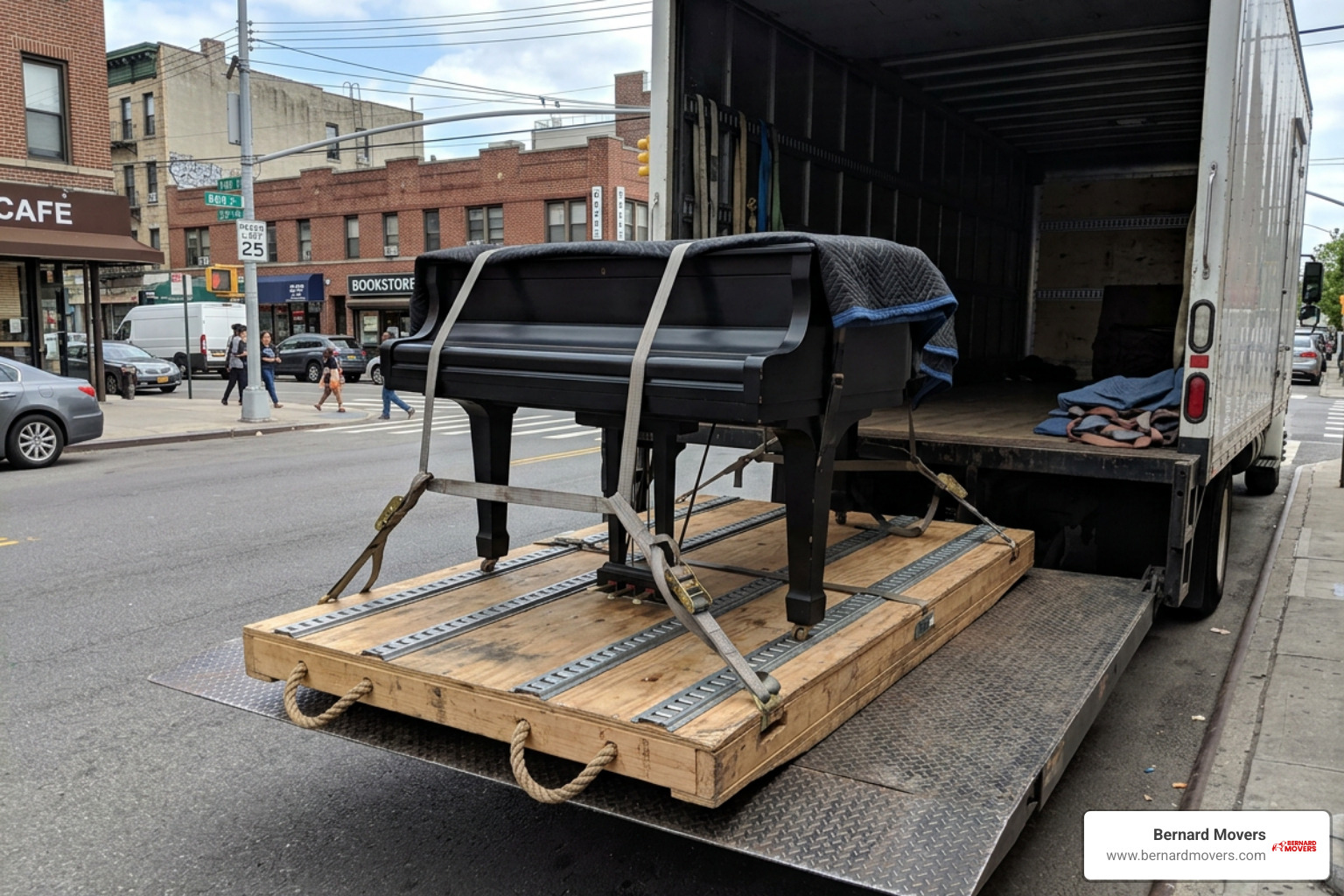
Once your board is built, maintain it properly:
- Inspect Before Every Move: Check for loose carriage bolts, splintering wood, or torn canvas.
- Replace Worn Parts: If you use nylon runners on the bottom of your board to slide over steps, replace them as soon as they show signs of thinning.
- Keep it Dry: Store your board in a climate-controlled environment to prevent the wood from warping.
When it comes to the physical move, never attempt to lift a grand piano with fewer than four strong adults. Use ramps for stairs, keep the board level on flat surfaces, and always employ spotters to guide the path. If you are uncertain about navigating tight Chicago stairwells, it is always safest to consult professional Piano Movers in Chicago.
Professional vs. DIY Piano Moving in Illinois
While building a grand piano skid board is a fun and cost-effective DIY project, using it to move a 1,000-pound instrument is a different story.
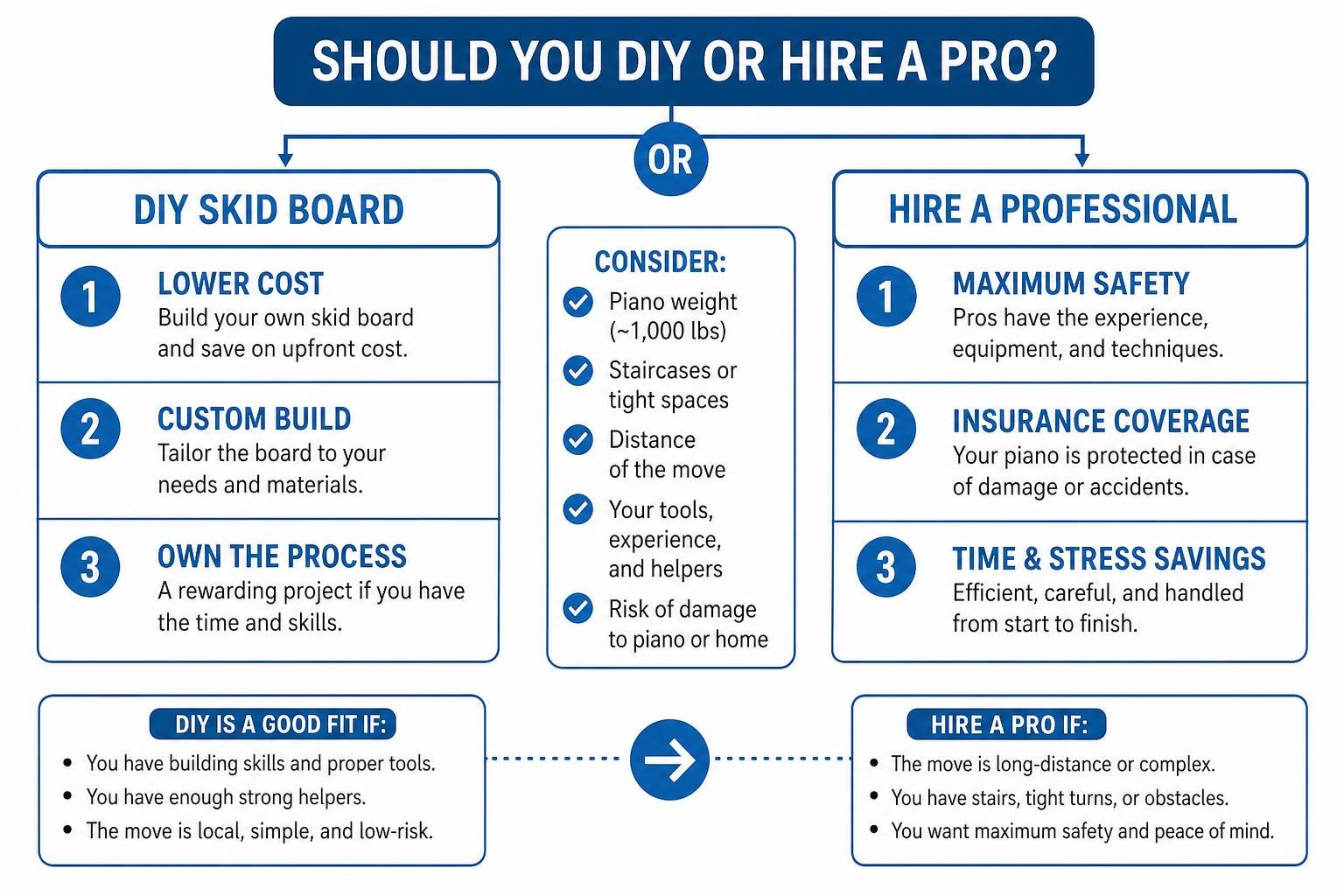
| Feature | DIY Skid Board | Commercial / Professional Board |
|---|---|---|
| Material Cost | ~$60 | $181 – $799 |
| Weight Capacity | Depends on build quality (approx. 800 lbs) | Certified up to 1,200 lbs |
| Sub-Frame | Wood only | Steel sub-frame & oak runners |
| Safety Features | Basic rope handles & wooden toe block | Integrated E-track, steel handles, nylon skids |
| Risk of Failure | Moderate (if screws/joints weaken) | Extremely Low |
At Bernard Movers, we have spent years moving heavy instruments safely throughout Chicago, Melrose Park, and the surrounding Illinois suburbs. We have the training, the heavy-duty trucks, and the professional-grade equipment to handle your piano with absolute care.
If you decide that the heavy lifting, tight corners, and structural risks of a DIY move are too much to handle, we are here to help. Contact us today for a professional Piano Moving quote and let our experienced team handle the hard work for you!