

Why Knowing How to Lift a Piano Safely Can Save You From Serious Injury
To lift a piano safely, follow these key steps:
- Gather 2-5 helpers (roughly one person per 100 lbs of piano weight)
- Get the right equipment — a 4-wheel piano dolly, moving blankets, lifting straps, and ratchet straps
- Measure all doorways, hallways, and staircases before you start
- Protect the piano by closing and locking the keyboard lid and wrapping it in moving blankets
- Lift with your legs, keep your back straight, and communicate with your team
- Secure the piano upright in the moving truck against the wall
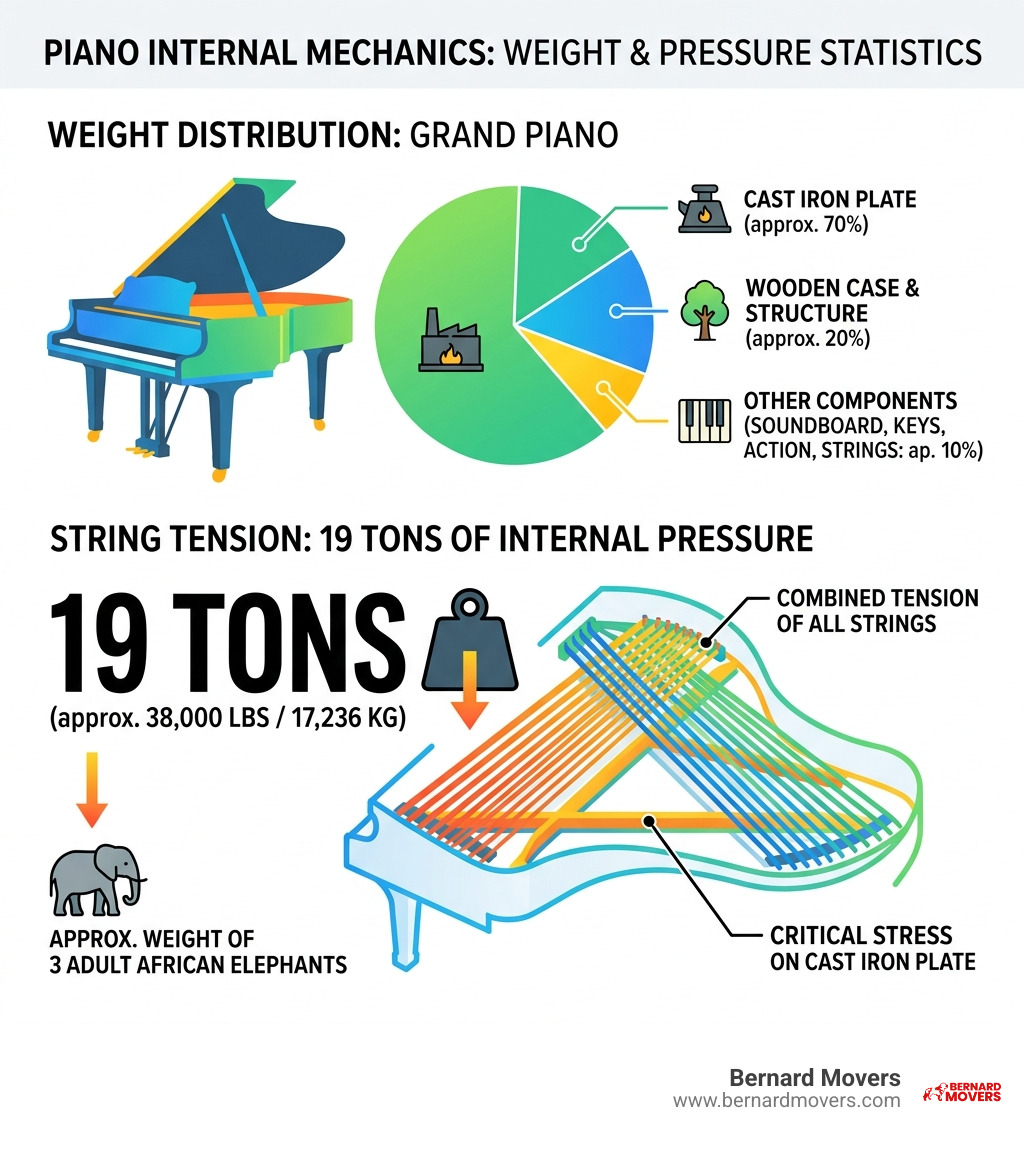
Pianos are deceptively difficult to move. A standard upright can weigh anywhere from 300 to 800 pounds. A concert grand can tip the scales at over 1,200 pounds. And despite their size, pianos are surprisingly fragile — with more than 10,000 internal components that can be damaged by a single wrong move. The internal cast-iron plate, often called the “harp,” holds the strings under immense tension—sometimes up to 20 tons of pressure. If the frame is dropped or jarred, this tension can cause catastrophic failure, not just to the instrument, but to anyone standing nearby.
Whether you’re relocating across Chicago, moving from Melrose Park, or heading out of Illinois entirely, the risks are real. We’ve seen broken toes, damaged finishes, and beloved instruments ruined — all because the move wasn’t planned properly. A piano is not just a piece of furniture; it is a complex machine and a piece of art. Treating it like a standard sofa is the fastest way to ensure a costly repair bill or a permanent loss of tone quality.
This guide walks you through exactly how to do it right, ensuring that both the movers and the music remain intact.
Easy lift a piano word list:
Essential Preparation to lift a piano Safely
Before you even think about putting your hands on the keyboard—or the frame—you need a plan. Preparation is the difference between a successful move and a trip to a Chicago emergency room. In our years of experience moving pianos across the suburbs from Skokie to Wood Dale, we’ve learned that gravity is a piano’s most persistent enemy. The weight distribution of a piano is rarely symmetrical, meaning one side will always feel significantly heavier than the other, often catching amateur movers off guard.
A piano has an “intimate relationship with gravity.” It doesn’t want to leave the ground, and if it becomes airborne, it will try to reconnect with the floor as violently as possible. To prevent this, we focus on keeping the instrument grounded or securely supported at all times. This involves understanding the center of gravity, which in an upright piano is located high and toward the back, making it prone to tipping backward during a lift.
Understanding Weight and Equipment to lift a piano
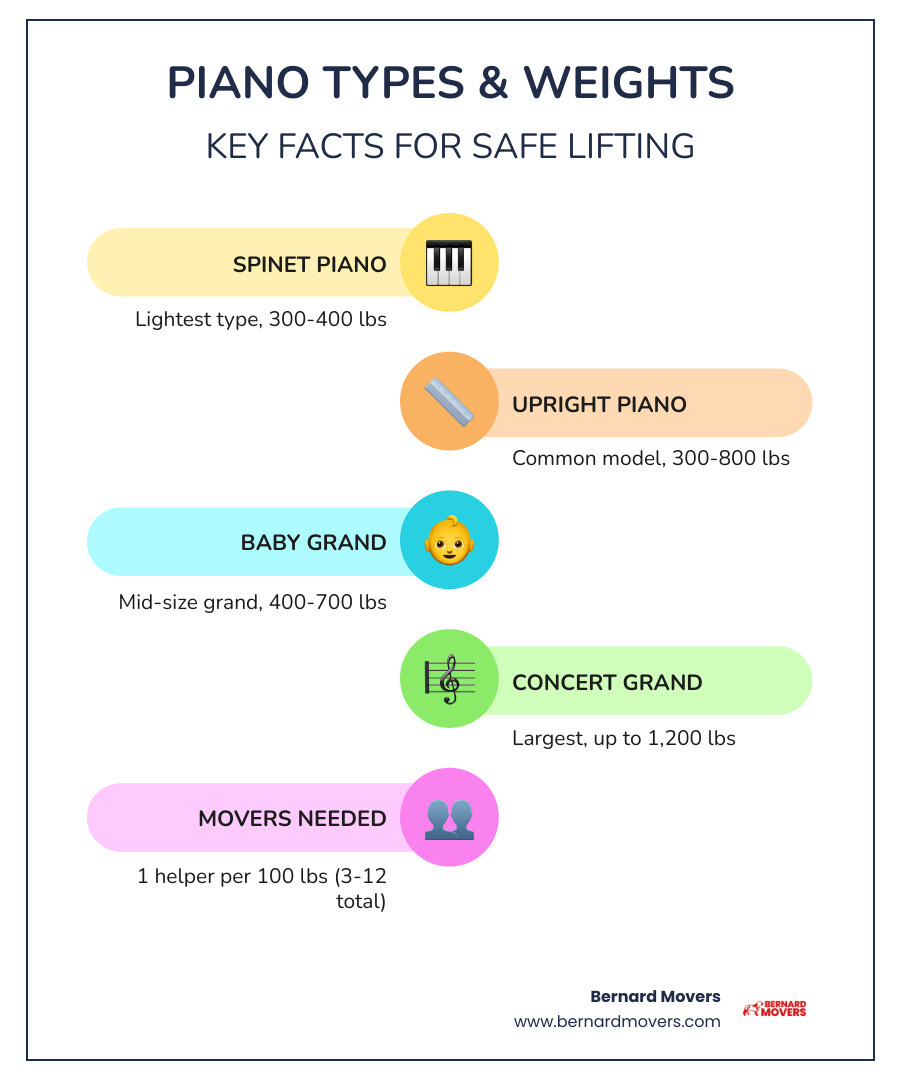
The first thing to understand is that not all pianos are created equal. A small spinet is a different beast compared to a full concert grand.

| Piano Type | Average Weight | Height/Length | Number of People Needed |
|---|---|---|---|
| Spinet | 300–400 lbs | 36″ – 39″ tall | 3 People |
| Console | 350–500 lbs | 40″ – 43″ tall | 4 People |
| Studio Upright | 400–600 lbs | 44″ – 48″ tall | 4-5 People |
| Large Upright | 500–1,000 lbs | 48″+ tall | 5-6 People |
| Baby Grand | 500–650 lbs | 5′ – 5’5″ long | 4-5 People |
| Concert Grand | 900–1,300 lbs | 7′ – 9′ long | 6+ People (Professional only) |
To lift a piano without hurting yourself, you need specialized Piano Moving Equipment. Do not rely on the small metal casters (wheels) attached to the piano. Those are decorative. They are designed to move the piano six inches away from a wall to vacuum, not to roll across a hardwood floor in Evanston. If you try to roll a 600-pound upright on those casters, you will likely gouge your floors or snap the legs off the piano.
Essential Gear List:
- 4-Wheel Piano Dolly: Not a standard furniture dolly. You need a heavy-duty version with soft rubber wheels and a solid frame. The rubber wheels are crucial as they absorb shock and provide the necessary grip on smooth surfaces.
- Lifting Straps and Humpstraps: These help distribute the weight to your shoulders and legs rather than just your forearms. Humpstraps are particularly useful for navigating steps.
- Moving Blankets: You’ll need at least 3-4 professional-grade quilts to wrap the exterior. These protect the delicate lacquer or wood veneer from scratches.
- Ratchet Straps: Essential for securing the piano to the dolly and the truck wall. Never use bungee cords; they lack the tension required to hold a heavy instrument.
- Plywood or Masonite: Used to create a smooth path over carpet, grass, or uneven thresholds. This prevents the dolly from getting stuck or sinking into soft surfaces.
For more detailed methods on using this gear, check out 4 Ways to Move a Piano – wikiHow Fun.
Planning the Path in Chicago and Melrose Park
In areas like Melrose Park and Chicago’s historic neighborhoods, we often deal with narrow hallways, sharp turns, and those infamous “Chicago stairs.” You must measure everything.
- Measure the Piano: Length, width, and height. Don’t forget to measure the depth of the keyboard bed.
- Measure the Path: Check every doorway, corner, and staircase. Don’t forget to account for the width of the dolly! A piano on a dolly is often 6-10 inches taller than the piano alone.
- Clear the Area: Remove rugs, loose items, and furniture that might trip you up. Even a small rug can bunch up and stop a dolly in its tracks.
- Protect the Environment: Use cardboard or Masonite to protect hardwood floors. Pianos are heavy enough to crack tiles if they aren’t handled gently.
Properly preparing the instrument itself is also vital. You should lock the lid and wrap the pedals in bubble wrap or small towels. If you’re wondering how to wrap the body to prevent scratches, see our guide on How To Pack A Piano For Moving.
Step-by-Step Instructions for Moving Day
It’s April 2026, the weather in Illinois is finally turning, and it’s time to move. Everyone on the team should be wearing closed-toe shoes (steel-toed is better) and work gloves with a rubber grip. Communication is the most important tool you have; if one person loses their grip or feels the weight shifting, they must shout “Stop” or “Set” immediately.

How to lift a piano: Upright and Spinet Models
Upright pianos are notoriously top-heavy because the cast iron plate (the “harp”) is located toward the back. This makes them prone to tipping over backward if you aren’t careful.
- Wrap and Secure: Close the keyboard lid. Wrap the piano in blankets and use packing tape to hold them in place. Avoid putting tape directly on the wood finish! Use at least two layers of blankets for high-value instruments.
- Position the Dolly: You’ll need at least three people. Two people should stand at either end of the piano, while the third handles the dolly. The third person acts as the navigator.
- The Lift: Grip the piano by the handles on the back and under the keybed (the shelf the keys sit on). Lift a piano by using your legs, not your back. Keep your chest up and your core engaged. Lift one side about 8-12 inches while the third person slides the dolly underneath.
- Balance: The dolly should be centered under the piano’s center of gravity. Because the back is heavier, the dolly usually needs to protrude slightly toward the front to prevent the piano from tipping forward. Test the balance by gently rocking the piano before moving.
- Secure to Dolly: Use a ratchet strap to “lash” the piano to the dolly. This ensures the dolly won’t slip out if you hit a bump or a door threshold.
For a deeper dive into the physics of this move, the How To Lift A Piano – Tips For An Easy Move – Mozart Project offers great advice on weight distribution. If you want the most efficient method for your specific model, read about the Best Way To Move An Upright Piano.
Disassembling and Moving a Grand Piano
Grand pianos are a different story. You cannot simply lift a piano of this size onto a dolly and roll away. They must be partially disassembled to fit through doors and to protect the delicate legs.
- Remove the Lyre: This is the assembly that holds the pedals. It is usually held on by several large screws or bolts. Once removed, wrap it separately.
- Drop a Leg: This sounds scary, but it’s standard. While several people support the weight of the piano at the front-left corner, you unscrew the front-left leg.
- The Tilt: Carefully lower the piano onto its flat side (the long straight side) onto a “skid board” or “piano board.” This board is padded and designed to hold the piano vertically. This requires a coordinated effort to ensure the piano doesn’t slam down.
- Remove Remaining Legs and Lid: Once the piano is securely on the skid board, remove the other two legs and the lid. Removing the lid reduces weight and prevents the hinges from being stressed.
- Secure and Strap: Wrap everything in blankets and strap the piano body tightly to the skid board. Now, the skid board itself can be placed on a 4-wheel dolly for transport.
This process is complex and carries a high risk of damaging the internal action. We highly recommend looking into Grand Piano Moving Chicago if you own a baby grand or larger.
Navigating Stairs and Obstacles in Illinois
If your move involves more than two steps, the difficulty level spikes. This is where most DIY injuries happen. In Chicago, many older homes have narrow back porches or “winders” (stairs that turn) that are nearly impossible for amateurs to navigate with a 600-pound instrument.
- The “Cheat” Technique: For 1-4 steps, you can sometimes use a “cheat” method. This involves tipping the piano on the dolly and using a humpstrap to pull it up or guide it down one step at a time. This requires immense strength and perfect timing.
- Stair Positioning: If you must manually carry a piano up or down stairs (which we advise against for amateurs), the strongest people must be at the bottom. The weight shifts significantly toward the lower end on an incline, meaning the people at the bottom may be supporting 70% of the total weight.
- Ramps and Planks: Whenever possible, use a heavy-duty ramp. If you’re moving over a lawn in Park Ridge or a gravel path, lay down plywood planks to create a hard, level surface for the dolly. A dolly wheel sinking into the mud can cause the piano to tip instantly.
- Communication: One person should act as a “spotter” and “caller.” They don’t lift; they just watch for obstacles, check clearances, and give commands like “Heave,” “Set,” or “Stop.”
For those in the city dealing with tight stairwells, our Upright Piano Moving Chicago guide covers specific strategies for urban environments.
When to Hire Professional Piano Movers
We love a good DIY project, but sometimes the smartest way to lift a piano is to let someone else do it. Professional movers have insurance, specialized training, and the right tools to handle the unexpected.
You should hire professionals if:
- The piano weighs more than 500 lbs and you don’t have enough fit helpers.
- There are more than four consecutive stairs involved.
- The piano is a grand or baby grand.
- The path involves tight turns or narrow doorways where the piano must be tilted on its side.
- The piano has high sentimental or financial value.
At Bernard Movers, we specialize in these delicate relocations. Whether you are in Des Plaines, Franklin Park, or Elmhurst, we have the specialized equipment—like Jansen dollies and heavy-duty ramps—to ensure your instrument arrives in perfect condition.
A Special Note for Long-Distance Moves: If you’re planning a move from Illinois to the Southeast, we have a unique offer. Bernard Movers provides a 20% additional discount on moves to Georgia and Florida booked for delivery by March 15, 2025. This is a great way to ensure your piano is handled by experts while saving on the total cost.
After the Move: Once the piano is in its new home, don’t play it immediately! Pianos are made of wood and felt, which expand and contract with temperature and humidity changes. Moving a piano from a humid basement to a dry living room can cause the soundboard to crack if not handled carefully.
- Settling Time: Let the piano sit for at least 4 to 6 weeks before calling a tuner. This allows the 10,000+ parts to acclimate to the new environment’s humidity and temperature.
- Placement: Keep the piano away from direct sunlight, radiators, and drafty windows. An interior wall is always the best location for tuning stability.
Finally, make sure you know How To Secure A Piano In A Moving Truck. It should be the first thing loaded, placed against the back wall (the cab side), and strapped so tightly that it cannot budge even an inch. A piano that shifts during transit can easily break through the side of a moving truck.
Moving a piano is a feat of engineering and teamwork. By following these steps, using the right equipment, and knowing when to call in the experts at Piano Moving Chicago, you can protect your back and your music for years to come. For more information, visit our More info about piano moving services page.