

Moving in Chicago Is Harder Than It Looks — Here’s What You Need to Know
Residential moving services Chicago residents rely on cover a lot more than just loading a truck. Whether you’re leaving a Gold Coast high-rise, a Lincoln Park walk-up, or a Melrose Park family home, Chicago’s unique mix of city regulations, winter weather, and dense neighborhoods makes every move a logistical challenge. The city’s layout, while beautiful, was often designed before the era of massive moving trucks, leading to narrow alleys and tight corners that require expert navigation.
Quick answer — what Chicago residential moving services typically include:
- Local moving (within Chicago or Chicagoland suburbs like Melrose Park)
- Long-distance and out-of-state moving (including relocations to Florida or other states)
- Full-service packing and unpacking
- Furniture disassembly and reassembly
- High-rise and apartment moving (with elevator reservations and COI handling)
- Specialty item moving (pianos, antiques, safes)
- Short- and long-term storage solutions
- Parking permit coordination with the City of Chicago
Moving is consistently ranked as one of life’s top stressors — and in a city like Chicago, the complexity only goes up. Tight stairwells, strict building rules, icy sidewalks in February, and limited street parking can turn even a simple move into a full-day ordeal. Furthermore, the “moving season” in Chicago, which peaks around May 1st and September 1st, creates a high demand for professional help, making early booking essential for a smooth transition.
The good news? The right moving partner handles all of it for you, from the initial planning stages to the final box being placed in your new living room.
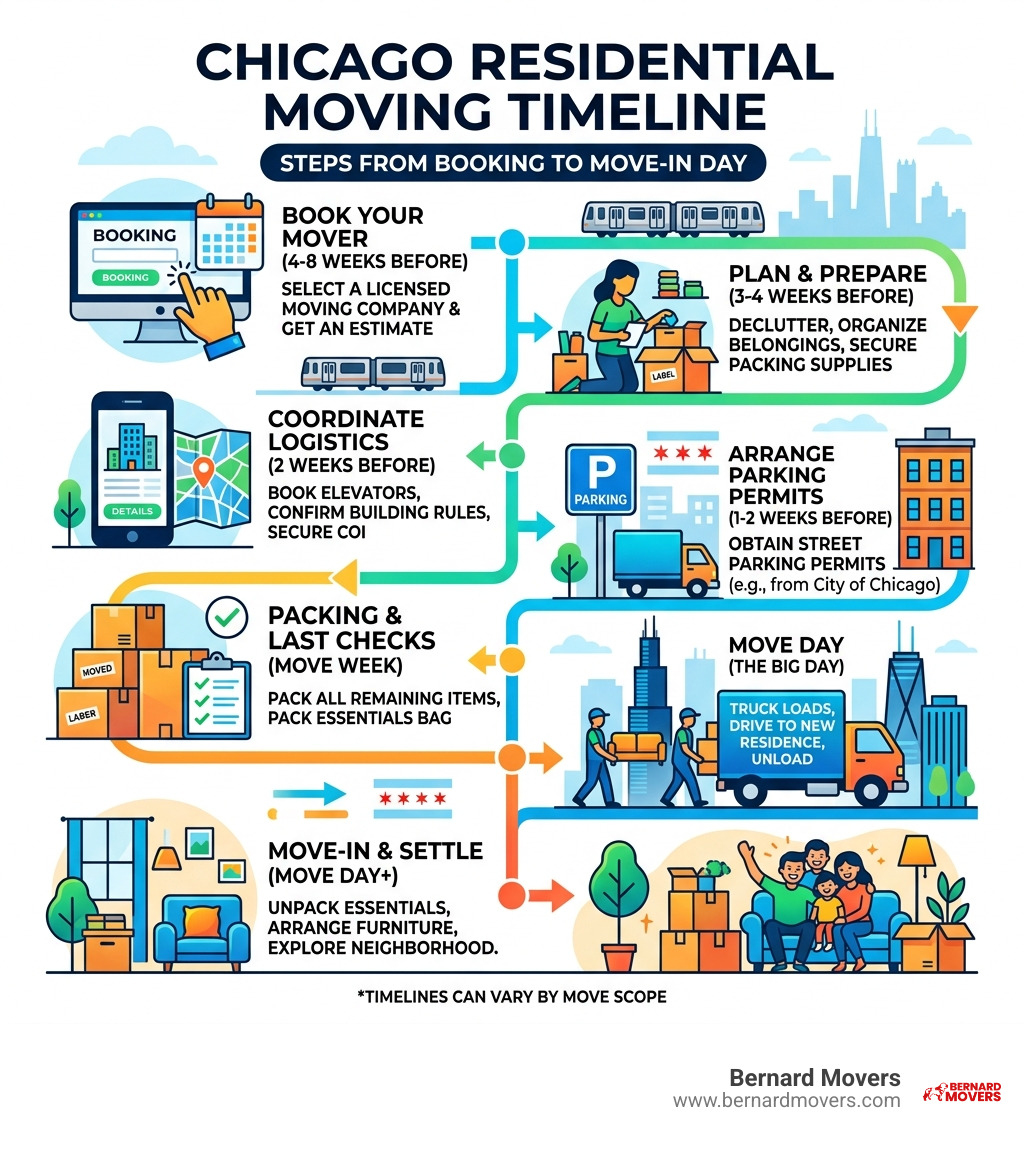
Simple guide to residential moving services Chicago:
- Cost of moving from Chicago to California
- Cost of moving from NYC to Chicago
- Cost to move from Chicago to Tampa
Navigating residential moving services Chicago: From High-Rises to Suburbs
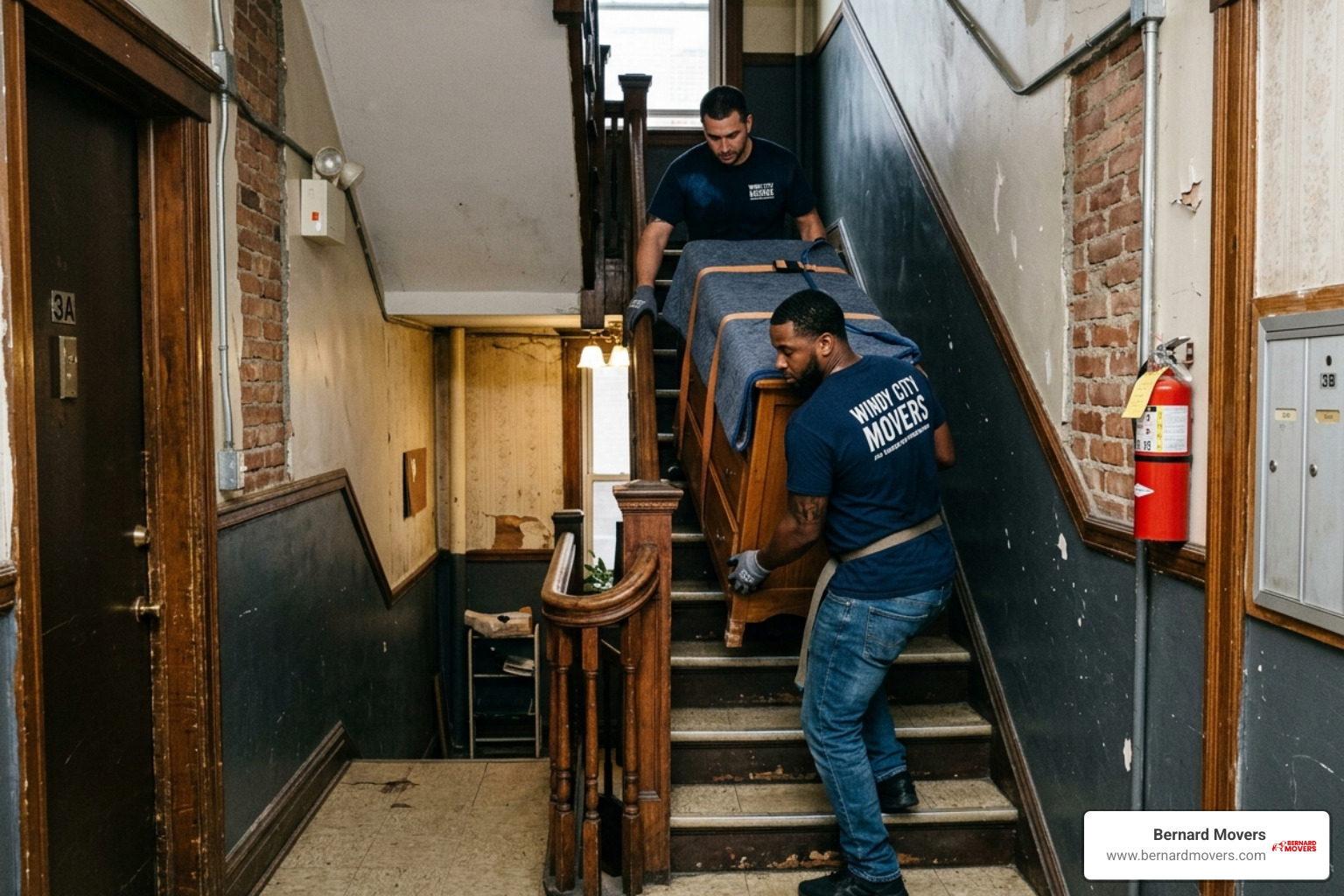
When we talk about moving in the Windy City, we aren’t just talking about one type of home. Chicago is a beautiful, architectural patchwork. One day we’re helping a young professional move out of a sleek studio in River North, and the next, we’re assisting a family transitioning from a historic bungalow in Melrose Park to a larger estate in Park Ridge. Each of these scenarios requires a different set of tools, a different size truck, and a different logistical strategy.
The most common types of moves we see include:
- Local Relocations: These are moves within the city limits or to nearby suburbs like Skokie, Evanston, or Elmhurst. Even a move of just three blocks can be a major undertaking if it involves three flights of stairs and no service elevator. Local moves are often about speed and efficiency, ensuring that the transition happens within a single business day.
- Long-Distance Moves: Whether you are headed to the suburbs or leaving Illinois entirely, these require more intensive planning and inventory management. Long-distance moves often involve climate-controlled transport and detailed tracking to ensure your belongings arrive safely across state lines.
- High-Rise and Apartment Specialist Moves: This is where the real expertise comes in. Moving in neighborhoods like the Gold Coast or the Loop isn’t just about heavy lifting; it’s about diplomacy with building managers and precision timing with freight elevators. Many of these buildings have strict “move-in/move-out” policies that only allow for specific windows, often excluding weekends or holidays.
Expert apartment moving requires a deep understanding of the city’s layout. We know that a move in Wicker Park looks very different from a move in Streeterville. While one might involve navigating a “L” tracks adjacent alley, the other requires strict adherence to high-rise loading dock schedules. For those staying within the city, a comprehensive guide to local moving can help demystify the process.
Essential Logistics for residential moving services Chicago
The logistics of a Chicago move are often what catch people off guard. It’s not just about the boxes; it’s about the “paperwork” of the streets and the specific requirements of urban living.
- Parking Permits: In neighborhoods like Lakeview or Lincoln Park, finding a spot for a 26-foot moving truck is nearly impossible without help. We often assist in securing city-issued “No Parking” signs to ensure the truck can actually get close to your front door. Without these, you risk heavy fines or having the truck parked blocks away, which significantly increases labor time.
- Certificate of Insurance (COI): Most modern high-rises and luxury condos in the Loop or River North require a Certificate of Insurance (COI) before a mover is even allowed on the property. This document proves the moving company has the necessary liability and workers’ comp coverage to protect the building’s elevators, hallways, and common areas from damage.
- Elevator Reservations: You can’t just show up and hope the elevator is free. Most buildings require a reserved block of time (often 2-4 hours). If you miss your window, you might be stuck with a full truck and nowhere to go, leading to overnight storage fees.
- The “Winter Factor”: Moving in January? We’ve seen it all. Icy sidewalks and sub-zero temperatures mean we have to take extra steps to protect your flooring from salt and slush, and ensure your fragile items don’t succumb to the “Big Freeze.” We use floor runners and specialized padding to keep your new home pristine despite the Chicago slush.
Navigating these hurdles is why many residents search specifically for apartment movers chicago il who understand the granular details of city living.
Specialized residential moving services Chicago and Packing Solutions
Sometimes, a standard move isn’t enough. Many of our clients require a “white-glove” touch. This goes beyond just moving boxes; it involves a curated approach to your most prized possessions, ensuring that everything from fine art to electronics is handled with extreme care.
- Full-Service Packing: We can pack your entire home, from the spice rack to the fine china. We use professional-grade materials, including double-walled boxes for fragile items, wardrobe boxes to keep your clothes wrinkle-free, and specialized crating for high-value artwork or mirrors.
- Furniture Disassembly: Don’t worry about taking apart that massive sectional or the complex bed frame. Our crews come equipped with the tools to disassemble and reassemble your furniture at the new location, ensuring that every screw and bracket is accounted for.
- Specialty Items: Pianos, gun safes, and large antiques require more than just muscle; they require specialized equipment like shoulder dollies, lift gates, and custom ramps. We have the experience to move these heavy items without damaging your floors or the items themselves.
- Senior Relocations: Moving a loved one into a senior living community in a place like Des Plaines or Wilmette requires a gentle, patient approach. We focus on making the transition as smooth and emotionally supportive as possible, often helping with the downsizing process.
- Storage Solutions: Sometimes the timelines don’t align. You might need to move out of your Franklin Park home on the 15th, but your new place in Northbrook isn’t ready until the 30th. In these cases, residential moving and storage chicago options provide a climate-controlled bridge for your belongings, keeping them safe and secure until you are ready for delivery.
Understanding Costs and Home Sizes
One of the first questions everyone asks is: “How much is this going to cost?” While every move is unique, we can look at averages based on the size of your home and the volume of your belongings. In Chicago, most local moves are billed at an hourly rate, which includes the truck, the labor, and basic equipment like blankets and tape.
| Home Size | Estimated Crew Size | Estimated Time | Price Range (Local) |
|---|---|---|---|
| Studio Apartment | 2 Movers | 2–3 Hours | $450 – $700 |
| 1-Bedroom Apartment | 2-3 Movers | 3–5 Hours | $700 – $1,000 |
| 2-Bedroom Home/Condo | 3 Movers | 5–7 Hours | $900 – $1,300 |
| 3-Bedroom House | 3-4 Movers | 7–9 Hours | $1,500 – $2,200 |
| 4+ Bedroom House | 4+ Movers | 10+ Hours | $2,500+ |
Note: These are estimates. Factors like “long carries” (walking a long distance from the truck to the door), multiple flights of stairs, and heavy packing needs will affect the final total. For example, a third-floor walk-up will naturally take longer than a ground-floor apartment with a dedicated driveway.
To avoid hidden fees, we always recommend getting a detailed quote. Reputable residential movers should be transparent about their rates and any additional costs for materials or specialty items.
Choosing the Right Partner for a Seamless Illinois Relocation
With so many companies offering residential moving services Chicago, how do you pick the right one? It comes down to more than just the lowest price. You are trusting these people with your entire life’s collection of belongings, and the peace of mind that comes with a professional crew is invaluable.
First, check the credentials. Any mover operating in Illinois must be licensed by the Illinois Commerce Commission (ILCC). This license ensures the company meets state safety and insurance requirements. You can also look for membership in the Illinois Movers and Warehousemen’s Association, which signals a commitment to industry ethics and standards.
Second, look at the reviews. Don’t just look at the star rating; read the stories. Did the movers show up on time? Were they respectful of the property? How did they handle challenges like a broken elevator or a sudden snowstorm? A high referral rate is often the best indicator of a quality mover. Ask friends and neighbors for recommendations, as local reputation is everything in Chicago.
Finally, consider the timing. If you want to save money, try to avoid the “peak season” (May through September) and the end of the month when leases typically expire. Mid-week and mid-month moves are often more affordable and offer more flexibility in scheduling, allowing the crew to take more time with your items.
How to Prepare for Your Move Day
Preparation is the enemy of stress. Even if you hire the best movers in the world, a little legwork on your end goes a long way in ensuring the day goes off without a hitch.
- Declutter Early: Don’t pay to move things you don’t need. Donate, sell, or toss items at least a month before the move. Chicago has many great charities that will even pick up furniture donations, saving you the effort.
- The Labeling System: Don’t just write “Kitchen” on a box. Write “Kitchen – Daily Dishes” or “Kitchen – Small Appliances.” It makes the unpacking process much faster and helps movers know which boxes are fragile.
- Inventory Management: For long-distance moves, a digital inventory is a lifesaver. Take photos of high-value items before they are packed to document their condition.
- Coordinate with the Building: If you’re in an apartment, confirm your elevator reservation 48 hours in advance and ensure the loading dock is clear.
- Clear the Path: Ensure walkways are clear of debris and, if it’s winter, make sure the stairs and sidewalks are shoveled and salted to prevent accidents.
For a deeper dive into the logistics, check out our residential moving services complete guide.
Why Local Expertise Matters in Chicago Neighborhoods
Why does it matter if your mover knows the difference between Logan Square and Melrose Park? Because Chicago is a city of neighborhoods, each with its own “personality” and physical constraints. In Lincoln Park, we’re often dealing with beautiful but narrow 19th-century walk-ups where large sofas simply won’t fit through the door and must be hoisted or carefully angled. In Bucktown and Wicker Park, the challenge is often narrow one-way streets and tight alleyways where the “L” train might be rumbling overhead.
In Melrose Park and other suburbs like Mount Prospect or Glenview, the moves are often larger, involving multi-story single-family homes. Here, the expertise lies in efficient truck loading and protecting hardwood floors and banisters from scuffs. Choosing from a pool of chicago local moving companies that have spent years navigating these specific streets ensures that your move doesn’t get derailed by a low bridge or a “No Trucks” residential zone.
Finalizing Your Move with Bernard Movers
At Bernard Movers, we pride ourselves on being more than just a crew with a truck. We are your neighbors, serving communities from Evanston to Melrose Park and everywhere in between. We understand the stress of a relocation, and our goal is to handle the heavy lifting—both literally and figuratively.
If you are planning a bigger move, we have an incredible opportunity for you. We are currently offering a 20% additional discount on moves to Georgia and Florida booked for delivery by March 15, 2025. Whether you’re chasing the sun or moving for work, we can get you there reliably and affordably.
Ready to see how much your move will cost? You can find more information on how much do movers cost in Chicago and get a tailored quote for your specific needs. Let us help you move your whole life without losing your mind. Give us a call today, and let’s get you home.