

Why Moving Within Your Building Still Requires Professional Help
Hiring moving apartments in same building movers can turn a deceptively tricky relocation into a seamless experience. While shifting down the hall or up a few floors might sound simple, same-building moves come with unique challenges that often catch residents off guard. Many people assume that because they aren’t loading a truck and driving across the city, they can handle the transition themselves with a few friends and a borrowed grocery cart. However, the reality of vertical relocation in a dense urban environment like Chicago involves complex logistics, strict building management protocols, and the physical toll of navigating heavy items through narrow corridors and shared elevators.
Quick Answer: What You Need to Know About In-Building Movers
- Cost: Typically 40-60% less than standard local moves, with hourly rates around $160-$300 for two movers. This reduction is primarily due to the lack of fuel surcharges and travel time between locations.
- Time: Most in-building relocations take 2-4 hours from start to finish, depending on the volume of items and elevator availability.
- Why Hire: Heavy lifting, building requirements (COI, elevator reservations), furniture protection, and time savings. Professional movers prevent damage to the building’s common areas, which can save you from losing your security deposit.
- Key Services: Professional equipment, building coordination, insurance coverage, and efficient logistics. This includes the use of specialized floor runners and wall padding that DIY movers rarely possess.
In busy cities like Chicago and throughout Illinois, same-building moves are common. You might be upgrading to a corner unit with a better view of Lake Michigan, downsizing after a lifestyle change, or moving to a quieter floor away from the street noise. Whatever your reason, the short distance doesn’t eliminate the challenges — narrow hallways, shared elevators, and the physical demands of relocating heavy furniture remain real obstacles. In high-rise environments, the “vertical move” is often more about timing and precision than distance.
Many buildings require licensed and insured movers for internal relocations. Professionals bring specialized equipment like dollies, ramps, and moving blankets that most residents don’t have. They also understand how to handle tight corners and protect both your belongings and the building’s property. Without the right equipment, you risk scratching expensive hardwood floors or scuffing the wallpaper in the building’s lobby, which can lead to hefty fines from the homeowners’ association or property management.
I’m Mina Georgalas, owner and president of Bernard Movers. In nearly 30 years of leading our Chicago-based moving company, I’ve seen how hiring professional movers for an in-building relocation transforms a stressful weekend into a quick transition. Whether you’re in a high-rise in Chicago or a walk-up in Melrose Park, our team understands the unique logistics involved. We treat a move across the hall with the same level of care and professionalism as a move across the state.
Helpful reading:
Why Hire Professional Movers for a Same-Building Relocation?
It’s a common misconception that moving a few floors doesn’t require professional help. However, in Chicago and Melrose Park, that short distance is often fraught with difficulties. Hiring moving apartments in same building movers is a smart decision that helps reduce the risk of injury and property damage. When you attempt to move heavy furniture like sofas, armoires, or mattresses on your own, you risk back strain or more serious injuries. Our professional teams are trained in proper lifting techniques and use back braces and team-lifting strategies to ensure safety.
Our professional teams handle heavy lifting and bulky furniture with precision. We bring expertise in navigating unique layouts, from vintage walk-ups in Chicago’s historic neighborhoods to modern complexes in the Illinois suburbs. We use specialized equipment like sturdy dollies and thick moving blankets to safeguard your furniture and the building’s walls and elevators. In many older Chicago buildings, the elevators are small and the stairwells are steep; our movers have the experience to navigate these tight spaces without causing damage. This expertise is particularly valuable in neighborhoods like Lincoln Park or Lakeview, where vintage architecture often presents logistical hurdles that modern equipment alone cannot solve.
Time is another factor. While a DIY move might take days of back-and-forth trips, professional movers typically complete these relocations in 2-4 hours, minimizing disruption to your routine. This efficiency allows you to get settled into your new unit and back to your normal life much faster.
| Feature | DIY In-Building Move | Bernard Movers In-Building Move |
|---|---|---|
| Heavy Lifting | High risk of injury and fatigue | Handled by trained professionals |
| Time | 1-2 full days of labor | 2-4 hours of efficient work |
| Building Rules | Struggle with COI/Elevators | Expert navigation of regulations |
| Equipment | Often inadequate or rented | Professional dollies and blankets |
| Cost | Hidden rental/repair costs | Transparent hourly rates |
| Liability | Personal responsibility for damage | Fully insured and bonded |
For more insights, check out our guide on apartment moving.
Navigating Logistics for Your In-Building Move
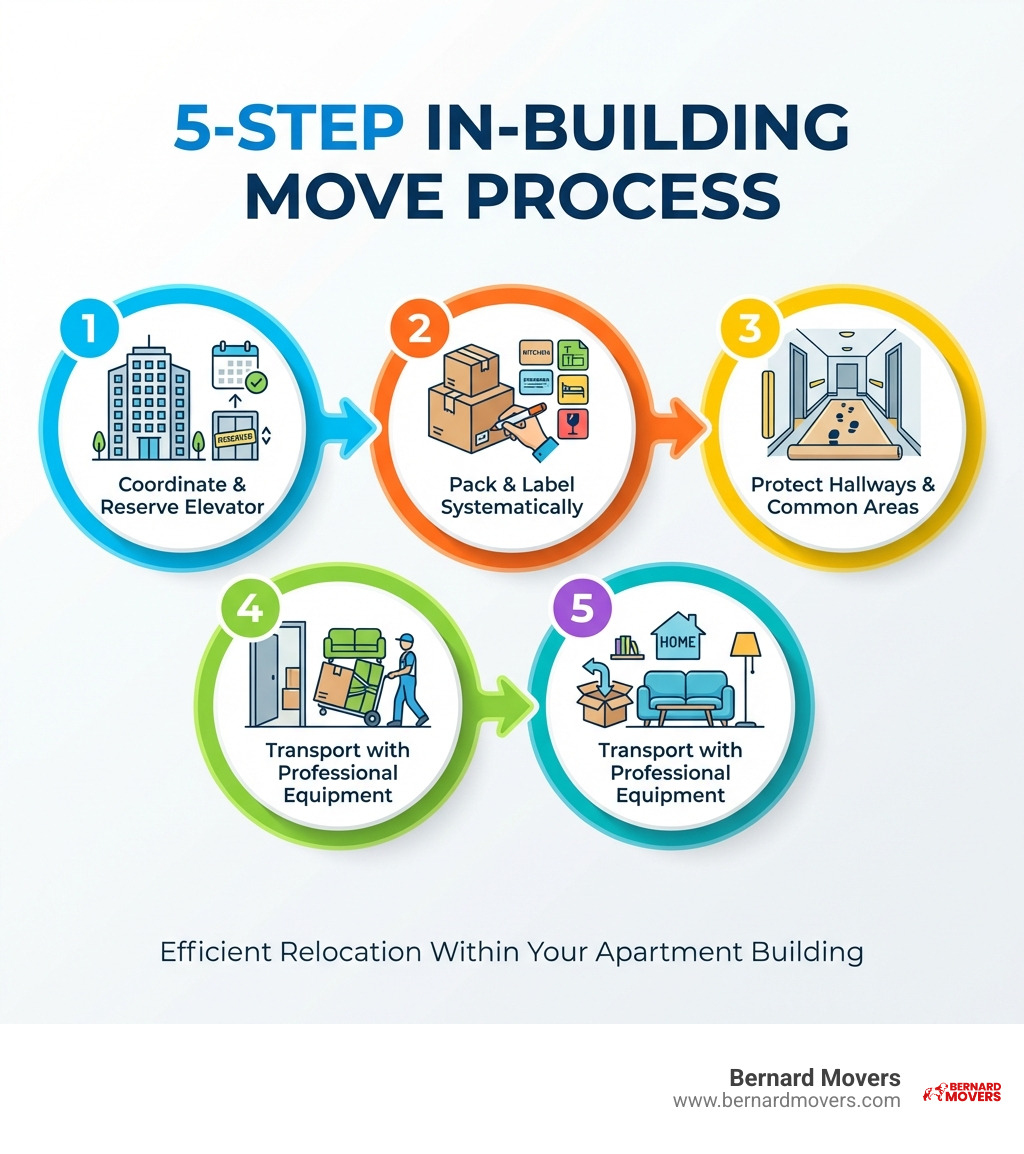
Professional expertise truly shines when handling the logistics of a same-building relocation. In Chicago high-rises, securing elevator reservations is critical. Many buildings have strict policies and designated hours for moving, often restricted to weekdays between 9:00 AM and 4:00 PM. If you miss your window, you may be forced to reschedule, which can be a nightmare if your lease is ending. Our teams coordinate with building management to ensure your dedicated time is secured and utilized efficiently.
We also handle building regulations, including parking for moving vehicles and loading dock access. Even if we aren’t driving a truck across town, we still need a place to park our equipment and staging vehicles. A common requirement is the Certificate of Insurance (COI). This is a document that proves the moving company has adequate liability and workers’ compensation insurance. Most luxury high-rises in Chicago will not even allow a mover through the front door without a COI on file. This document must typically name the building’s management and ownership as additionally insured, providing a layer of legal protection that DIY moves simply cannot offer. We can provide COIs when your building requires them for moves in Chicago, Melrose Park, and across Illinois. This document helps protect both your belongings and the property, ensuring that any accidental damage to the building is covered.
Cost-Effective Benefits of Hiring In-Building Movers
Hiring professionals for an internal move is surprisingly cost-effective because there are no transportation fees or long-distance surcharges. Pricing is based on hourly rates, which means you only pay for the time the movers are actually working. For most residential jobs, we have a 2-hour minimum. On average, you can expect to pay between $160 and $300 for two movers, which is 40-60% less than standard local moves that involve driving and fuel costs.
By hiring professionals, you eliminate the need for equipment rentals, such as renting a truck just to use the ramp or buying expensive moving blankets that you’ll never use again. You also avoid potential property repairs. A single scratch on a high-end elevator door can cost more to repair than the entire cost of hiring professional movers. This leads to reduced stress and quick transitions. To learn more about affordable options, visit our page on affordable apartment movers.
Essential Steps for Planning Your Internal Relocation
Proactive landlord communication is the first step. Discuss procedures for internal transfers and potential fees. Some buildings charge a “move-in fee” even if you are already a resident. According to the U.S. Census Bureau, millions of Americans relocate annually, and clear communication with property managers can resolve issues faster. Make sure to ask about the specific path the movers should take—some buildings require the use of a service entrance rather than the main lobby.
Clarify your lease status and security deposits. You will likely need to have your current unit inspected before your deposit is returned, and you may need to provide a new deposit for the new unit. Document the condition of your current apartment before moving with photos and video. Don’t forget utility updates and address changes. Even if the building address is the same, your unit number is changing. This affects your mail delivery, your internet service installation, and your billing address for credit cards. Notify your bank, employer, and the post office at least a week in advance. For a full checklist, see our 7 Steps for Apartment Moving.
Mastering the In-Building Move: Packing and Preparation
Packing for an in-building move requires organization to ensure efficiency. Just because you are moving a short distance doesn’t mean you should skimp on packing quality. Items can still shift or be dropped during the transition from the unit to the elevator.

Start by decluttering. An in-building move is the perfect time to evaluate what you truly need. Clients typically reduce belongings by 15-20% during in-building moves once they realize they don’t want to pay to move items they no longer use. Use a clear labeling system for all boxes, indicating the contents and the designated room in the new unit. We recommend using color-coded tape for different rooms (e.g., blue for the kitchen, red for the bedroom). This helps our movers place items exactly where they belong, leading to 60% faster unpacking times and less confusion for you on your first night.
For bulky items, furniture disassembly is often necessary. Many modern furniture pieces, especially those from retailers like IKEA, are not designed to be moved while fully assembled. Our team has the tools and expertise to safely disassemble and reassemble beds, dining tables, and large desks. We also offer packing and unpacking services to handle every item with care, from your everyday dishes to your most prized possessions.
Protecting Your Belongings and Building Property
We use moving blankets to wrap every piece of furniture, shielding them from scratches, dust, and dings. To protect the building, we use floor runners and corner guards. In Chicago high-rises, the hallways are often high-traffic areas with expensive carpeting or stone flooring. We pad wrap doors and walls in common areas to prevent damage to the property, which is a key requirement for many building managers. This level of protection is what separates professional moving apartments in same building movers from a DIY effort, as it significantly reduces the likelihood of disputes over security deposits related to hallway scuffs.
For fragile items, we use specialized packing techniques, such as double-boxing and using high-quality bubble wrap. We also recommend taking photos of the back of your electronics and cable setups before disconnecting them. This simple step will save you hours of frustration when you are trying to set up your TV and internet in the new unit. As premier apartment movers in Chicago, IL, we prioritize a meticulous approach to every detail, ensuring that your breakables arrive in the same condition they left.
Managing Move Day Challenges in Chicago High-Rises
To ensure a smooth day, avoid peak hours. We recommend scheduling moves mid-week (Tuesday through Thursday) and in the morning. This avoids the weekend rush when other residents might be using the elevators for groceries or deliveries. Access to service elevators and loading docks is vital. We coordinate directly with building staff to manage these resources and handle any parking restrictions for our vehicles. In some Chicago neighborhoods, parking is extremely limited, and having a professional team that knows how to navigate these constraints is invaluable.
Consider a “Moving Day Survival Kit.” Even though you are in the same building, you don’t want to be digging through boxes for your toothbrush, phone charger, or basic cleaning supplies. Keep a small bag with these essentials separate so you can access them immediately in your new unit.
Finalizing Your Transition and Settling In
Once moved, a systematic unpacking strategy helps you settle in quickly. Start with the kitchen and bathroom, as these are the rooms you will need to use first. Our team assists with furniture placement, positioning large pieces exactly where you want them so you don’t have to worry about moving them later. This includes the heavy lifting of sectional sofas or king-sized mattresses that are nearly impossible to adjust once the movers have departed. We can even help with the removal of packing debris and empty boxes, leaving your new home clean and clutter-free.
Finally, perform a post-move walkthrough of both units. Check the old unit for any forgotten items in closets or cabinets. Confirm everything is in place in the new unit and document the condition of your old apartment for security deposit purposes. Taking photos of the empty, clean old unit is the best way to protect yourself against unfair damage claims.
Planning a bigger move in the future? Bernard Movers offers a 20% additional discount on moves to Georgia and Florida booked for delivery by March 15, 2025. Whether you are moving up one floor or across the country, we are here to help.
Ready to make your in-building move a smooth experience? Contact us today for a personalized quote!